.svg&w=384&q=75 "logo")
Wasim Akram's Message on India-Pakistan Cricket Rivalry: It's Just a Game
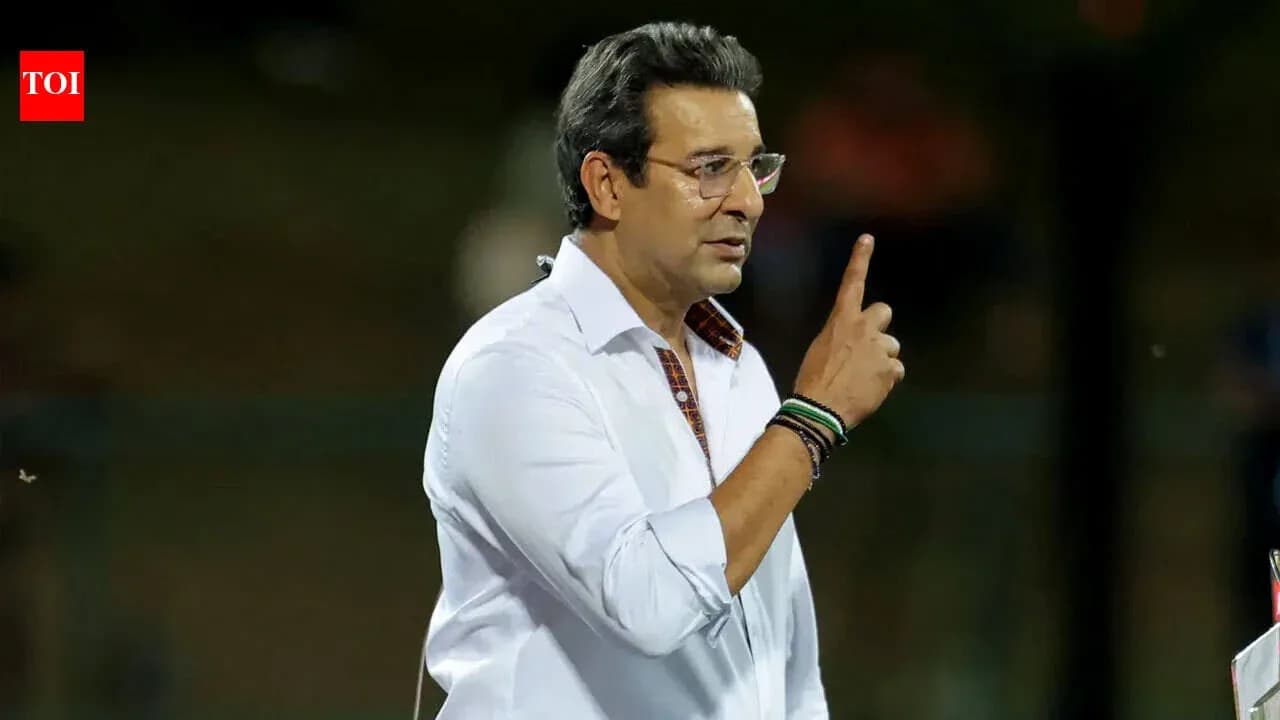
Wasim Akram has lived the full weight of India–Pakistan cricket. World Cups, Sharjah, packed stadiums, pressure that could crush careers. And yet, as the noise around the rivalry grows louder with every passing year, the Pakistan great has a simple, almost jarring reminder.
“It’s only a frikkin game.”
Speaking on the 1 Mint podcast, Akram cut through decades of political baggage and social media fury with a plea that sounded more like a rebuke than a request. Stop dragging history into cricket. Stop treating every result as a referendum on the past.
“People have too much time. Why can’t they understand? It’s only a frikkin game. At the end of the day, it’s just a match. Somebody has to win, somebody has to lose. And move on to the next one,” he said.
The words came laced with frustration. Not at the rivalry itself — he helped build it — but at what it has become in the age of hashtags and outrage.
“What happened many moons ago still lingers. Revenge and all is so 1970. It’s the classic ‘an empty mind is a devil’s workshop’ thought process,” he added.
For Akram, the equation is still straightforward: one side wins, one side loses, both prepare for the next contest. The rest is noise. Yet that noise now often drowns out the cricket, especially online, where every India–Pakistan game turns into a digital battleground long after the last ball is bowled.
A young Irfan Pathan, an old master, and a few crucial tips
In the middle of this conversation about rivalry and resentment, Akram’s memories drifted to a very different time: Australia, 2004. A young left-arm quick from India, Irfan Pathan, on his first tour. Akram, retired and in the commentary box, watching from the other side of the rope.
“Irfan met me in 2004 on his first tour to Australia; I was commentating. He was a big fan. Grew up watching us. I gave him a few tips here and there, but he did well early on in his career,” Akram recalled.
Pathan had already drawn comparisons with Akram by then. Same side of the wicket, similar action, the ball curving late and dangerously. The Pakistani legend, though, says his role was never to remodel the youngster’s technique.
“His action was similar to mine from the very beginning. But when players ask you about something, what you tell them is mostly about the mindset. Action and all is fine, because at that stage, you have reached that level where you’re representing the country,” he said.
So the advice went deeper. Into the craft.
“Things like wrist position and how to suss out a batsman. When to use variations, when not to. So yeah, it was good fun. Irfan is a good boy; he still keeps meeting me.”
Those small conversations fed into a career that saw Pathan become one of India’s most effective left-arm fast bowlers of the 2000s. The swing, the movement, the ability to trouble top orders — the Akram comparisons never really went away. His batting then turned him into a genuine all-rounder, a player who could tilt games with either discipline.
Pathan, Pakistan, and a rivalry written in wickets
If Akram is asking fans to calm down, Pathan’s numbers against Pakistan explain why they often don’t.
The Indian seamer built a formidable record against the neighbours: 67 wickets in 36 internationals — 27 in Tests, 34 in ODIs and six in T20Is. He didn’t just play in the rivalry. He hurt Pakistan, repeatedly.
One spell still stands out. Karachi, 2006. A charged Test, a flat pitch, an expectant crowd. Pathan, ball in hand, produced one of the most remarkable opening overs in Indian Test history. He became only the second Indian to take a Test hat-trick, removing Salman Butt, Younis Khan and Mohammad Yousuf in the first over of the innings.
Three big names. One over. Pakistan stunned. India roaring.
Moments like that feed the mythology of India–Pakistan cricket. They also feed the emotions Akram is now trying to cool.
From admiration to online jabs
The relationship between Akram and Pathan has shifted from mentor–pupil to something more playful, and at times prickly, in the public eye.
Akram laughed his way through one pointed observation: “It’s a different thing that he keeps tweeting some or the other thing against Pakistan. But our fans are ready too. They don’t have the tendency to ignore either. They just have to reply.”
Pathan, now a television expert and one of the more outspoken former Indian cricketers on social media, often weighs in after high-profile India–Pakistan clashes. His views, particularly when critical of Pakistan or its players, rarely go unnoticed. They spark replies, arguments, and the kind of digital pile-ons that have become standard fare around this rivalry.
Akram, though, refused to turn it into a personal issue. He acknowledged the jabs, acknowledged the responses, but kept dragging the conversation back to the same point: the line between sport and everything else must stay clear.
For him, the rivalry belongs on the field — in spells like Pathan’s in Karachi, in the pressure of a World Cup chase, in the roar of a full house. Not in decades-old grudges, not in endless social media wars.
“Somebody has to win, somebody has to lose. And move on to the next one,” he repeated.
The question now is whether anyone is still listening.