.svg&w=384&q=75 "logo")
Washington Wizards' Bold Strategy: Pairing Youth with Veteran Stars
The Washington Wizards are trying to skip steps. Or maybe they’re trying to rewrite the rulebook.
In a league where most rebuilding teams lean all the way into youth, Washington has chosen a far stranger, bolder path: pairing a 19-year-old franchise cornerstone with two established stars who carry both All-NBA résumés and heavy baggage.
Trae Young arrived first, pried away from the Atlanta Hawks in a move that raised more than a few eyebrows around the league. At 27, he doesn’t quite fit the usual timeline of a team starting from the ground floor, but he instantly became the face of the Wizards’ backcourt and their most dynamic offensive engine.
Then came the real jolt.
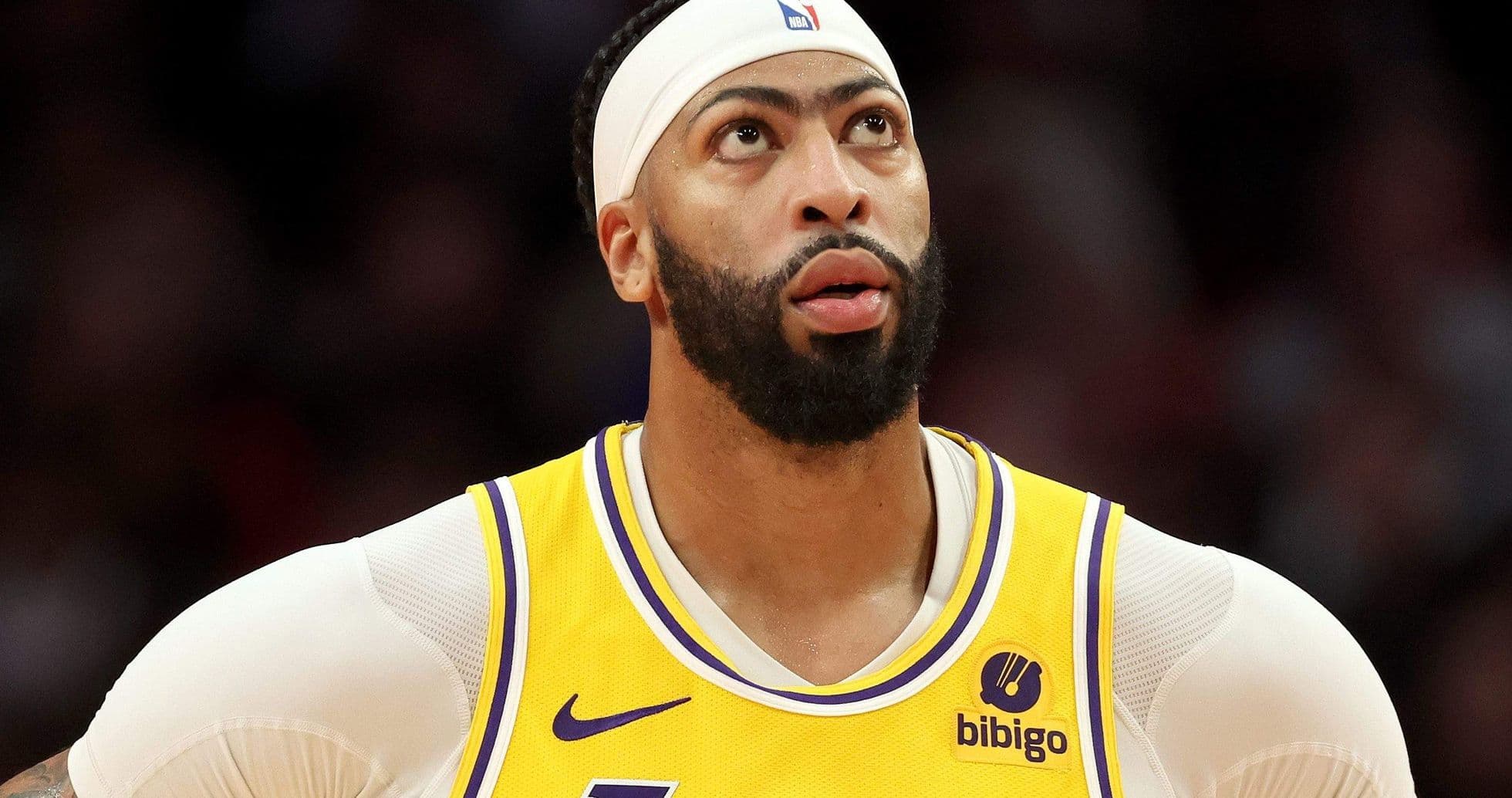
Anthony Davis, 10-time All-Star, perennial Defensive Player of the Year candidate when healthy, and owner of one of the league’s heftiest contracts, landed in Washington from the Dallas Mavericks. It was the kind of move rebuilding teams typically avoid. The Wizards ran toward it.
Now, the franchise sits in the middle of one of the NBA’s most intriguing experiments: can a young core grow while being led by two stars who have already lived through the brutal expectations of contention?
A Star Without an Extension
Davis is 33. He’s still owed roughly $175 million over the next three years. He’s eligible for an extension, yet the Wizards have not put one in front of him.
That silence has fueled the obvious question: is Anthony Davis really part of Washington’s long-term picture, or just the most valuable chip on the table?
On paper, if the Wizards decided to listen, the line of suitors would be long. Elite two-way bigs rarely hit the market, and Davis, even with his injury history and age, still changes the geometry of a game on both ends.
One potential caller sits in Boston.
The Celtics, fresh off moving on from Jaylen Brown, are searching for their next configuration around Jayson Tatum. A proposed framework making the rounds paints a clear picture of how aggressive Boston could be:
- Wizards receive: Paul George, Baylor Scheierman, Jordan Walsh, and a 2031 first-round pick
- Celtics receive: Anthony Davis
For Washington, that’s a classic retooling package. Two young wings in Scheierman and Walsh to drop into an already growing pool of prospects. A future first to keep the pipeline stocked. And Paul George, 36, as a short-term asset—one whose playoff form last season suggested he still has enough left to intrigue win-now contenders before the February trade deadline.
For Boston, it’s a bet on ceiling. If Davis stays on the floor, Tatum would finally share the court with a big man as decorated and dominant as any he has played with. A healthy Davis beside Tatum instantly vaults the Celtics into the conversation for the league’s most imposing star duo, with Davis anchoring the paint and giving Boston an MVP-caliber presence on both ends.
That’s the allure. That’s also the tension in Washington’s front office.
Building Around a Teenager, Riding With Veterans
The Wizards used the first overall pick in this year’s draft on AJ Dybantsa, a 19-year-old wing many inside and outside the organization view as the franchise’s future. Ordinarily, a team in that position strips down everything else and hands the keys to the kids.
Washington hasn’t done that.
Instead, they are preparing to open the 2026–27 season with Davis and Young at the top of the depth chart, Dybantsa and the rest of the young core orbiting around them. It’s a deliberate bet that veteran star power can accelerate development, not stunt it.
General manager Will Dawkins has been clear about the kind of locker room he wants, and why Davis still fits it.
“What we’re getting with both of them are players who are motivated and have a chip on their shoulder, as well,” Dawkins told ESPN earlier this year, speaking about Davis and Young. He framed the entire project as a collision of ambition: a coaching staff eager to prove itself, developmental players hungry to establish their names, and two stars trying to reclaim their place among the league’s elite.
Davis, shuffled from the Los Angeles Lakers to the Dallas Mavericks and now to Washington in a short span, arrives with something to prove. Young, once the unquestioned face of the Hawks, comes off a messy exit from Atlanta and a brief, five-game cameo with the Wizards last season before being shut down.
These are not stars coasting into a quiet late-prime. They are stars with reputations to restore.
Trade Now, or Ride the Storm?
The central question hangs over everything: why would a team centering its future on a 19-year-old keep a 33-year-old star on a massive deal?
The answer, at least for now, is that Washington believes the mix can work.
Dawkins has spoken with conviction about how Young and Davis can complement each other. A stretch pick-and-roll pairing with Young’s deep range and Davis’ rim gravity can simplify the game for Dybantsa and the rest of the youngsters. Every defensive possession anchored by Davis gives the kids room to make mistakes on the perimeter without the scoreboard spiraling.
If it clicks, the Wizards could bypass the usual multi-year slog of a rebuild and jump into the middle of the Eastern Conference playoff race far sooner than expected.
If it doesn’t, the escape hatch is obvious. Davis’ contract, his pedigree, and his impact when healthy ensure his trade value will not vanish overnight. A team like Boston—armed with picks, prospects, and urgency—will always be lurking.
For now, Washington is choosing the harder road: living with the noise, betting on motivation, and trusting that Davis and Young can drag a young roster up the standings instead of blocking its growth.
The Wizards have made their wager clear. The only thing left to find out is whether this storm of ambition can turn into something real in the East, or whether Anthony Davis becomes the next superstar to leave Washington as quickly as he arrived.