U.S. Women’s Team Advances to FIBA World Cup Final
BERLIN — For three quarters, the U.S. women’s team looked less like an unstoppable dynasty and more like a heavyweight trying to find its balance. By the end, the familiar picture returned: the Americans walking off with another World Cup final in their sights, Spain left wondering how a tight game slipped away.
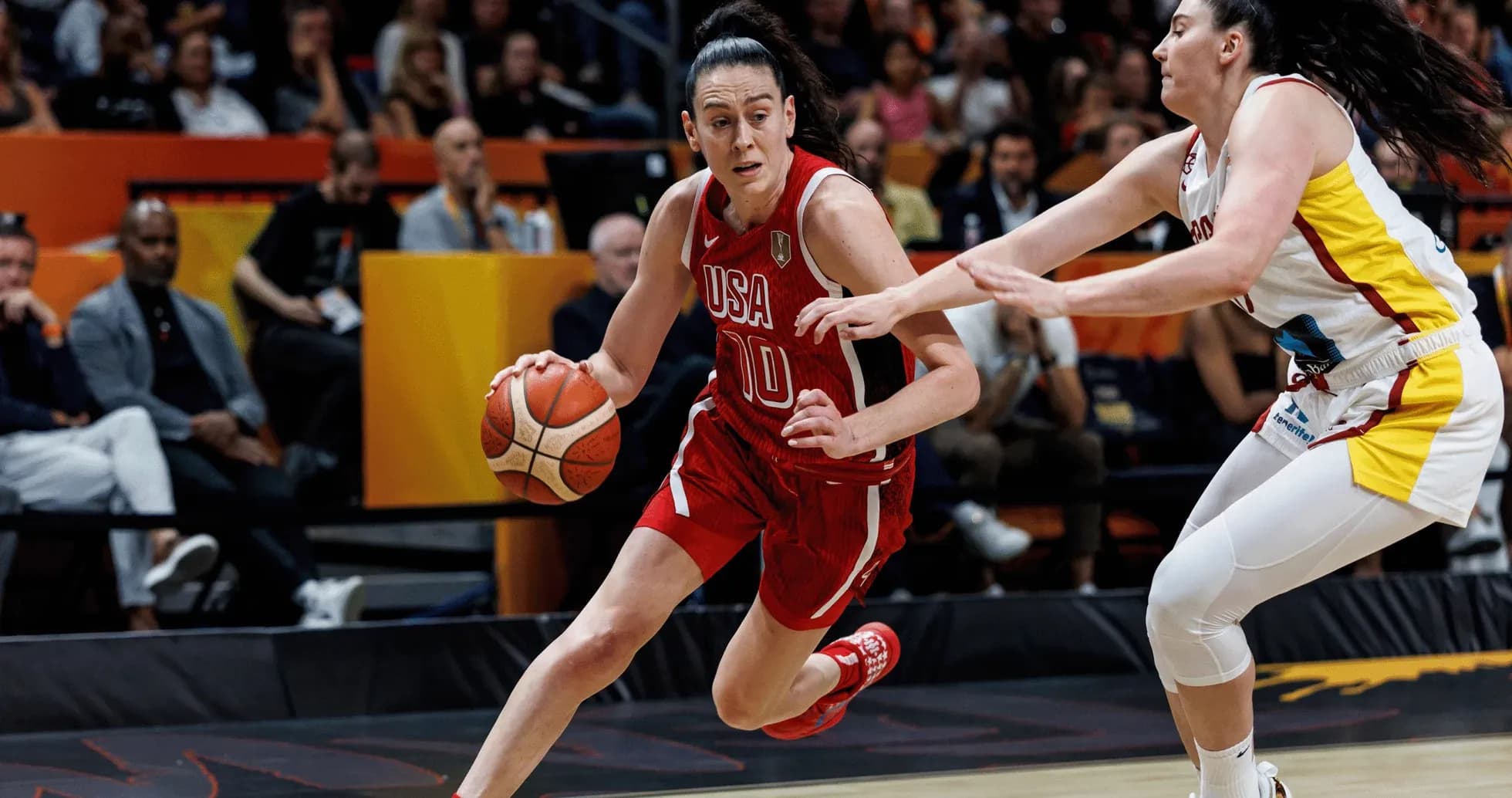
Breanna Stewart led the way with 16 points, Kahleah Copper added 13, and the U.S. ground out a 76-66 win on Saturday to reach the championship game of the women’s FIBA World Cup.
Next up: France. A straight rematch of the 2024 Paris Olympics gold medal game, decided by a single point in favor of the U.S. The stage is set for another clash with history hanging over it.
A streak under pressure
The U.S. came into Berlin carrying a remarkable run — 35 straight World Cup victories, unbeaten in the competition since a semifinal loss to Russia in 2006. One more win would seal a fifth consecutive title, pulling the Americans level with the former Soviet Union for the longest run of World Cup dominance.
Spain didn’t show up to play the underdog.
They punched first, hard. Nine of the game’s first 10 points belonged to Spain, who ripped through the U.S. defense and forced the Americans into the largest deficit they’d seen all tournament. That early 9-1 hole quickly grew to 16-9, a far cry from the largely comfortable paths the U.S. had enjoyed in previous games.
This was not Italy and that narrow 55-52 grind. This was a seasoned Spanish side willing to body up, contest everything, and live with the whistles.
The response came from the U.S. bench. The newcomers stepped in, changed the tempo, and turned chaos into control. A 12-2 run closed the first quarter, flipping the rhythm of the game and restoring some order, but not dominance.
Whistles, contact, and a broken rhythm
The second quarter turned into a parade to the free-throw line.
Spain’s physical defense disrupted the U.S. at every turn. Drives into the lane ended with arms tangled, bodies on the floor, and the referee’s whistle slicing through the noise. The Americans never truly settled into their offense, but they did something just as important: they kept attacking.
By halftime, the numbers told the story. The U.S. had taken 27 free throws and just 26 field-goal attempts. They converted 19 of those foul shots and edged into the break with a 39-36 lead, a fragile cushion built more on resilience than rhythm.
Spain, though, refused to fade. Every time the U.S. threatened to pull away, a response came — a timely jumper, a strong finish at the rim, another defensive stand that forced the Americans into tough looks and late-clock decisions.
Locked at 58 — then the switch flipped
The tension peaked at the start of the fourth quarter. The scoreboard read 58-58, the game hanging in the balance, the U.S. suddenly staring at the possibility of their first World Cup loss in 18 years.
That’s when the champions finally played like champions.
The Americans tightened the screws defensively and attacked with renewed purpose. They ripped off 12 of the first 14 points in the quarter, a surge that felt like a dam breaking. In a matter of minutes, a deadlock became a 70-60 U.S. lead — their largest of the night — with 5:20 remaining.
Spain were still fighting, still probing for a way back, but the gap never shrank to less than eight. Every small push ran into the same wall: U.S. composure, U.S. depth, U.S. free throws.
By the final buzzer, the foul line had become one of the game’s defining features. The Americans finished 27 of 35 from the stripe, their aggression rewarded on a night when open looks were rare and clean possessions even rarer.
From debut to dynasty
This semifinal carried a thread of history for Stewart in particular. The last time these two teams met at a World Cup, in the 2014 gold medal game, she was making her debut with the national team as the U.S. beat Spain for the title.
A decade later, she’s the anchor of a group chasing records, not just wins.
The performance in Berlin was far from flawless. The offense sputtered, the ball stuck at times, and Spain’s physicality clearly bothered the Americans. Yet the result looked familiar: U.S. players walking off the court with another final ahead of them, the streak still alive, the standard still theirs.
Now comes France, and with it a chance to turn a remarkable run into something even bigger — a fifth straight World Cup crown and a place alongside the greatest dynasties the sport has ever seen.