
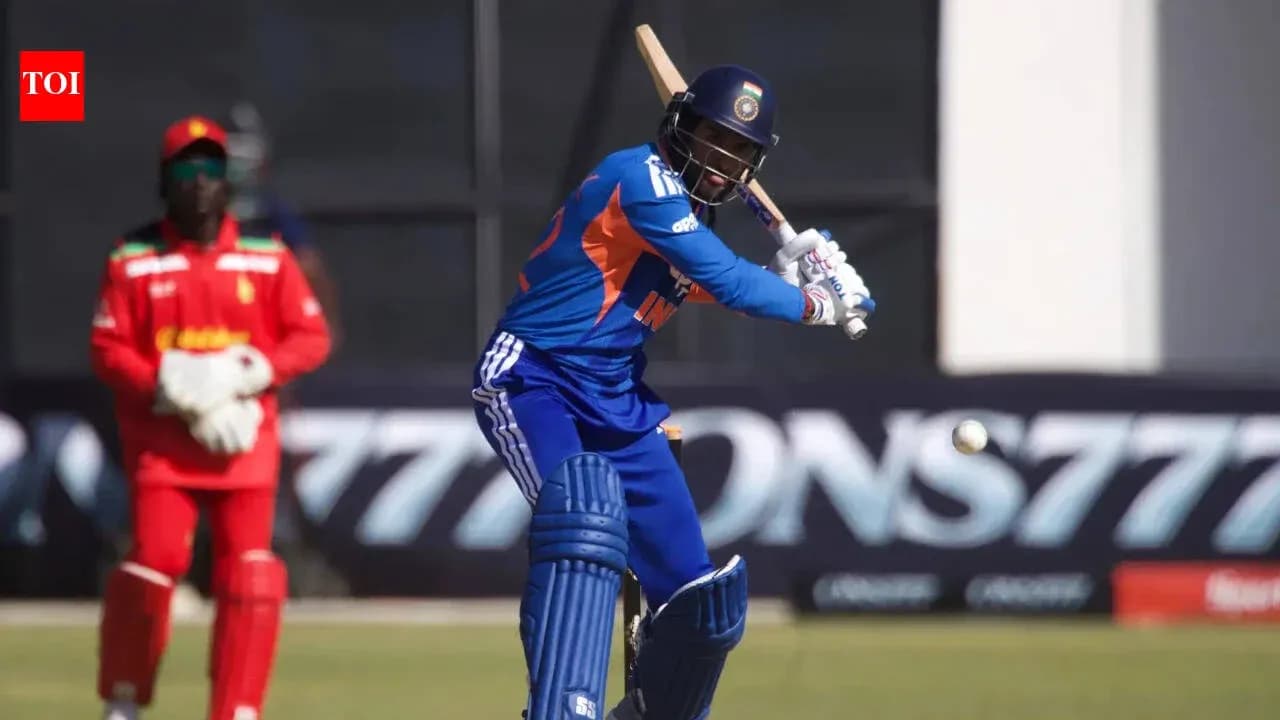
Tilak Varma's Role in India's T20I Strategy
India’s search for something as simple, and as elusive, as consistency in T20I cricket rolls on into a three-match series against Afghanistan. The results column tells its own story. Since lifting a second straight T20 World Cup earlier this year, Shreyas Iyer’s side has lurched from one extreme to another: six defeats on the bounce to Ireland and England, followed by a 3-0 clean sweep of Zimbabwe.
Now comes Afghanistan on September 13, then a historic T20I against Japan, and the Asian Games 2026 beyond that. The fixtures are piling up. The answers are not.
At the heart of it all sits a single, nagging question: what exactly is Tilak Varma’s role in this team?
De Villiers Puts the Spotlight on Balance
AB de Villiers has seen enough T20 dressing rooms to know when a side is juggling too many options. On his YouTube channel, the former South Africa star laid out India’s dilemma in blunt terms: the names are there, the talent is there, but the jigsaw still doesn’t quite fit.
Shreyas Iyer, the captain. Ishan Kishan. Sanju Samson. Abhishek Sharma. Vaibhav Sooryavanshi. Then come the all-rounders, and with them, Tilak Varma, the vice-captain whose place in the order remains stubbornly undefined.
“There will definitely be some selection issues with regard to the batters,” de Villiers said, before homing in on the left-hander. For him, the puzzle is not whether Tilak plays, but where. Top order aggressor? Middle-overs anchor? End-overs finisher? Every answer changes the balance of the XI.
De Villiers called the squad “really, really strong,” yet circled back to the same theme: clarity. Against a side he labelled “quite a dangerous team” in Afghanistan, India cannot afford to improvise roles on the fly.
Numbers That Shine, Context That Stings
On paper, Tilak’s recent returns look like the profile of a player you build around, not one you shuffle around.
Since the 2026 T20 World Cup, he has scored 255 runs from 10 innings at a strike rate of 159.36. Three of those knocks have crossed fifty. Those are the sort of numbers that usually silence debate.
But the context refuses to cooperate.
One of those half-centuries came in the Zimbabwe series that India dominated. Another arrived in the fifth T20I against England, by which point the series was already gone. The impact has not always matched the aesthetics. The figures look impressive in isolation, yet spread across the whole period, they tell a more uneven tale.
His tour of the UK underlined that inconsistency. The odd big score punctuated a run that never quite settled, never quite convinced that India had found a long-term pillar in the middle order. For a vice-captain, that uncertainty becomes louder with every game.
A Batting Logjam
This is not a side short of options. It is a side drowning in them.
Shreyas Iyer is expected to anchor and lead. Ishan Kishan brings left-handed explosiveness at the top. Sanju Samson offers range-hitting and flair. Abhishek Sharma is another left-hander with powerplay intent. Vaibhav Sooryavanshi adds yet another layer of competition.
On top of that, the all-rounders demand space, especially in a format where India has often leaned on depth rather than a rigid top-heavy structure. Every extra bowler squeezes the batting order tighter. Every additional batter pushes a bowler out.
In that crush, Tilak Varma’s role cannot be vague. If he is the designated aggressor at No. 3, India must build around that. If he is a middle-overs manipulator against spin, the rest of the top order needs to complement that skill set. If the team views him as a flexible floater, that too needs definition, not a last-minute adjustment after a couple of early wickets.
De Villiers’ warning cuts through the noise: it is not about picking the “best” XI on paper, but about constructing an XI in which every batter knows his job before the first ball is bowled.
Afghanistan Await, Questions Remain
Afghanistan are no longer a novelty act in T20 cricket. They are awkward, fearless, and increasingly well drilled. They expose muddled thinking quickly. Any hesitation in roles, any lack of conviction in the batting order, and their bowlers tend to pounce.
India’s recent path under Iyer has been anything but smooth. A brutal run against Ireland and England, then a commanding response against Zimbabwe. Peaks and troughs, with little in between. The Afghanistan series now becomes the next checkpoint in a longer campaign that stretches into that landmark clash with Japan and on to the Asian Games.
Tilak Varma stands at the centre of that storyline. Vice-captain, high strike rate, flashes of brilliance, lingering doubts. India can keep rotating names and tinkering with combinations, but at some point they must decide: is Tilak a cornerstone of their T20 future, or a luxury piece they fit in where space allows?
The answer, and where he walks out to bat against Afghanistan, will say plenty about how serious India are about finally bringing order to all this T20 talent.





