.svg&w=384&q=75 "logo")
Tilak Varma: India's Middle-Order Blueprint Shift
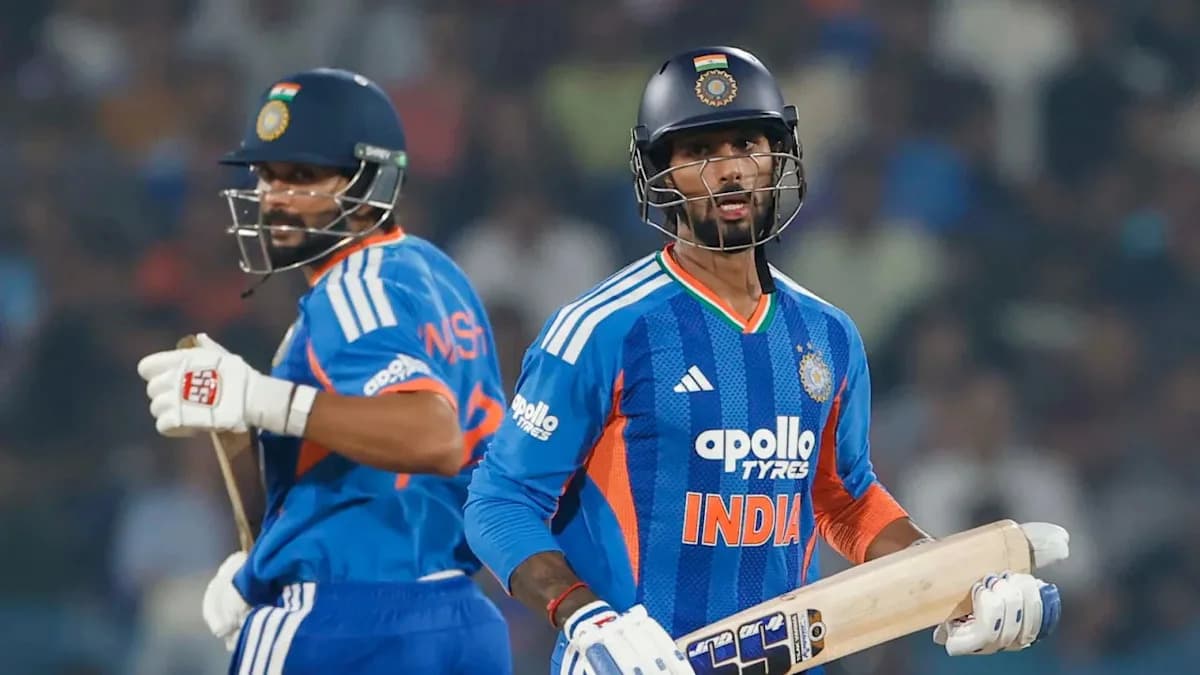
New Delhi: A year out from the ODI World Cup in South Africa, India’s white-ball think tank has started to redraw its blueprint — and a 21-year-old left-hander from Hyderabad has quietly moved into the frame.
Tilak Varma, already seen as one of India’s most composed young T20 batters, has emerged as a potential backup to Shreyas Iyer in the top six. Not as a like-for-like replacement in terms of experience. As a tactical shift.
A left-hander in a sea of right-handers. And, crucially, a batter who can bowl.
Left-Hand Option, Extra Overs
Team management and selectors have discussed Tilak as a middle-order option who can break the monotony of India’s right-handed core. His off-spin has been identified as a genuine work-in-progress, not a token part-time option. He has been specifically asked to sharpen that skill.
This isn’t a luxury project. It comes from a clear problem.
The current ODI side has leaned heavily on the lower order and frontline bowlers because the top six rarely contribute with the ball. The lack of bowling options at the top has been flagged internally as a structural flaw — one that leaves the attack exposed and the balance of the XI fragile.
With the World Cup in South Africa expected to test batters against pace and bounce, the planning will move into full gear when India land in New Zealand in October. That’s when most first-choice players are expected to be together again. The upcoming home ODIs against West Indies from September 27 will not feature the full-strength core, and a parallel full T20 squad is set to travel to Japan for the Asian Games.
Gambhir–Gill Demand a Bowling Batter
Inside the camp, the message from the leadership is blunt.
Head coach Gautam Gambhir and captain Shubman Gill, according to a BCCI source, believe India do not have a ready-made backup for the middle order. With Hardik Pandya and Nitish Kumar Reddy both carrying a history of injuries, they want at least one top-order batter capable of delivering four overs in an ODI.
That need has already forced some awkward calls.
Over the last year, India have repeatedly pushed Washington Sundar or Axar Patel into No. 5 or No. 6 to hold the balance of the side together. In the recent series in England, Ishan Kishan even went in ahead of vice-captain Shreyas Iyer, a move that underlined how unsettled the middle-order planning really is.
Ageing Core, Fitness Alarms
The World Cup venue changes the conversation again.
South African conditions demand sharp fielding, athleticism, and batters comfortable against high pace and steep bounce. Inside that context, India’s ageing core stands out.
“The team has to be prepared for conditions in South Africa in the World Cup. Iyer got injured in Australia and his game against pace and bounce is untested of late. The team already has two ageing players in Rohit Sharma and Virat Kohli. They are having niggles as well. KL Rahul too will be over 35 by the time the World Cup comes around. Ravindra Jadeja isn’t a certainty either. The fielding of the team has suffered due to fitness issues. The team management feels that they need younger backups ready,” the source said.
That is the backdrop against which Tilak’s name has gained traction — youth, left-hand variety, and the potential to chip in with the ball.
Selectors Push Back on Batting Musical Chairs
There is another tension running through the planning room.
Selectors, it is learnt, are wary of shunting batters up and down the order just to plug short-term gaps. The example of Ruturaj Gaikwad is still fresh. Picked as a backup opener when Gill was injured, Gaikwad was pushed to No. 4 against South Africa in Raipur — and responded with a hundred. He has not played an ODI since.
“Gaikwad was picked as backup opener since Gill was injured. The team management feels Tilak could have been tried in that place. That’s why they don’t want to rush Devdutt Padikkal in the ODI setup because he found his calling in white-ball cricket while opening the batting,” the source said.
The message: stop turning openers into temporary middle-order fixes. If Tilak is to be groomed for No. 4, No. 5, or No. 6, he should be backed there, not shuffled around.
West Indies ODIs an Anomaly
The immediate assignment against West Indies at home will look nothing like the eventual World Cup template.
Iyer, Tilak, Ishan Kishan and Axar Patel are all set to miss that ODI series. With so many regulars unavailable, the selectors’ priority for West Indies will be more functional than strategic — they are focused on identifying another wicketkeeper for that tour rather than unveiling long-term middle-order plans.
The real World Cup build-up starts later, with a fuller squad and tougher decisions.
Afghanistan T20Is: Asian Games Core Likely to Stay
Before that, there is a T20 detour.
The selection committee is expected to meet by September 3 to name the squad for the three-match T20I series against Afghanistan in Delhi, starting September 13. The same core chosen for the Asian Games is likely to be retained, keeping continuity in the shortest format.
Fitness bulletins will shape the final call. Official reports on Hardik Pandya, Nitish Kumar Reddy and Jasprit Bumrah are still awaited. Varun Chakravarthy, meanwhile, has regained full fitness and is back in the frame.
India’s white-ball future, then, sits at an interesting crossroads: an ageing but decorated core, a coach–captain duo demanding multi-skilled batters, and a young left-hander being quietly groomed to change the shape of the middle order. The only question now is whether Tilak Varma can turn potential into trust before the World Cup clock runs out.