Team USA Women’s World Cup Victory: A New Era in Women’s Basketball
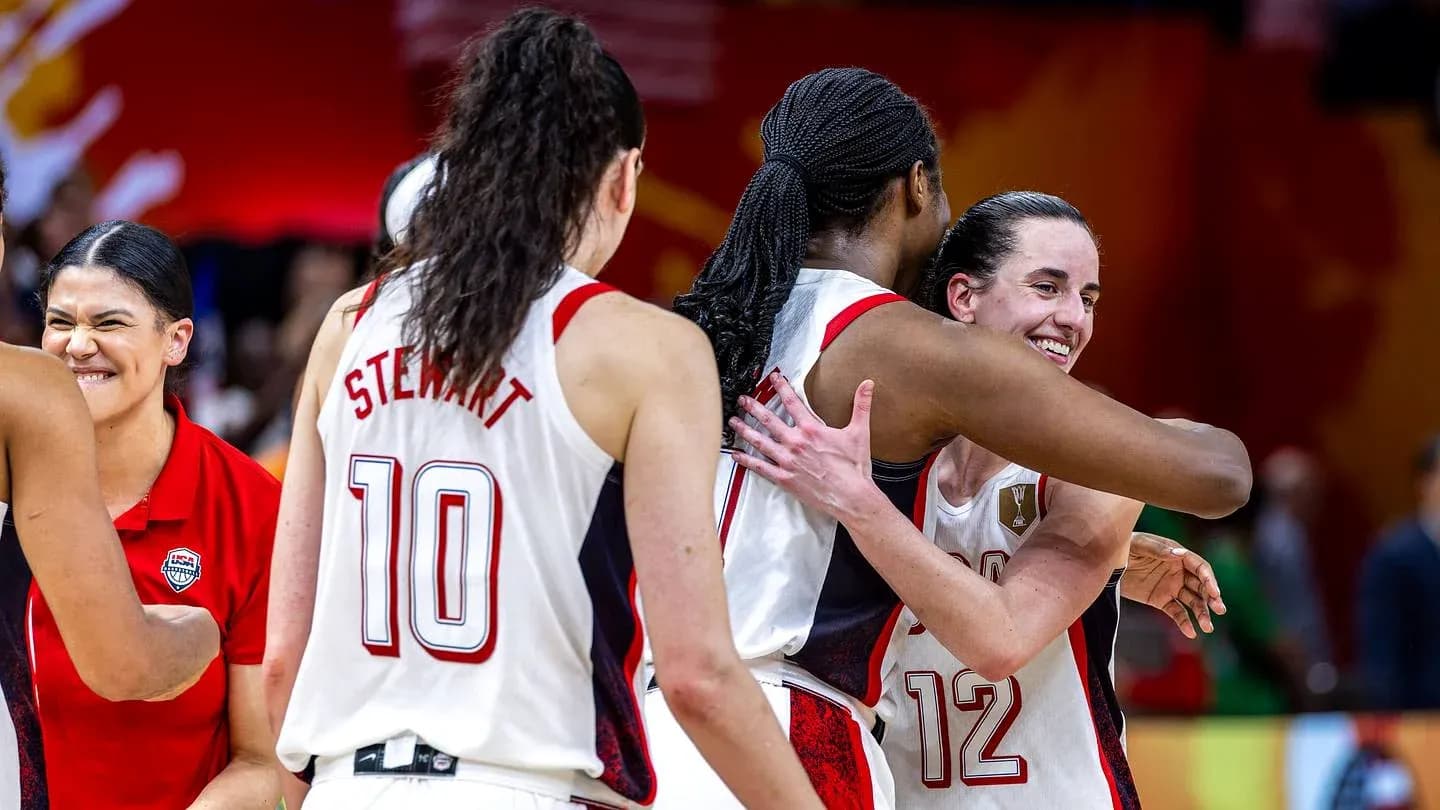
Team USA’s women didn’t just win a World Cup in France. They broke through the noise of America’s most crowded sports weekend and dragged a global tournament into the mainstream U.S. conversation.
A Final That Cut Through the Chaos
On a Sunday owned by the NFL and shared with the U.S. Open, USA vs. France still pulled in 1.2 million average viewers across HBO Max, TNT, and truTV. The Americans rolled to a 97-79 win; the numbers were just as ruthless.
That audience represents a 158% jump from the 2022 FIBA Women’s World Cup final and a staggering 750% leap from the 2018 final. Same trophy, same stage, completely different universe.
This wasn’t a one-off spike. It was the crest of a wave.
Semifinal Surge, Historic Company
One day earlier, the semifinal against Spain averaged 938,000 viewers. That figure made it the fourth most-watched FIBA Women’s World Cup game ever. The final against France ranked third all-time.
Only two games in the tournament did better, and both involved the same team. Team USA’s near-upset scare against Italy drew 1.3 million viewers, the highest mark of the event. Their final group-stage game against Czechia matched the France final at 1.2 million.
So the two biggest games by stakes weren’t the two biggest by audience. That’s not a reflection of interest in the team. It’s a reflection of the calendar.
The NFL Problem — and the U.S. Open Squeeze
The World Cup final tipped off in the teeth of Week 1 of the NFL regular season. That’s the immovable object of American sports television. Every network builds around it. Every other sport feels it.
The championship in France unfolded as the NFL kicked off a new year and as the U.S. Open men’s final, featuring American Ben Shelton, grabbed its own share of the spotlight. Any other Sunday in September, those basketball numbers likely climb even higher.
The semifinal against Spain had its own traffic to fight. No NFL, but wall-to-wall college football. Different league, same issue: a crowded screen, split attention, remote in constant motion.
It’s no surprise, then, that media voices pushed back against the scheduling. The tournament’s showcase games ran headlong into the two most powerful football properties on the calendar and a Grand Slam tennis final. The stage was big. The timing undercut it.
Growth You Can’t Ignore
Yet even with all that working against it, the World Cup delivered a clear message. Averaging more than a million viewers for a women’s basketball game in the middle of NFL Sunday is no small feat. It’s a marker of where the sport now sits—and where it’s headed.
The numbers don’t just speak to the brand of Team USA. They speak to the faces driving it.
Caitlin Clark is already the headline act, a ratings engine in sneakers. Paige Bueckers brings a polished, all-court game and a built-in following from years under the spotlight. Angel Reese adds edge, personality, and a fan base that travels with her every step.
This World Cup felt like a preview. A trailer, not the full film.
They showed what they can do in a FIBA setting, both in terms of basketball and buzz. The audience followed them through group scares, statement wins, and a final that went head-to-head with America’s most powerful sports product and still held its own.
The next question isn’t whether people will watch. It’s how big the stage can get when the calendar finally works in their favor.
Circle Paris 2028. By then, these young stars won’t just be the future of Team USA—they might be the ones reshaping what “must-see” means in women’s basketball.