.svg&w=384&q=75 "logo")
Team USA Faces Hungary in FIBA Quarterfinals: Win or Go Home
Team USA wakes up early in Berlin on Thursday with a familiar burden on its shoulders: win or go home, and keep a dynasty alive.
The defending champions step into the FIBA Women's Basketball World Cup quarterfinals against Hungary at Berlin Arena, with tipoff set for 9:30 a.m. local time. It’s a game made for coffee and commitment back in the United States — 3:30 a.m. Eastern, 12:30 a.m. Pacific — the kind of start time that tests how badly fans want to see history continue in real time.
In Berlin, it’s the first game of the quarterfinal slate. On FIBA’s schedule, it’s part of the opening session. In reality, it’s something bigger: the latest checkpoint in a run of dominance that has reshaped the sport.
A dynasty on the clock
Team USA arrives in the knockout rounds carrying a staggering résumé. Four straight Women's World Cup titles. Eleven overall. The last one came in Sydney in 2022, when the Americans brushed aside China 83-61 in the final and underlined the gap between themselves and the rest of the world.
That kind of history doesn’t just follow a team. It defines it.
This 2026 roster, though, is more than a continuation. It’s a pivot. A'ja Wilson and Breanna Stewart anchor the group as established global stars, the standard-bearers of a program that expects gold every time it gathers. Around them, the next wave has arrived on the biggest senior stage: Caitlin Clark, Paige Bueckers, Angel Reese. New names at World Cup level, but already some of the most scrutinized and talked-about players in the sport.
The blend has turned Team USA into the tournament’s main attraction. Established power. Fresh storylines. All of it under the pressure of a “title or bust” expectation.
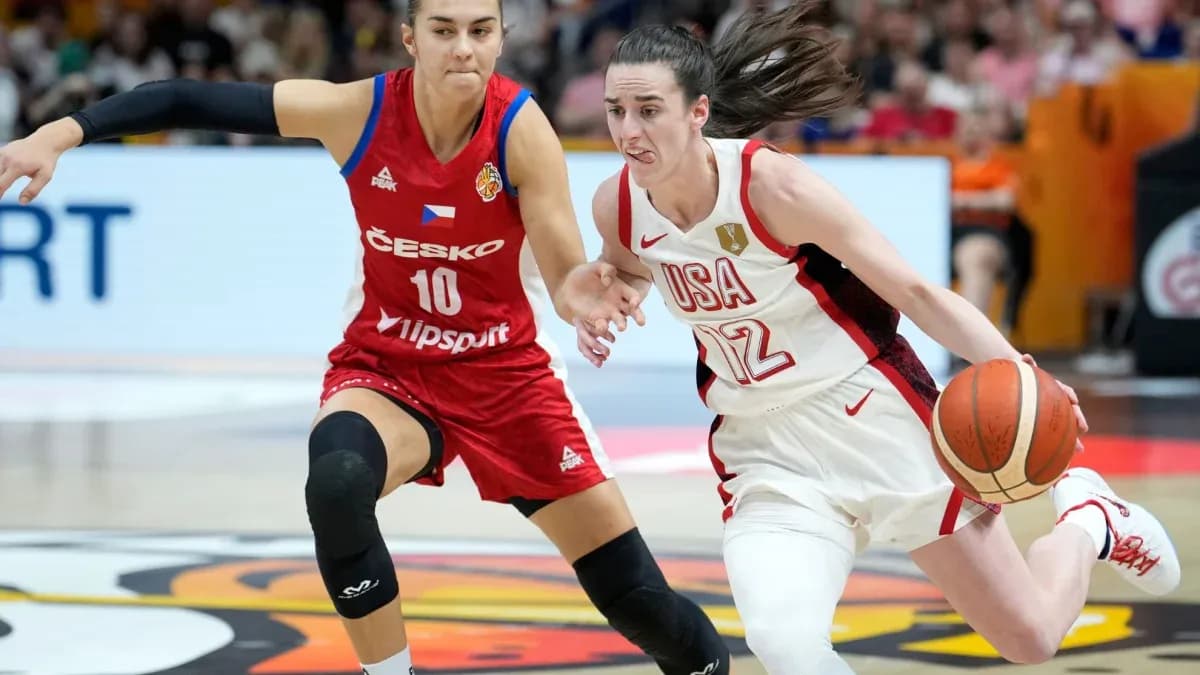
They’ve already shown both faces of a champion in Berlin. The Americans ripped through China in their opener, then overpowered Czechia with the kind of depth and firepower that tends to break games open before halftime. For stretches, it looked like the usual script: talent, tempo, inevitability.
Italy tore that script up.
In a grinding, nervy contest, the United States had to claw its way to a 55-52 win that was far from pretty but absolutely priceless. That narrow escape locked up top spot in Group D and a direct path to the quarterfinals, skipping the qualification round that awaited the second- and third-place teams in each group under the 2026 format.
It also served as a sharp reminder. Even for the four-time defending champions, margins can shrink quickly when the stakes rise.
Hungary’s shot at history
Hungary arrives from the other side of the bracket tension. Forced into a qualification game after its group finish, it had to earn its place in the last eight the hard way. It did, and in doing so set up a quarterfinal that carries very different weight for the two nations.
For the United States, this is the next step in a mission they’ve completed four tournaments in a row.
For Hungary, it’s a shot at something the country hasn’t touched in nearly three decades.
FIBA’s own preview paints Hungary as a confident, dangerous unit built around its interior strength. Dorka Juhasz, the EuroLeague MVP, and Virag Takacs-Kiss give them a serious presence near the rim, the kind of frontcourt pairing that can slow the pace, punish mistakes and drag a game into the halfcourt, where upsets are born.
Hungary is chasing its first World Cup semifinal appearance since a landmark run in 1998. That’s the scale of the opportunity: one win to match a generation-old high point.
On paper, Team USA is the clear favorite. The deeper bench. The bigger names. The heavier expectations. But Hungary’s path into the quarterfinals — through a do-or-die qualifier — means it arrives battle-tested and already in elimination-mode rhythm.
Rest, rhythm and rising stakes
The format has handed the Americans a small but meaningful edge. By winning Group D, they stepped straight into the quarterfinals, gaining extra days to scout, rest and recalibrate after that scare against Italy. The teams that finished second and third had to survive single-elimination qualifiers just to get here.
Extra preparation time for a coaching staff with this much talent at its disposal is no minor detail. It allows rotations to tighten, matchups to be fine-tuned and roles to be sharpened before the real pressure hits.
That pressure only intensifies from here.
Win on Thursday, and Team USA moves into Saturday’s semifinals, still on course for a fifth consecutive crown. Lose, and the four-time defending champions exit before the final weekend, a shock that would reverberate far beyond Berlin.
The semifinals are set for September 12, with the third-place game and the championship final to follow on September 13. Those dates sit in the background for now, like distant landmarks on a road the Americans have come to know well.
First, they have to get past Hungary.
Tipoff comes at 9:30 a.m. in Berlin, 8:30 a.m. in the UK, 3:30 a.m. ET. FIBA lists every game as available live or on demand through Courtside 1891 on DAZN, subject to local rights, giving fans around the world a way to watch the bracket tighten.
One game. One slip allowed? None.
For a team chasing a fifth straight world title, the margin for error is about to shrink to almost nothing.