Bukayo Saka's Injury Concerns: Arteta's Balancing Act
Mikel Arteta is starting to sound less like a coach managing a star and more like a guardian trying to protect a prized asset from being run into the ground.
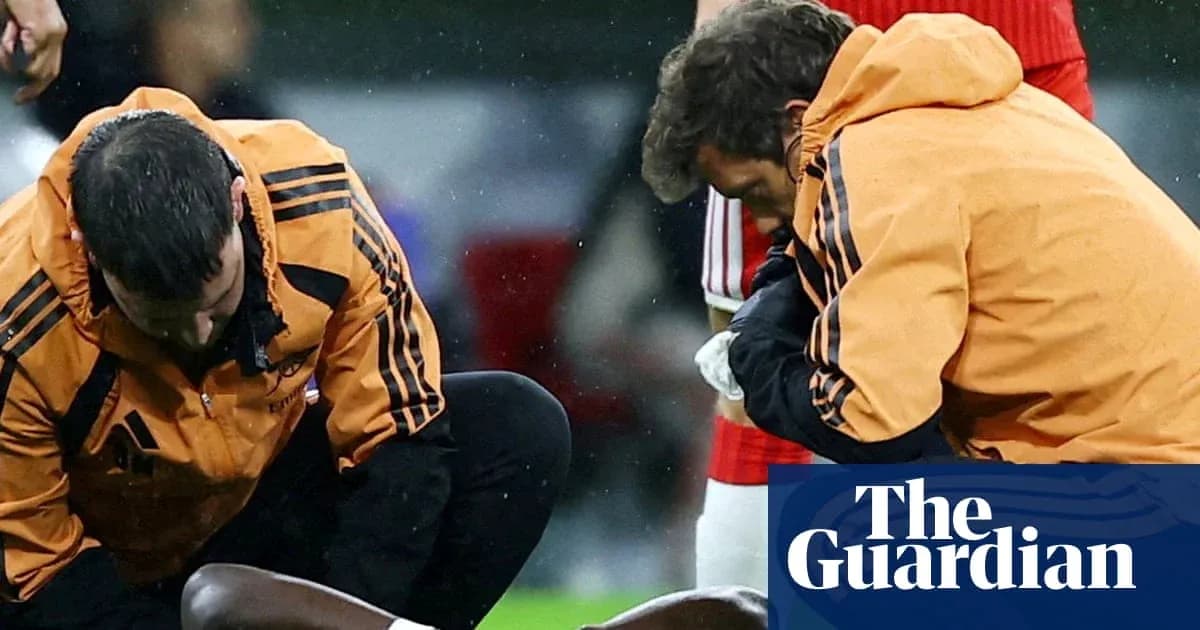
Bukayo Saka, Arsenal’s relentless ever-present for three seasons, is now the subject of growing concern at the club after yet another injury – this time a thigh problem that has him facing an MRI scan and a potentially lengthy spell out.
A body starting to protest
Saka limped off in the 2-2 draw with Bayern Munich in the Champions League, and the early signs are not encouraging. Arteta revealed the 25-year-old had “quite a lot of fluid in the area so it was difficult to understand the extent of the injury”, a phrase that rarely points to a quick turnaround.
He is already ruled out of Saturday’s Premier League game against Everton, and Arsenal privately fear a grade-two tear that could sideline him for up to six weeks. For a player who once felt indestructible, the numbers over the past year tell a different story.
Since September 2023, Saka has suffered 11 separate injuries. Hamstring, hip, achilles – the list has grown steadily, each knock chipping away at the image of a winger who used to glide through seasons almost untouched.
Last season he missed a large portion of the campaign with those issues, then another hamstring problem hit in 2024-25. The pattern is no longer a blip. It is a trend.
Arteta’s balancing act
Arteta insists he has already started to change how he uses his talisman.
“It’s certainly been different in the last year or so,” he said when asked whether Saka remains robust enough to start every match. The Arsenal manager did not hide from the reality of the modern schedule. “The demands that we are putting on every player are immense. The amount of games, the intensity of those matches, the international competitions, the times as well between games are getting narrower.”
The planning was visible last week. Saka did not start against Lille in the Champions League, a decision Arsenal framed as precautionary rather than tactical. Arteta laid out the calculation: “Bukayo against Lille didn’t start the game because we knew what was happening. We have to play three times in less than six days.”
That kind of run has become the norm for elite clubs. For players like Saka, who carry both club and country, the margin for error is tiny. Arteta described the reality bluntly: matches that go “until the last minute you are there, you are chasing the game, you want to win. The necessity is to win every game.”
So Arsenal prepare, rotate where they can, manage workloads, and still the injuries keep coming. “We are preparing the players for those scenarios and we do the best that we possibly can,” Arteta said, a line that sounded as much like a plea to the calendar as an explanation.
From iron man to fragile symbol of the modern game
For three years, Saka looked untouchable. Between 2021 and 2024 he missed only three Premier League games. He broke the club record with 83 consecutive top-flight appearances, a staggering run in an era of high-intensity pressing and constant travel.
He is already closing in on 300 appearances for Arsenal, the club he joined at seven years old. That kind of mileage, accumulated so quickly, is now at the heart of the debate around his future management.
Arsenal recognised his importance with a lucrative new contract in February, a deal that placed him among the highest-paid players in the club’s history. It was a statement: this is the player to build around for the next decade.
With that comes a responsibility to protect him.
Asked whether he feared burnout, given Saka made his Arsenal debut just three months after his 17th birthday, Arteta pushed back. “I don’t have that feeling at all,” he said. But his next words underlined how delicate the situation has become.
He spoke of the need “to create the right ecosystem around the player to fulfil his qualities” and stressed that when Saka does return, Arsenal must “really understand… how we are going to manage his load, what he is capable of to sustain having an impact in the team.”
It was a manager talking less about the next game and more about the next five years.
Door opens for a record-breaking teenager
Saka’s enforced absence now creates a vacancy on the right that would once have felt unthinkable. Into that space steps a 16-year-old who has already made history.
Max Dowman has played only nine minutes of league football this season, but those nine minutes were enough to write his name into the record books. His goal against David Moyes’s side in March made him the youngest scorer in Premier League history, a moment that instantly changed the way people talked about him.
Arteta has not forgotten it. “There is something inevitable to go back to that memory and the feeling of the moment,” he said. “That’s with us, that’s going to stay in that stadium for a long, long time.”
The Arsenal manager has been careful not to smother Dowman with hype, yet his trust is obvious. “He’s training and every time he’s got a moment to play, he’s showing that he’s a player that is going to impact the game. For sure he’s going to have minutes.”
Everton at the weekend could be the next step in Dowman’s rapid rise. It is a big stage for a teenager, but Arsenal have never been afraid to lean on youth when the opportunity arises. They did it with Saka. They may now do it again.
The question that lingers is whether Arsenal can finally learn from the past with their new prodigy, while still finding a way to keep their old one on the pitch.