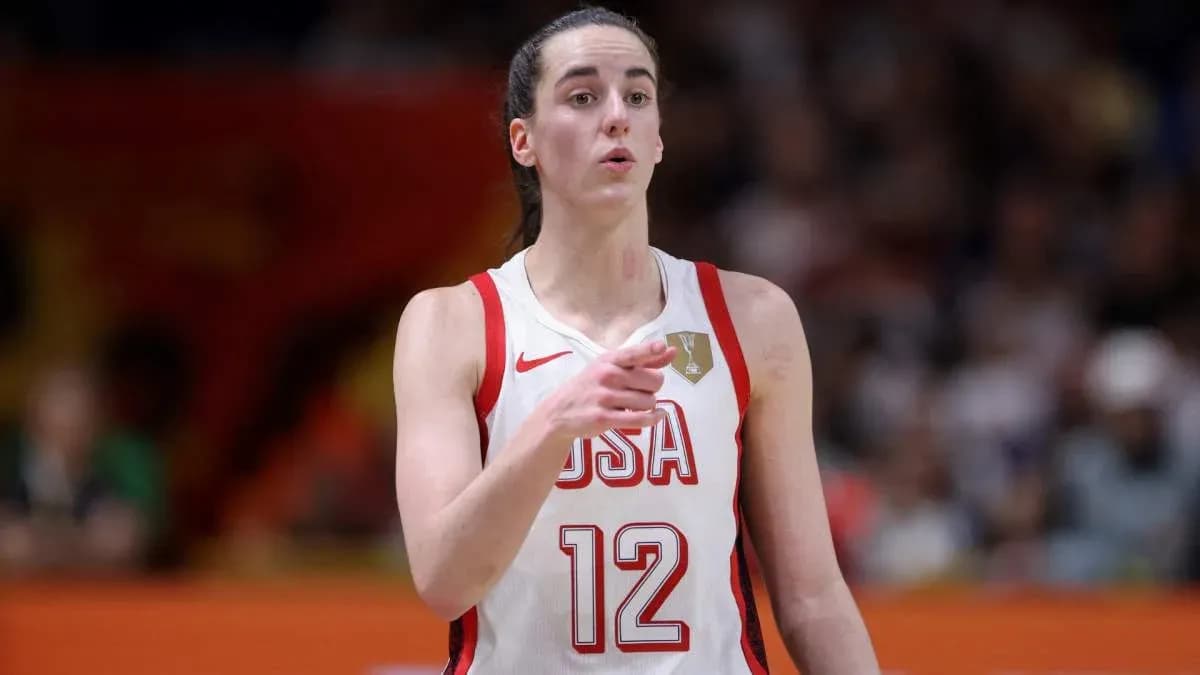
Team USA Triumphs in Berlin as Caitlin Clark Sparks Victory
Team USA walked into a storm in Berlin and walked out world champions.
Down by double digits to a sharp, confident France side, the Americans looked briefly rattled in Sunday’s 2026 FIBA World Cup final. The ball stuck. The shots rimmed out. France, fluid and fearless, pushed the lead to 14 and threatened to turn the night into a European coronation.
Then the game flipped.
Breanna Stewart steadied everything, as she so often does. The veteran forward controlled the glass, dictated the tempo and, by the end, had a stat line that screamed MVP: 22 points, 10 rebounds, four assists. Every time the U.S. needed a grown-up possession, the ball found Stewart and the chaos quieted.
But the surge that lit the fuse came from the bench.
Caitlin Clark checked in and the entire rhythm of the final changed. She finished with 12 points and three assists, but the numbers only hint at the impact. Her two made threes landed like punches, especially the one that sliced through French momentum right before halftime.
France had built that 14-point cushion with crisp execution and relentless belief. Clark’s first three nudged the door open. Her second, a tough corner bomb to trim the deficit to two before the break, blew it off the hinges.
“It was a good time to come alive,” Clark said afterward, explaining that she knew her team needed a jolt and that her minutes had to matter. She praised France’s “incredible” tournament, but she also laid out the turning point: once the U.S. fell behind by 11, they finally found their footing, clawed back, and never let go.
The third quarter became a statement. Team USA came out of the locker room with a different edge, locking in defensively and running France off the floor. They won the period 30–12, a near-perfect 10-minute stretch that turned a nervy final into a 97–79 rout.
Stewart’s dominance framed the night, yet she was far from alone. Jackie Young delivered a complete, quietly ruthless performance: 18 points, six rebounds, five assists, filling gaps and punishing every French mistake. Kahleah Copper added 15, attacking the rim and keeping France’s defense permanently off balance.
By the time the fourth quarter settled in, the U.S. weren’t just chasing gold. They were dictating terms.
Clark’s “Aura” Captures the Moment
Back in Indiana, the Fever needed only one word to sum up what Clark brought to the world stage.
“Aura.”
The franchise posted the caption alongside a photo of Clark during the medal ceremony, a simple message that matched the way the night felt. She didn’t start. She didn’t lead the scoring. Yet when the game tilted, she was at the center of the shift.
Fans flooded the comments, echoing the vibe. “Effortlessly ✨🔥.” “Aura off the charts.” “Shows up always in the big moments.” One declared, “Caitlin Clark is winning that championship next! Watch out.” Another pointed to the exact instant the final swung: “GOAT. GAME CHANGED WHEN THAT 3 WAS HIT AT HALF.”
It wasn’t just about the shots. It was about the readiness. As one fan put it, “CC stayed ready! A shooter is never out of it for long. Her number was called and she delivered.”
The Fever didn’t stop at Clark, either. They also celebrated Aliyah Boston and coach Stephanie White, recognizing the franchise’s deep imprint on a Team USA side that had to dig itself out of real trouble to lift the trophy.
From World Stage Back to the Playoff Race
The medals will shine for a while. The break will be brief.
After the World Cup, Clark and her teammates return to a WNBA season that offers no time for nostalgia. The Indiana Fever resume on September 18 against the Toronto Tempo in a game that carries real weight in the playoff picture.
Indiana sit in a tight battle for a Top 4 seed, and the schedule gives them little margin for error. After Toronto, the Fever host the Washington Mystics on September 20 and the Minnesota Lynx on September 22, then close the regular season on the road at Target Center against the Lynx on September 24.
The World Cup showed how Clark can swing the feel of a game in a matter of possessions, how Stewart can anchor a team under pressure, how stars like Young and Copper can turn a deficit into a demolition.
Now the question shifts from Berlin to Indiana: can that same aura carry the Fever into the top tier of the WNBA when the stakes turn domestic and the margin shrinks again?