Stephen Fleming Takes Charge as England's Test Coach Ahead of the Ashes
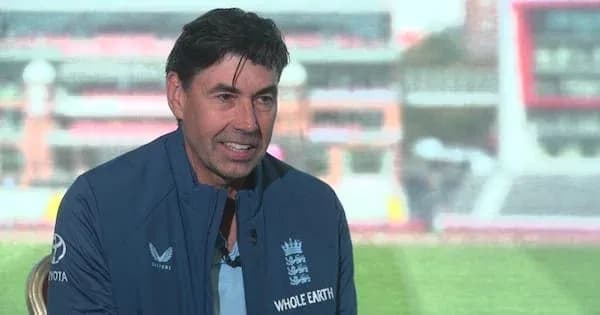
Stephen Fleming has never been one to chase the spotlight. It tends to find him anyway.
Now, one of New Zealand’s greatest cricket minds has walked straight into its fiercest glare: the England Men’s Test head coach job, and with it, the Ashes.
He calls it an opportunity “too good to refuse.” You can see why.
A Kiwi in charge of the old enemy
For a New Zealander, the Ashes carries a different edge.
“New Zealanders love beating Australia so that doesn’t change,” Fleming told 1News, admitting he has to “suppress” his excitement at the thought of being part of cricket’s most storied rivalry from the England dressing room.
As a player, Fleming built his reputation in whites. Ten years as Black Caps captain from 1997 to 2007. Twenty-eight Test wins. One of the finest batters and thinkers his country has produced. He retired from international cricket in 2008, but never from the game’s deeper questions.
Now, at 53, he steps into what he calls “probably the most prestigious position in world cricket” for a cricketer. England. Test cricket. The Ashes. The whole package.
He has history in the UK. County cricket seasons that he still describes as some of his best days. A long-standing respect for English cricket and its traditions. The pull was powerful.
But it was not automatic.
“You go through it and think, ‘Can I make an impact?’” he said. The hesitation was real. So was the lure.
England in turmoil, Fleming in demand
England did not come to him from a position of strength.
A 4-1 Ashes defeat to Australia at the start of the year. A 2-1 Test series loss to New Zealand in June. Brendon McCullum sacked as Test coach in July, though retained for T20 and ODI duties. Ben Stokes, the former captain, retiring during the third Test against New Zealand, then stood down for the second Test as he and a teammate were investigated for breaking a midnight curfew. A run of late-night, alcohol-fuelled incidents has stained the team’s image.
This is the environment Fleming walks into.
When the England job opened up, he had just stepped away from an 18-year stretch in the Indian Premier League, most notably as the architect behind Chennai Super Kings’ sustained success in the T20 era. The offer came fast.
“The job became vacant and it was probably three, four days which wasn’t a lot of time to process leaving one job after 18 years and look at another one,” he said. So he sat down with his family. They went through it all.
Once he “soaked it all in,” something started to burn in the pit of his stomach. The more he learned about the role, the people, the scale of the challenge, the stronger that feeling grew.
McCullum, his former player, close friend and business partner, was central to that process. The pair go back to McCullum’s Black Caps debut, with Fleming as captain. Their bond has only deepened since.
“It’s a challenge at times but he’s great,” Fleming said of their relationship.
McCullum gave him the unvarnished truth. How tough the job is. How much he enjoyed it. How proud he was of what England had done under his watch. And yes, how much it hurt to lose it.
“He was a bit heartsore about losing the position, no doubt about it but he was also very encouraging about the opportunity that this presented to me,” Fleming said.
The two will now work alongside each other in the England setup, sharing players, resources and schedules across Test, ODI and T20 cricket. Fleming likes the idea of a familiar face with a “professional slant” helping to push for “some great things.”
Who else will be in his coaching team remains under wraps. He’s still finalising the staff and is not yet ready to go public.
Back to his roots: red-ball cricket
Some critics have questioned whether a man who spent 18 years in franchise T20 is the right fit to revive England’s Test fortunes. Fleming doesn’t flinch at the suggestion. He rejects the premise.
“My DNA was playing in the whites and captaincy and the challenges and the rewards that came through having a great opportunity to captain New Zealand for so long,” he said. “I was brought up in the red ball and learned the white ball.”
T20, he admits, has been a big part of his professional life. But his “deep passion” is Test cricket. His methods, he says, are built for it. Longer planning cycles. More layers. More “substance and strategy.”
He points to one of cricket’s quirks: “We are one of the only sports still that is captained from the inside out,” he said. So his job is to ensure Joe Root and the other leaders are “well equipped.”
The goal is to raise England’s cricket “smarts” so that in the hardest sessions, under the heaviest pressure, the players can adapt. That’s the part he relishes.
“That’s strategy, that’s creating an identity piece, a belonging piece, some standards,” he said. “Making sure that as a team no matter who you represent, that you’re representing it well.”
It is the same philosophy he honed as Black Caps captain. Now he intends to transplant it into the English system.
The Kiwi coaching mindset
Fleming was asked whether his laid-back Kiwi manner fits England’s needs right now. He pushed that question towards the England and Wales Cricket Board, noting that the UK is long accustomed to foreign coaches, particularly in football.
What he did emphasise was the New Zealand mentality.
“We don’t have the resource that other bigger countries have, that’s not just in cricket,” he said. “So what we do is we look outside the square and we squeeze everything we can out of the stone to make sure that we can compete on the world stage, that’s our DNA, that number 8 wire DNA that we pride ourselves on.”
That scarcity shapes the way New Zealand coaches think. It forces them to value relationships because “you can’t burn them in New Zealand if you haven’t got much resource.” It also drives them to focus on what they can control: culture, standards, and living those values every day.
His vision for England is simple in its wording, daunting in its reality: he wants them to be the best Test team in the world.
“It is a challenge, it’s the pinnacle,” he said. “There’s a lot of attention on this role in England and media has been talked about and that’s all part and parcel of being in the privileged position of it.”
He believes there is “room to move” on the cultural side and that players are craving that sense of belonging.
Inheriting Bazball – and its backlash
Fleming will also inherit the legacy of Bazball.
The aggressive, fearless style introduced by McCullum and Stokes turned a struggling England into a thrilling, winning side. It asked players to be brave, to back their instincts, to treat risk as a tool rather than a threat.
Fleming was effusive about what they achieved.
He called it “quite remarkable” and said the pair “culturally changed the cricket landscape.” It began, fittingly, against New Zealand, when England beat the Black Caps at home in a series that made the cricket world sit up.
“The courage that both of those leaders had to do that was immense so I have huge respect towards that,” Fleming said.
He also recognises the game has moved again. Once England set those standards, other teams adapted and caught up. The plan, he admits, was “challenged” towards the end of the McCullum–Stokes partnership.
Fleming does not talk about abandoning that mindset. He talks about evolving it.
He also feels a broader duty. With Test cricket under pressure from the shorter, flashier formats, he believes those in charge have an obligation.
“We have a responsibility to entertain and play the game well,” he said.
Old loyalties, new battles
Fleming has not yet allowed himself to picture walking out against New Zealand as England coach.
“Thankfully there’s two more years to get some performances under the belt and then we’ll come across that,” he said. “But it will be a good battle.”
He insists New Zealand cricket was “always a consideration” for him, but the England role was the concrete offer on the table. As for whether the Black Caps needed him, he was quick to deflect.
“No, they’re too good. They’re set, they’re doing so well,” he said, adding he has the “utmost respect” for what New Zealand has achieved and for players he knows intimately.
For now, his focus is elsewhere. He missed England’s recent Test series against Pakistan because of commitments at home and still has commentary obligations for T20 matches when India tours New Zealand, but believes he is now in a position “to give it everything.”
His first Test series in charge comes in December, when England head to South Africa for a tour running into early January. A hard, uncompromising start.
Cleaning up off the field
The late-night incidents that have dogged England’s reputation have not escaped his attention.
Fleming called them “disappointing” and spoke of an education process to lift standards. He sees Root, 35, and a former captain from 2017 to 2022, as a model for others.
“Very similar to Kane Williamson where they epitomise everything great about how you conduct yourself by still being a great player,” he said.
“There’s work to be done,” he added. But he will not be setting more midnight curfews. Control will come from culture, not clocks.
Fleming describes this as a homecoming to the format that shaped him. England see it as a reset. Somewhere between his red-ball instincts, New Zealand’s resourceful mindset, and the lingering embers of Bazball, a new identity has to emerge.
The Ashes will not wait.