.svg&w=384&q=75 "logo")
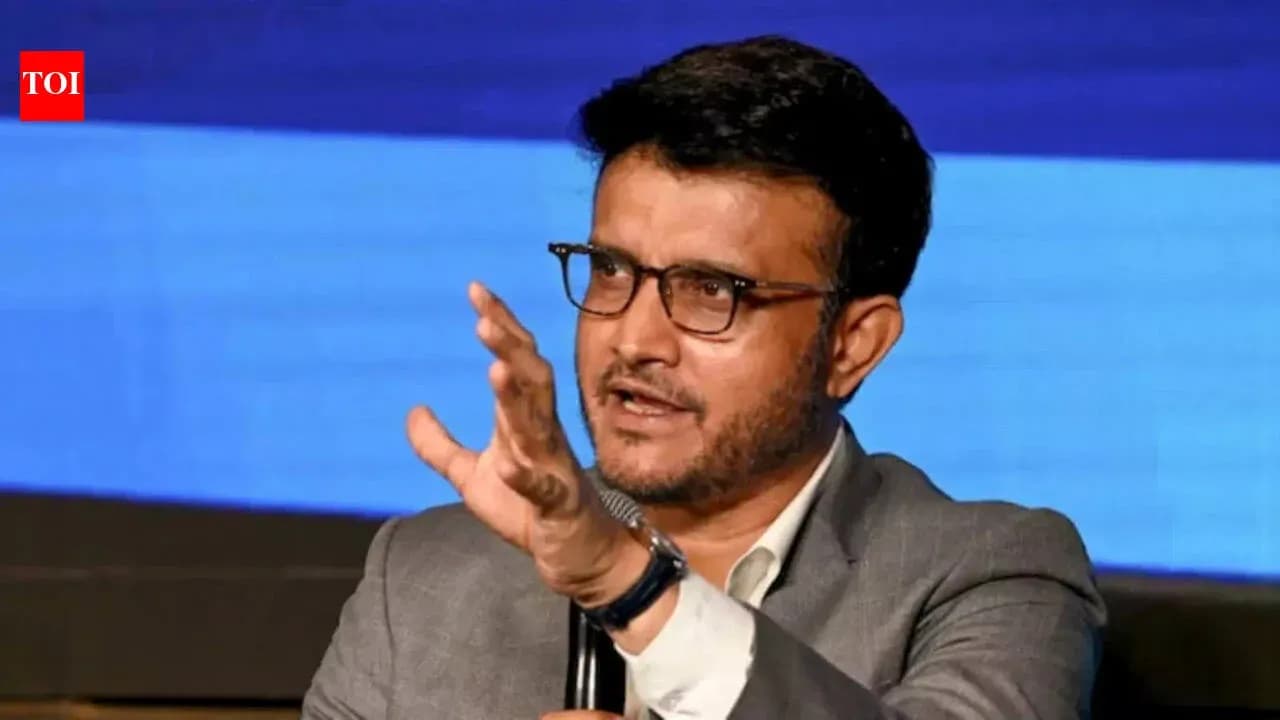
Sourav Ganguly's Impact on Indian Cricket
Sourav Ganguly did not just change fields and batting orders. He changed how India looked its opponents in the eye.
Former India wicketkeeper-batter Deep Dasgupta has lifted the curtain again on that shift, recalling how Ganguly’s unapologetic swagger — the “I am the king” mindset — slowly seeped through an Indian dressing room that had long preferred silence to confrontation.
Speaking on The Great Indian Cricket Show on Doordarshan, Dasgupta traced the roots of India’s modern, combative identity back to the early 2000s and to one man at the helm.
From Silent Resolve to Open Fire
Dasgupta played eight Tests and five ODIs for India, straddling the period when the team moved from being quietly defiant to openly aggressive. The trigger, he says, was not just tactics or selection. It was personality.
Before Ganguly, the Indian response to sledging followed a familiar script. Take the abuse. Internalise it. Let the bat or ball answer.
Under Ganguly, that script was ripped up.
“Under Ganguly, if someone sledged, we started to give it back,” Dasgupta recalled. The team did not abandon the old method of channeling anger into performance, but it added a new layer. “Rather than saying, ‘I will channel it’, while we used to channel it, we would give it back as well.”
The nickname told its own story. “His nickname is Maharaj. So, he's always had that idea that ‘I am the king.’ And it started reflecting on the team as well,” Dasgupta said.
Ganguly’s self-belief was not a private trait. It walked out with him at the toss, it stood at cover, it argued with umpires, it stared back at fast bowlers. And gradually, a previously restrained group began to mirror that energy.
Australia: Two Tours, Two Mindsets
For Dasgupta, the contrast between his first tour of Australia and the 2003-04 visit underlined just how far India had travelled in a few short years.
Australia, with its hard pitches and harder words, had long been the game’s most hostile classroom. Indian teams had often treated the verbal barrage as background noise, using it as fuel but rarely responding in kind.
That changed.
“Now, while we were still doing that, we were expressing it as well,” Dasgupta said. “I think between my first tour and my last tour in Australia in 2003, you could see that change. Earlier, it was controlled and internal. But by the time we came to 2003, if someone said something, we would give it back.”
This was not mindless bravado. It was a statement: India would no longer play the role of polite visitors overseas. They would compete, argue, gesture — and win.
The Captain Who Redrew India’s Edges
Ganguly’s numbers as captain tell one story. The mood of his team tells another.
He led India in 196 international matches, winning 97, losing 79 and drawing 15. In Tests, he captained in 49, with 21 wins, 13 defeats and 15 draws. Those bare figures sit alongside some of the most significant results in Indian cricket history.
The 2001 Border-Gavaskar Trophy, with that epic fightback against Australia. The 2002 Test win at Leeds, where India batted England out of their own backyard. The 2003 triumph in Adelaide, a landmark victory that signalled India’s intent on foreign soil.
His white-ball record carried the same edge. India reached the 2003 World Cup final under his leadership, played bold cricket in England to win the NatWest Trophy, and shared the 2002 Champions Trophy with Sri Lanka after a washed-out final.
These were not isolated peaks. They were markers of a team learning to travel with ambition, not insecurity.
Dasgupta’s memories of that period go beyond tactics and trophies. They speak of a cultural rewire, a squad that stopped just absorbing pressure and started throwing it back.
The question for every generation that has followed is simple: who carries that “Maharaj” attitude now, when the noise rises and the words start to fly?