.svg&w=384&q=75 "logo")
Sophia Dunkley's Century Powers England to Competitive Total Against Ireland
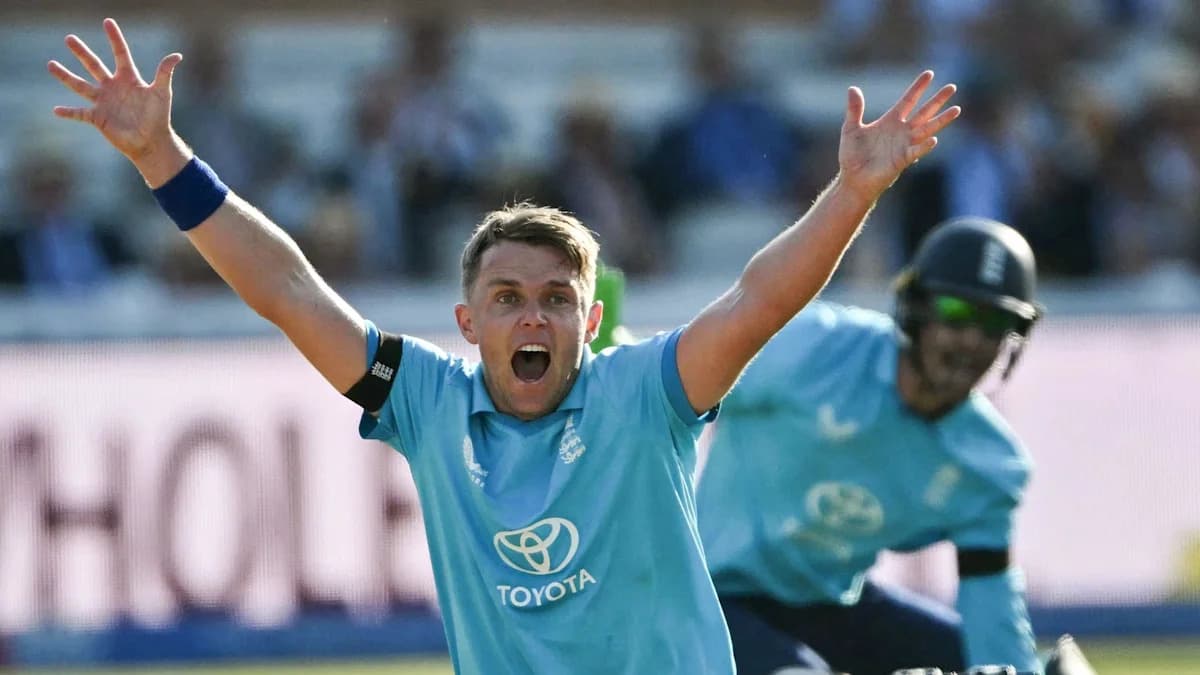
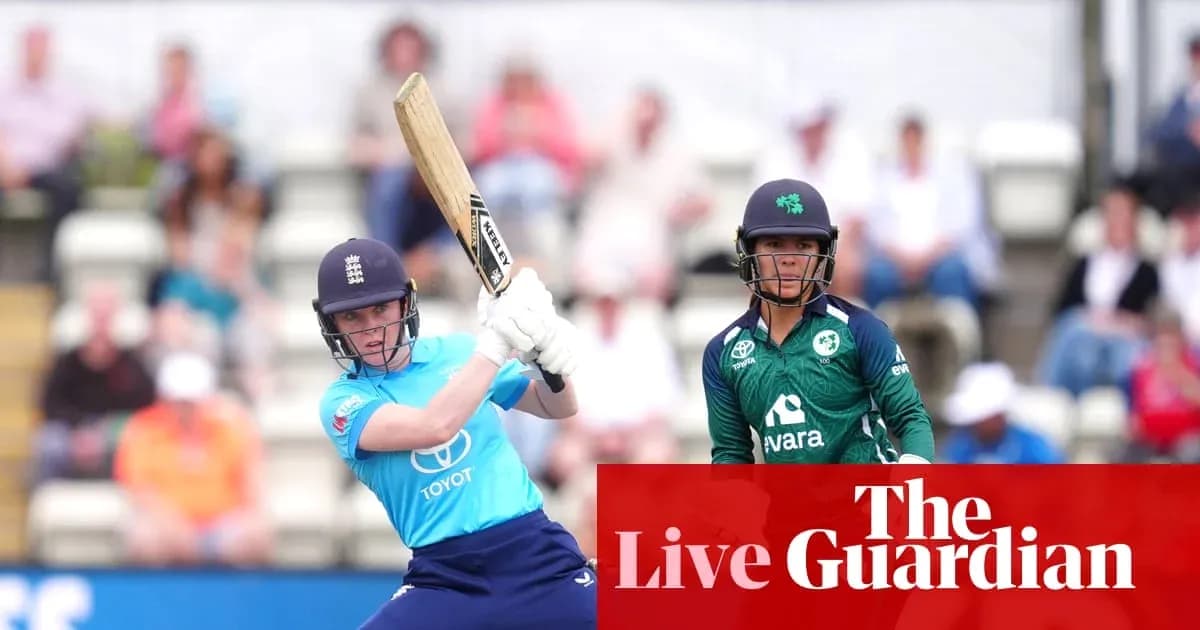
Sophia Dunkley’s commanding century lit up New Road as England’s batters surged, stumbled, then scrambled to a competitive total against an Ireland side that refused to go quietly.
This was Dunkley’s day, though. Everything else orbited around her.
Dunkley in complete control
When Grewcock nudged a single in the 29th over, the stage cleared for Dunkley. She adjusted her helmet, took guard, and promptly pulled Arlene Kelly for four to move to 99. The next ball, worked calmly for a single, brought up a second international hundred – 100 from exactly 100 balls, a perfectly weighted innings that grew from a slow, watchful start into something far more assertive.
Helmet off, bat raised, she allowed herself a rare show of emotion. It had been that kind of knock: controlled, dominant, and increasingly ruthless.
By then she already had Ireland’s attack on a string. Earlier, she had driven Kelly through the off side and cut with authority, collecting her eleventh four by the 26th over and looking utterly untroubled. She toyed with the pace variations, dispatching a slower ball from Kelly over long-on, then rocking into the 90s with a leg-side hoe off a wayward delivery.
Around her, England built steadily. Grewcock, initially becalmed, finally broke free with a classical on-drive for her first boundary after 26 balls, then followed with a less orthodox but effective swipe past cover. A checked drive for four in the 30th over underlined her growing confidence. England, at that point, were “sailing away” at the halfway mark, 146 for 1 and in complete control.
Ireland hit back through Murray and McBride
The momentum turned in flickers, then all at once.
First came the end of Grewcock. Having worked hard for her 35, she shuffled into position and simply chipped a return catch back to Murray, who stooped to take it by her ankles. England 183 for 2, the partnership broken just as it looked set to bury Ireland.
Capsey’s stay was brief and brutal in its misfortune. She had just turned McCartney into the leg side to bring up England’s 200 when fate intervened. Dunkley drove straight, McCartney got the faintest touch on the ball, and it cannoned into the stumps with Capsey stranded out of her crease. Run out for 10, trudging away after a “stinker” of a dismissal.
Dunkley pressed on. A reverse-sweep off Murray brought three; the scoring ticked in neat singles as she eased into the 110s. But her ambition finally cost her. On 119, she went searching for her first six of the innings, lifting McBride towards deep midwicket. It was a beautiful strike, just not quite long enough. Prendergast, Ireland’s tallest fielder, balanced herself on the rope and held the catch. The heart of England’s innings walked off at 214 for 4, and with it went the sense of inevitability.
Ireland sensed their moment.
McBride had already kept things tight, closing out her spell with just one for 53 from ten overs, a tidy return amid the pressure. McBride and McCartney combined to drag the rate back, as England’s boundary flow suddenly dried up. Singles replaced swagger. The rope, so regularly found earlier, went untouched for over three overs.
Kemp and Gibson counter, then the wobble
Into that lull stepped Freya Kemp and Maia Gibson, charged with reigniting the innings.
Kemp made her intent clear almost immediately. She stood tall, then crouched low to whip Little through the covers for four – a shot full of timing and authority. A slip in the deep gifted her another boundary via a “majesterial” cut, and she began to pick off singles with Gibson as Ireland’s fielding started to fray. A fumble at backward point allowed Gibson to cash in with a cross-batted four that flew over the infield and raced away.
The pressure finally told on McCartney, who was driven for England’s first six of the innings: Gibson clubbing her over long-off “like a caveman on an away day”. Kemp, meanwhile, threaded the gaps, rotating the strike and punishing anything marginally off line. A glorious extra-cover drive off Murray, beyond the dive of Gaby Lewis, underlined England’s second-wave assault.
Then came the twist.
On 23 from 21 balls, Kemp launched Murray high, seemingly into orbit. It looked gone. Instead, it dropped agonisingly on the rope, where Lewis, at full stretch and falling backwards, pulled off a superb catch. A key cameo ended just as it threatened to become something more damaging.
Murray was not finished. In the same over, Dean, having launched her first ball – a full toss – for four, feathered a more generously flighted delivery through to Hunter. A double-wicket over, Ireland roaring back again. England, suddenly, 264 for 6 and faltering.
Villiers tried to counter but never settled. She survived a near-miss when an early reverse-sweep almost cost her stumps, then three balls later succumbed to a soft dismissal. Down the track, a misjudged lofted stroke off Murray drifted tamely to deep midwicket, where Little accepted the catch. England’s platform, once rock-solid, now looked distinctly wobbly at 270 for 7.
Scramble at the death
The closing overs became a scrap.
McCartney finished with control, denying the rope and conceding just ones and twos. McBride returned to squeeze England further, his overs tightening the noose as the batters searched for gaps that weren’t there.
Gibson, though, held her nerve. She cut McBride for four when offered width, then ramped Prendergast deftly for another boundary, a shot full of touch and nerve in the 47th over. She moved past 40, anchoring the tail with calm judgment amid the late clatter.
At the other end, MacDonald-Gay swung hard but briefly. A slog-sweep early on just evaded Lewis at deep square, but the reprieve didn’t last. Trying to clear long-on, she simply offered Kelly – on her farewell appearance – a “lovely gift” of a catch. Seven runs, and gone.
England’s innings, once cruising behind Dunkley’s hundred, had become a story of surges and stumbles. From the elegance of that checked drive by Grewcock and the classical on-drive that finally freed her arms, to the brutal misfortune of Capsey’s run-out and the late-order jitters, it was a total built on brilliance and patched together at the end by grit.
Ireland, for their part, will look back at dropped chances and misfields with some regret, but also at the way Murray, McBride and McCartney dragged them back from the brink.
Dunkley set the tone. Ireland’s chase will decide whether her hundred becomes a match-winning masterpiece or just the standout performance in a contest that slipped away.