.svg&w=384&q=75 "logo")
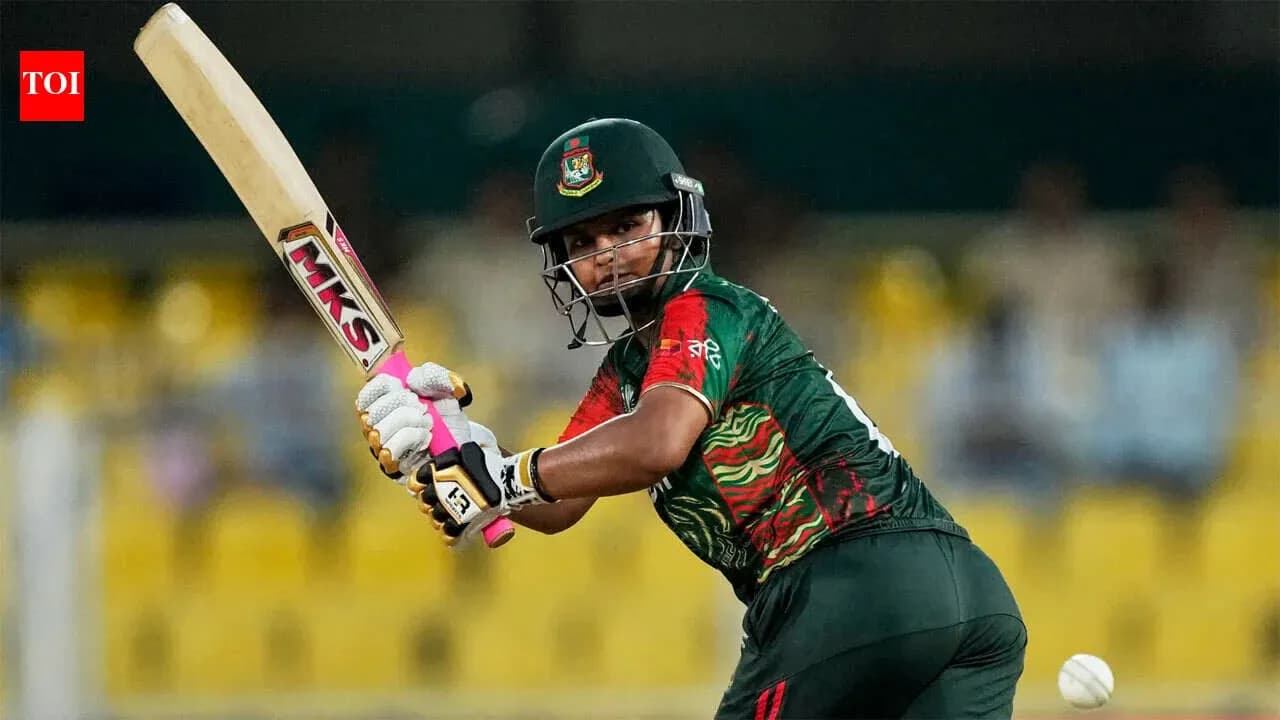
Sobhana Mostary: The Journey of Bangladesh's Cricket Star
Sobhana Mostary still hears the roar.
Six years on from Bangladesh’s seismic 2018 Women’s Asia Cup triumph, the images remain sharp: Jahanara Alam sprinting through for the final two runs in Kuala Lumpur, India stunned, a trophy that had always seemed to belong elsewhere suddenly in Bangladeshi hands. For Mostary, that night did more than rewrite a scorecard. It rewired an entire sport back home.
“After 2018, we beat India and won the Asia Cup, so it was a huge change in Bangladesh women's cricket. Everything changed. They started giving us lots of facilities, money, everything. There was a lot of change,” she told TimesofIndia.com ahead of the 2026 edition.
Those changes still shape her career.
A title that changed everything
Bangladesh’s 2018 campaign was not a one-off upset. It was a statement delivered twice over. They beat India by seven wickets in the group stage, then came back for more in a gripping final, chasing down 112/9 off the very last ball. Alam’s nerveless dash for two runs sealed their maiden Women's Asia Cup title and sent a jolt through the region.
The reaction at home was immediate and tangible. The Bangladesh Cricket Board announced a Bangladeshi Taka 2 crore reward for the squad, a public recognition that this team had shifted perceptions of what was possible for women in the game.
For Mostary, that legacy is not a sepia-toned memory. It’s a live target.
“We think this Asia Cup, we fight for the title, because if we beat India, so maybe we own the Asia Cup,” she said, the competitive edge clear.
This time the path is different. Bangladesh sit in Group B with Sri Lanka, Indonesia and the UAE. India are parked in Group A alongside Pakistan, Thailand and Hong Kong. Any rematch of that 2018 final can only arrive in the knockouts, where reputations tend to collide with reality.
From village nets to the national side
Mostary’s own story begins a long way from continental trophies and TV cameras.
As a child she played anything she could: football, badminton, cricket. The turning point came when her father took a 10-year-old Sobhana to a small cricket academy in their village. Six months of hard training later, she turned up at a trial for the Bangladesh Krira Shiksha Pratisthan (BKSP). She got in.
That selection ripped up the script her family had imagined for her. She moved to Dhaka without her parents, a teenager chasing a game that, at the time, still sat on the margins of mainstream Bangladeshi sport.
The rise was rapid but not smooth. She made her international debut at just 16, an age when most players are still learning their trade in age-group cricket. The cap came early; the chances did not.
“It was very difficult. I always travelled with the team, but couldn't play. I just waited and thought that someday the opportunity would come and I could show my strength,” she said.
For three to three-and-a-half years, she lived in that limbo – on every tour, rarely in the XI. Flights, nets, warm-ups, then the long walk back to the dugout as the toss took place without her name on the sheet.
Learning to wait, learning to grow
The breakthrough has been gradual rather than explosive. In 2023, the ICC picked her out as a bright future prospect, a nod to the promise in her game. Mostary, though, refuses to treat that as a destination.
“I don't think I have fulfilled my dream and that bright future yet, but day by day, I improve,” she said.
It’s a simple line, but it tracks with her career. A player who once struggled just to get on the field now talks about refinement, not arrival. The grind has become part of her identity.
“I struggled for three or four years, but now I have improved,” she said, matter-of-factly.
Harmanpreet on the wall
The twist in her story sits across the border.
Mostary’s childhood idol is not a Bangladeshi batter, but India captain Harmanpreet Kaur. As a young girl, she watched the 2017 Women's World Cup semi-final where Harmanpreet shredded Australia with an unbeaten 171, an innings that still echoes through the women’s game.
“That match inspired me a lot, I followed her batting, everything how she controls the match, and now the time how she captains. I just followed everything,” Mostary admitted.
The admiration hasn’t faded with time. It has simply evolved from distant fandom into professional study.
So when India appear on the schedule, there is no fear in her voice, only anticipation.
“For Bangladeshi fans, playing India is a very good match. They are crazy fans and lots of supporters come to watch. It is a normal match, but normally playing India is very interesting and always very exciting for us,” she said.
India are not just a rival. They are a measuring stick.
Asked which Indian bowler she would most like to face, she did not hesitate: Deepti Sharma.
“Deepti Sharma is always the top bowler in the Indian side, she has played consistently for so many years and improved day by day. I love her bowling,” Mostary said.
It’s an answer that reveals a batter who studies the craft on both sides of the contest – not just the idols with the bat, but the bowlers who test them.
A South African session and a different dream
Harmanpreet may have shaped her childhood, but another name sits on her current wish list: Laura Wolvaardt.
“I want to practise with Laura Wolvaardt, I really like her batting, and she's also a good human being,” she said.
You can see why. Wolvaardt’s classical, precise game offers a template for a young top-order batter looking to tighten technique without losing flair.
All of this – the idols, the Asia Cups, the international tours – almost never happened. There was another life on the table.
“Maybe a doctor, because my mother wanted me to be a doctor,” Mostary said when asked what she might have done without cricket.
Instead, the girl who left home at 16 for a shot at the game has spent years wearing national colours, part of a generation that has dragged Bangladesh into serious conversations about women’s cricket in Asia.
Now comes another Asia Cup, another chance to test themselves against the region’s best, another possible collision with India in a knockout match with something heavy on the line.
Mostary knows exactly what that would mean. Not just for a tournament. For a country that still remembers the night Jahanara Alam ran those two runs and everything changed.