Sanju Samson vs Sooryavanshi: A Trust-Based Rivalry in T20 Cricket
Sanju Samson has lived this story from both ends of the dressing room.
He was the captain who first tossed a cap to a wide-eyed 14-year-old at Rajasthan Royals when injury forced him out of IPL 2025. Now, in India colours, he’s the senior pro fighting that same teenager for the most coveted seat in T20 cricket – the top of the order.
Back then, the call felt bold. With Samson sidelined deep into the league phase, RR rolled the dice on Sooryavanshi. The kid didn’t just survive; he detonated. A century in his third game, fearless strokeplay, a temperament that seemed immune to the lights and the noise. By the time Samson was fit, the hierarchy had shifted. The captain walked back into his own XI and slid down to No. 3. The boy stayed where he belonged – at the top.
That early mentor-protege bond was always going to change shape once India came calling. And it did.
A shared slot, one opening position, two men in form.
In Delhi, against Afghanistan at the Arun Jaitley Stadium, the latest chapter unfolded. India chose Samson. The teenager sat out again, fresh off a Player of the Series run in Zimbabwe, but consigned to a bib and a boundary line.
Samson knew what that meant. He also knew what he had to do.
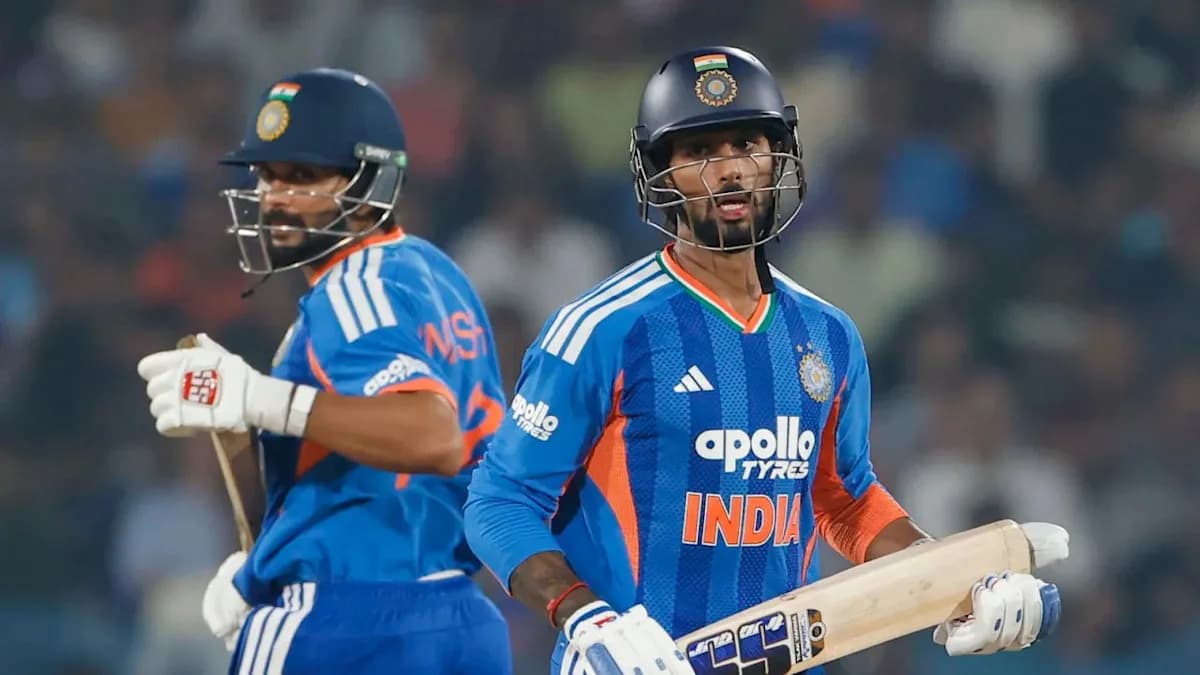
He tore into Afghanistan with a 22-ball 57, an innings that felt less like a response and more like a statement. This, after a failure in the series opener. This, with Sooryavanshi watching on for the second game in a row. India wrapped up the three-match T20I series 2-0 with a game to spare, and the debate over who should open only grew louder.
Inside the dressing room, Samson insists, it sounds very different.
“We may be competitors to the outside world, but we are a team and we are playing for a country and we want to win the game first,” he said after the win. The words were measured, but the reality he described is anything but easy.
“We just have to be ready for our own opportunity. We can't sulk that ‘oh, I didn't get [the chance] or why did they give it to him’. Those kind of mindsets don't work here.”
He knows both sides of the conversation. As captain of an IPL franchise, he has had to make those same calls – dropping in-form players, backing a hunch, choosing one opener over another. Now he’s on the receiving end of those decisions in the India set-up, and he doesn’t pretend it’s simple.
“It is a very challenging place to be in. For the whole team management and everyone, from the captain, from the coach, from the selectors, it is a very tough choice. I totally understand, myself [having] led an IPL franchise. I know how hard these decisions are when everyone has been performing really well.”
This is not the story of a player clinging on. Samson’s recent past is gilded.
He walked away with the Player of the Tournament award at the home T20 World Cup earlier this year. He didn’t start that campaign either, then exploded when his chance came: 97* off 50 in the semifinal, 89 in the final, and India became the first team to defend a T20 crown. On that stage, under that pressure, he looked every inch the long-term answer at the top.
But cricket rarely moves in straight lines.
While Samson’s World Cup glow lingered, Sooryavanshi set the IPL on fire. A 776-run season, averaging 48.5, striking at a scarcely believable 237.3. Numbers that don’t just nudge a door open; they blow it off its hinges. Samson, meanwhile, rode a rollercoaster at Chennai Super Kings – feasts and famines, flashes of brilliance wrapped inside inconsistency.
The inevitable correction followed. Samson failed in three games – twice in Ireland as India slipped to a 0-2 series defeat, and again in the first T20I in England. Suddenly, the “Sooryavanshi factor” stopped being a subplot and became the main narrative.
The teenager was thrown in for three matches against a quality England attack and endured a harsh introduction to international cricket. India still went down 0-4 in the series. Samson returned only for the final game. Then came another twist: he was rested entirely for the Zimbabwe tour, and Sooryavanshi flourished, taking Player of the Series and, in many eyes, edging ahead of his former IPL captain in the pecking order.
Delhi flipped that script again. Samson in, Sooryavanshi out. Another round of musical chairs. Another public debate over selection.
Samson’s answer was blunt and timely: runs.
His answer to the noise off the field is a little different.
“I try to turn off the Wi-Fi,” he joked, drawing laughter in the room. The humour only half-masked the reality.
“At first, it feels bad. I am not a machine. We are not robots that it wouldn’t affect us at all. It definitely matters, and you kind of get a bit affected,” he admitted.
He has had to grow into that space. Maturity, as he tells it, has come from experience and from accepting the chaos that comes with being an Indian cricketer in the social-media age. Fail once, and the commentary swells. Fail twice, and the calls for change grow louder. For a T20 opener who lives by a high-risk, high-reward method, that scrutiny is relentless.
Samson’s response is to narrow his focus.
“I think consistency in my process. I think consistency in my preparation, consistency in how I am practicing, how I am putting my hard yards in. That's where I try to focus on. You can't control the consistency in the result in this format… Consistency has to be in the frame of mind, and then whatever happens, happens. I think that's what fearless mindset is.”
It’s a telling line. Fearless, for him, is not slogging blindly. It is walking out knowing the results will fluctuate and refusing to let that force a compromise in intent.
That mindset also shapes how he views Sooryavanshi.
“You see, a 15-year-old boy has scored 700-800 runs. My Man of the Tournament award [at the 2026 World Cup] was before that. After that he’s performed so well. He had to come in [to the Indian set-up] sooner than later,” Samson said, stripping the narrative of any personal sting.
He didn’t shy away from his own lean patch either.
“I didn't perform in 2-3 games and he was in-form and we wanted to win games in that [England] series.”
The key, in his telling, lies in communication. Inside the group, there is no mystery about where each player stands.
“There was a lot of communication in the middle of the England series. He spoke to me a lot before this series as well… It’s very easy to take very popular decisions. But, as a leadership group, we have been taking some really tough calls keeping the team at the front. That’s where we have to give the credit to the leadership group of our team.”
Samson’s clarity is striking. Sooryavanshi’s rise does not have to be his downfall. His own failures do not need to be the only door through which the teenager walks. Two careers can run side by side, intersecting, competing, and still coexisting without bitterness.
On Tuesday night in Delhi, Samson put his name back on the board with the only currency that truly counts – runs under pressure. The next game may yet see the selectors hand the opportunity back to the boy he once promoted at Rajasthan Royals.
That, in many ways, is the reality of modern India T20 cricket: no one owns a spot, not even the man with a World Cup medal and a Player of the Tournament trophy in his cabinet.
For now, Samson has reminded everyone he is not stepping aside quietly. The next move belongs to the selectors – and perhaps, once again, to Sooryavanshi.