.svg&w=384&q=75 "logo")
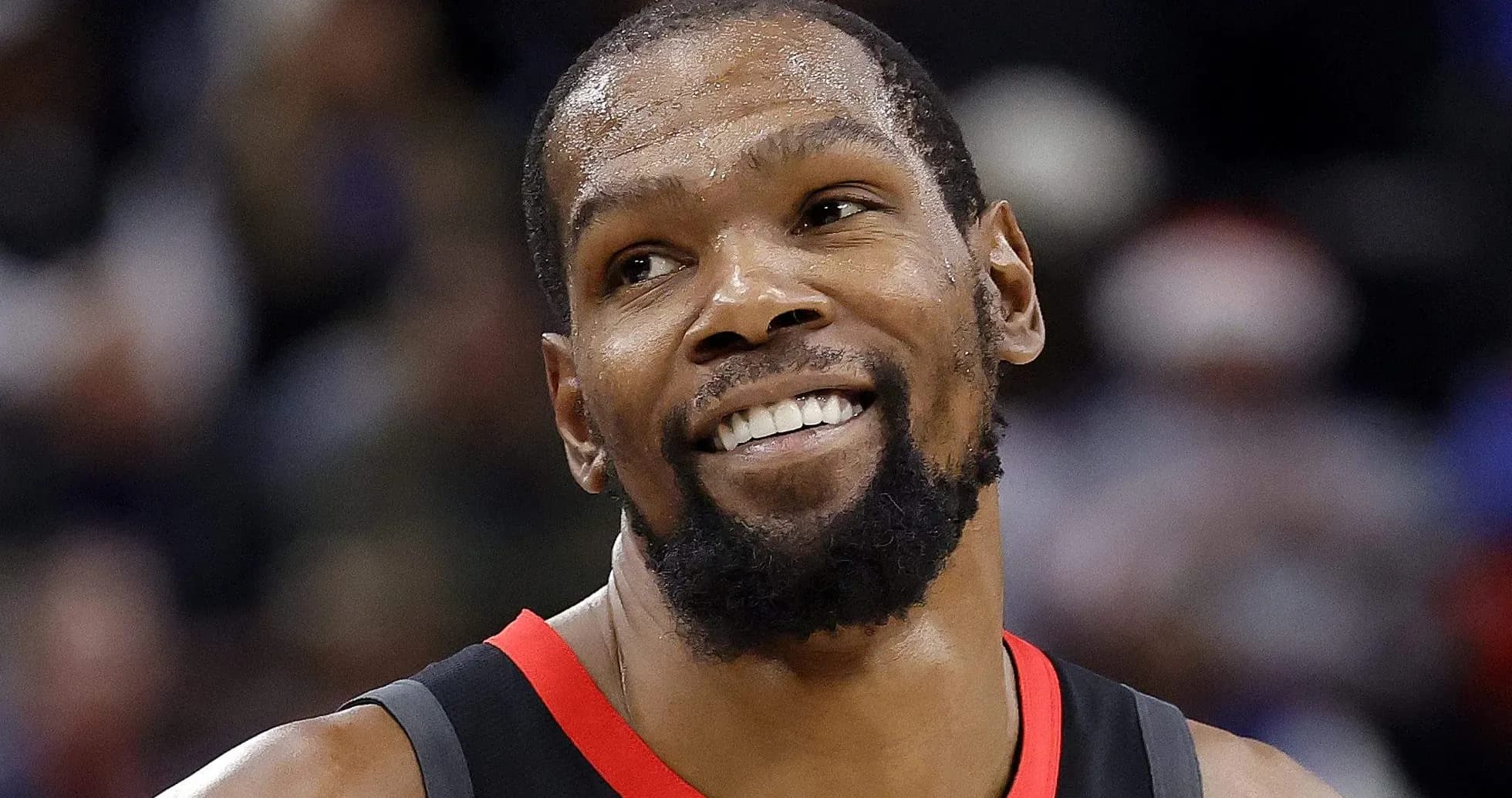
The Rockets' Future: Navigating the Durant Dilemma
The Rockets have already made their choice.
After a 52-win season that ended with more questions than celebrations, Houston isn’t tearing anything down. It’s doubling down on the core, betting that health, continuity and a little luck will turn promise into something more concrete.
Fred VanVleet will be back running the show after that brutal ACL tear wiped out his season before it even began. Steven Adams returns as the bruising anchor in the middle after left ankle surgery. Around them, the kids—Alperen Sengun, Amen Thompson, Reed Sheppard—are expected to look less like prospects and more like problems for the rest of the Western Conference.
ESPN’s Michael C. Wright framed the landscape bluntly: Oklahoma City and San Antonio sit in the “top tier.” Houston, though, “might have a fighting chance.” The Rockets believe that, too. Especially with Kevin Durant heading into Year 2 in Houston, more familiar with the system and no longer surrounded by a point-guard-by-committee experiment.
This time, Sengun won’t have to moonlight as a full-time offensive hub. The plan is to unleash him as a scorer, to “pummel opponents more in the paint,” as Wright put it. Thompson and Sheppard have already taken their lumps. Their expanded roles last year hardened them. The organization expects that growth to cash out now.
All of that optimism runs headfirst into one unavoidable question: how long will Durant actually be part of this?
The Durant Dilemma
Durant is still an All-NBA Second Team forward, still a 26-point-per-game scorer, still the kind of player who tilts playoff series. He’s also 37 and coming off a season that didn’t push Houston forward the way many inside and outside the franchise expected.
That’s where the hypothetical starts to get loud.
If the Rockets decide to pivot earlier than expected—before the 2026-27 season rather than at the trade deadline—what does a Durant trade really look like? One proposed scenario sends him to a contender that already knows how to hang banners.
In this construction, Houston would receive Aaron Gordon, Christian Braun, a 2031 first-round pick and a 2028 second-round pick. Denver would land Durant and Clint Capela.
On paper, both front offices would at least have to sit with that offer for a while.
Why Denver Would Gamble
For the Nuggets, the logic is ruthless and simple. Durant becomes a player-for-player upgrade over Gordon, dropping a lethal scorer next to Nikola Jokic and Jamal Murray. A 26-point weapon who can create his own shot in the tightest playoff half-court possessions is exactly the kind of luxury that separates “very good” from “parade route.”
Durant slides into a system already built around Jokic’s genius and Murray’s shot-making. Denver would also trim nearly $3 million in payroll in the process, a small but notable bonus for a team living in the tax neighborhood.
Capela’s inclusion adds another layer: a proven rim protector and rebounder who can soak up regular-season minutes and offer a different look behind or alongside Jokic when matchups demand it.
Why Houston Would Listen
Houston’s side is more emotional. Trading Durant would mean walking away from the idea of a ready-made superstar accelerating the rebuild into contention. It would also mean acknowledging that last season, with him, didn’t unlock the leap they imagined.
The return, though, is hardly a white flag.
Gordon, when healthy, has already proven he can impact a championship run. He defends multiple positions, finishes at the rim, and doesn’t need the ball to change games. Braun, at 25, fits the Rockets’ timeline perfectly—young enough to grow with Thompson, Sengun, Jabari Smith Jr. and Sheppard, experienced enough not to flinch in big moments.
Add in the 2031 first-round pick and a 2028 second, and Houston suddenly owns more flexibility—either to draft and develop or to flip those assets into the next disgruntled star.
On the floor, the shape of the team changes, but not necessarily for the worse. A projected starting five of VanVleet, Thompson, Gordon, Smith Jr. and Sengun has balance: ball-handling, length, defense, and a clear interior focal point. Off the bench, Braun, Adams, Sheppard and Marcus Smart bring toughness, shooting, and playmaking.
That group might not scare Oklahoma City or San Antonio yet. It might, however, be more coherent than last year’s version with Durant, and more aligned with a long-term build.
Will Houston Actually Move Him?
For now, the noise is louder outside the building than inside it.
NBA insider Jake Fischer reported that while there was “some external trade interest from around the league” after a disappointing year in Houston, the Rockets themselves aren’t acting like a team ready to detonate anything.
“Every word I’ve gotten out of the Rockets organization has been that they clearly felt last year was just a very bad year of injury luck,” Fischer said. He added that Houston never really viewed this offseason as a time for “major changes.”
That stance keeps Durant in place—for now. It also doesn’t erase the reality that his contract and pedigree give Houston a powerful lever if the season starts to slide or if the right package lands on the table.
The Rockets believe they can climb toward that top tier with a healthy VanVleet, a restored Adams, a liberated Sengun and a more settled Durant. But if the climb stalls again, and if a contender like Denver comes calling with real assets, the franchise may have to decide what matters more: squeezing one more run out of a 37-year-old star, or cashing him in to build a team that can terrorize the West for the next decade.