Rashid Khan on Afghanistan's Cricket Evolution and Future Challenges
Rashid Khan has lived every twist of the India-Afghanistan story. He was there when Afghanistan were the plucky outsiders, happy to “compete” and collect experience. He is there now, as the face of a side that walks into series believing it can knock over giants.
That belief, he insists, is real. The job, though, is far from done.
Powerplays, mentality and the gap to India
On the eve of the third ODI against India, Rashid cut through the noise. Results matter, but for Afghanistan this tour has doubled as a mirror.
“The learning is about how we are going to use the powerplay as a batting unit,” he said, laying bare the core issue. Afghanistan have watched India pile on runs at the top and know that is where the game is slipping away. The challenge is not just technical; it’s mental.
He talks of Delhi, of pitches where 300-plus is routine, and of a mindset that still lags behind. High-scoring venues demand ambition. Afghanistan’s batters, he feels, must harden themselves to think big: “to have that mentality of scoring big is something that is so important.”
The same scrutiny falls on the ball. Conceding 70-80 in the first 10 overs, Rashid says, makes targets of 200 or even 230 almost irrelevant. Powerplay plans, both ways, sit at the heart of Afghanistan’s next phase.
As he sees it, the gulf between this Indian side and his own is not about flair. It’s about consistency, depth, and a ruthless understanding of how to stretch an innings.
India’s fearless new wave
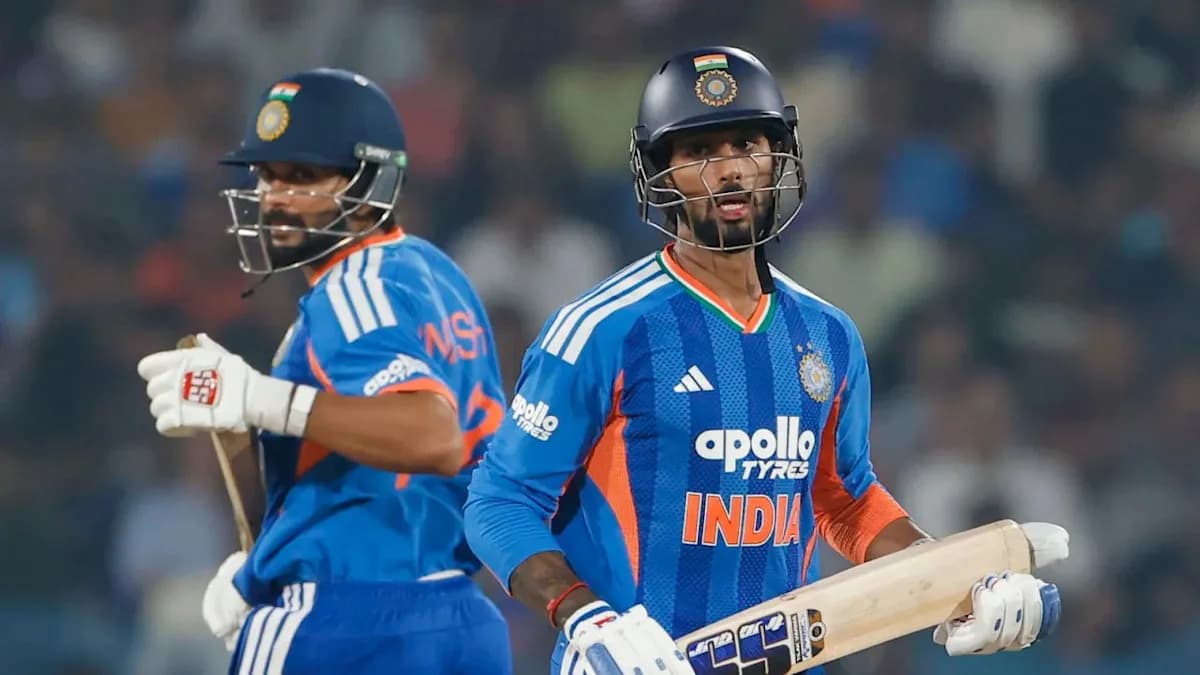
Rashid has faced many versions of India. This one, led by Shreyas Iyer and stacked with young hitters, leaves a particular impression.
“It is a very dangerous side, a destructive side,” he says. One after another, batters walk in with the same intent: take the game deep and go big. Not 20s and 30s. Hundreds. In T20 cricket, that kind of sustained, fearless hitting changes everything.
They don’t just swing hard. Rashid keeps returning to the word “skill.” This India group has the range and the courage to match it, and that, in his view, is what separates them.
Among the new faces, one name leaps out.
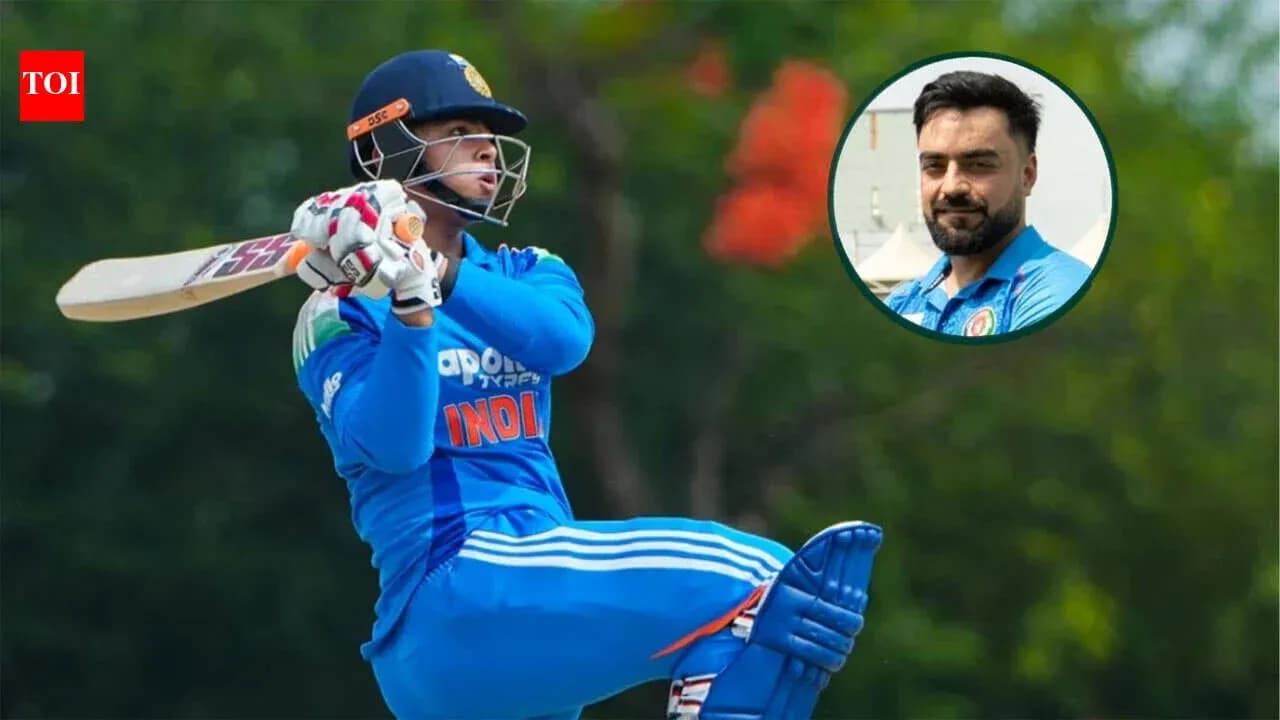
Abhishek Sharma: India’s “big package”
Rashid knows Abhishek Sharma better than most, having shared a dressing room with him at Sunrisers Hyderabad. He saw the raw material early.
Abhishek’s batting has already caught the eye, but Rashid is adamant there’s more. He rates him as a genuine all-round option, someone who can quietly slip in overs through the middle and change a game with the ball as well.
“He is the one who is going to be a very big package for Team India in the future,” Rashid says. Not just a dasher at the top, but a multi-dimensional cricketer around whom a side can build.
The phenomenon of Vaibhav Sooryavanshi
Then there is Vaibhav Sooryavanshi, the teenage prodigy who has forced his way into international cricket at 15 and rattled even world-class bowlers.
Rashid has bowled to him. He has seen, up close, what the hype is about.
The word that keeps coming back is “fearless.” Not slogging. Not blind aggression. A young player who already knows his options, understands his game plan against any bowler, any attack, any situation.
You rarely see that at 15. Those instincts usually arrive with years of cricket. Sooryavanshi seems to have skipped the queue.
Rashid talks about his shot selection, his power, his hand-eye coordination. “He is a god-gifted talent,” he says simply. The kind of natural ease you “hardly see in any other player.”
Asked whether Sooryavanshi reminds him of a young Rashid Khan, he laughs at the idea. The skill, maybe. The six-hitting at that age? No chance, he admits. The teenager, in his eyes, is something else entirely.
And crucially, he has already shown it on the biggest stages – not just in the IPL, but in Indian colours.
Afghanistan’s rise – and the next step
Rashid has become the symbol of Afghanistan cricket’s surge, but he is quick to point out that the real turning point arrived only recently.
The belief, he says, truly began to harden during the 2023 World Cup in India. Wins over England, Pakistan and Sri Lanka, plus that bilateral T20 series victory over Pakistan, changed how the dressing room viewed itself. The 2024 T20 World Cup semi-final run, pushing deep into the business end in Australia and New Zealand, confirmed it.
From plucky underdogs to a side “in that category where we can beat big teams” – that is how he frames it. The danger now is not dreaming too small. It is managing expectations, sustaining standards, and making sure this is a beginning, not a peak.
Ibrahim Zadran and the burden of leadership
The responsibility of steering that next phase falls on Ibrahim Zadran, now captain of the T20I side. Rashid has led Afghanistan himself and understands exactly what the role can do to a player.
What he admires most in Ibrahim is simple: hard work and honesty. A captain who wants to lead from the front, set the tone, and show younger players what “professional” actually looks like.
“You need someone like that who is very consistent and who is very straightforward,” Rashid says. He sees a man trying to build standards, not just tactics.
From his own experience, he offers Ibrahim one hard-earned lesson: don’t carry everything alone. Rashid remembers the times he loaded too much pressure on himself, tried to own every result, and watched his own game suffer.
His advice now is to stay anchored in process. Focus on skills, plans, and execution, not on the scoreboard or the what-ifs. Get that right, he believes, and the results will follow.
The next Afghan names to know
Rashid has become Afghanistan’s first global superstar, but he is adamant he will not be the last. The production line is real.
Noor Ahmad is already on the radar, a left-arm wrist-spinner who has shown he can live at the top level and, in Rashid’s eyes, has another gear to find. With the right handling, he sees Noor becoming a major force in the years ahead.
Fast bowling remains an area Afghanistan must strengthen. That is where Abdollah Ahmadzai comes in. Rashid likes what he has seen: genuine pace, the raw tools to trouble top batters. The key, he stresses, will be managing him properly – workloads, development, and exposure. Get that right, and Afghanistan could have a serious quick on their hands.
Rashid’s body, Rashid’s calendar
The global calendar once belonged to Rashid. He hopped from league to league, country to country, collecting experience and wickets at a furious rate. It made him the bowler he is – adaptable, streetwise, and unflustered by conditions.
Then came surgery. The body pushed back.
Since then, he has been forced to strip down his schedule, to choose his cricket instead of taking everything that came. A recent stint at the Red Bull Athletic Performance Centre in Austria gave him a forensic look at his own body. Tests, data, long conversations with physios and doctors.
He came away with a blueprint: what to avoid, what to strengthen, where to play, where to rest, and how much cricket he can realistically squeeze into a year without breaking down.
The teenage whirlwind has become a measured professional, still hungry, but now guided by science as much as instinct.
The unfinished chapter
For all the leagues, the records, the nights under lights in front of packed crowds, Rashid’s mind keeps circling back to one thing.
An ICC trophy. For Afghanistan.
He thought the 2024 T20 World Cup might be the moment. A semi-final berth hinted at something extraordinary, but the fairytale stopped one step short of the final.
That hurt has not faded. If anything, it sharpens the target.
“One unfinished thing is to win the World Cup for team Afghanistan,” he says. Not as a dream, but as a line he wants written into his career before he walks away – T20 or 50-over, it doesn’t matter.
Afghanistan have moved from hopefuls to contenders. The question now is blunt, and Rashid knows it better than anyone: can this golden generation turn belief into a trophy before time runs out on its greatest star?