Why the Pistons Invested $200 Million in Jalen Duren Despite His Playoff Challenges
At just 22 years old, Jalen Duren is an All-NBA center who recently secured a $200 million deal with the Detroit Pistons. Even with such a massive commitment, questions linger about his playoff performances.
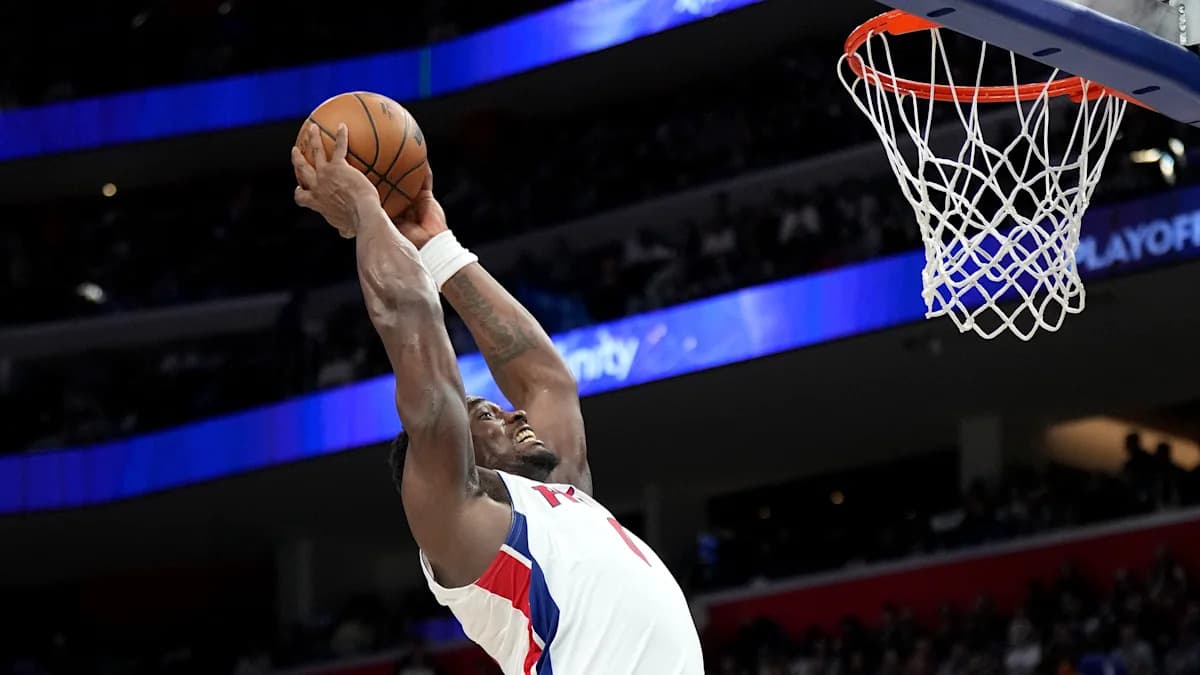
The Pistons locked Duren up for five years at a figure well below the $287 million max he could have demanded. He already complements Cade Cunningham by providing a strong presence near the basket—capable of soaring for lobs, absorbing contact, crashing offensive boards, and running the floor. Last season, Duren reduced his turnovers while increasing his role as a ball handler, passer, and screener. When Cunningham rested, Duren expanded his face-up post moves, doubling his free throw attempts per game. He averaged 19.5 points and 10.5 rebounds, anchoring the league’s second-best defense and earning a rightful spot on an All-NBA team.
Playoff Struggles and What They Reveal
Then came the playoffs. Duren was outperformed by Wendell Carter Jr. in the first round and overwhelmed by Evan Mobley and Jarrett Allen in the second. His scoring dropped to 10.2 points per game, and his shooting percentage slid from 65% during the regular season to 51.4%. The star looked less comfortable, struggling even with basic role-player duties.
"I’m man enough to acknowledge my flaws and that I’m not perfect. I’m also man enough to get my ass in the gym and work on those things and get better," Duren said at his press conference. "I’m not trying to run from anything. I’m not running from what happened because I know I will make things better in the future."
Inconsistencies and Growth
Duren’s playoff woes partly explain why the Pistons hesitated to offer him the full max. Over his first three seasons, he showed flashes of dominance but also periods of lackluster defense and limited offensive impact. Scouts debate whether these ups and downs stem from focus, mentality, conditioning, or a mix of all three. At times, the Pistons even considered weight clauses in his contract negotiations. Maturity plays a part too; Duren has transitioned from a teenager into a man committed to his craft, signaling the start of his prime.
Time will tell if this contract proves wise. To justify it, Duren must confirm that last season’s growth wasn’t a fluke and carry that success into the playoffs. For him to surpass expectations, he’ll need to keep evolving. When asked about his goals this season, Duren explained:
"I would say just creating my own shot. I try to put myself in a position to be versatile and be able to be used in different ways, so you never have to put me in a box. I try to be a tool that my coaches and my teammates can use to do anything."
Expanding His Offensive Arsenal
Duren increased his dribble-driven offense last season, taking more pull-up jumpers than in all previous years combined. He made 15 of 31 dribble jumpers (48.4%), showing promise in this new area despite the small sample size. He also posted efficient marks of 54.5% shooting on post-ups and 46% on isolations, though these came on low volume.
If these skills develop into reliable weapons, it’s clear why the Pistons didn’t trade him for older players like Domantas Sabonis or injury-prone stars like Anthony Davis. Still, Duren’s biggest hurdle remains his potential rather than his current skill set. The real challenge is whether he can add consistent spot-up three-point shooting—a long way off, if it happens at all.
The Fit with Ausar Thompson and Team Dynamics
Duren’s fit alongside Ausar Thompson matters deeply. In the playoffs, Cunningham and Duren struggled to find space in the paint partly because Thompson doesn’t shoot. This made attacking lanes difficult for Thompson as well. Though their style worked well in the regular season, it felt awkward come playoff time.
- With Thompson on the floor and Duren off: Pistons outscored opponents by 11.2 points per 100 possessions.
- With both Duren and Thompson: Pistons had a -0.9 net rating.
- With Duren and without Thompson: Detroit was -1.7.
Duren’s struggles and the lack of spacing he offers hurt the team’s flow. The lineup functioned better when Paul Reed played alongside Thompson’s movement and cutting.
The combination of two non-shooters in Duren and Thompson, plus streaky shooters like Cunningham and Tobias Harris, was ineffective. Detroit addressed this by acquiring John Collins, Isaiah Joe, and Taurean Prince, and drafting Ebuka Okorie. These additions bring reliable shooting to the roster.
Looking Ahead
Last season’s 60 wins were impressive, even if playoff results disappointed. Cunningham is only 25, Thompson 24, and Ron Holland 21—this group is still young, with many players yet to hit their prime.
Duren has already contributed to winning 60 games, but his best basketball might still lie ahead. Trajan Langdon, the team’s decision-maker, must evaluate how much of Duren’s upside fits with Detroit’s core. The contract settled just one piece of that puzzle. If Duren fails to improve as needed, his deal remains tradable, giving the Pistons options.
The ideal scenario involves either Duren or Thompson developing a dependable three-point shot, Okorie or Holland becoming contributors, and Cunningham continuing to rise. There’s reason to be patient. Yet NBA windows close quickly, and one more playoff failure could push Langdon to reconsider his patience.
"I want to be a Detroit Piston for life," Duren said Sunday. Becoming that player will require more than individual improvement—it means fitting better with the team.