Pelicans Betting On Internal Growth For 2024 Season
The numbers from last season still sting: 26-56, 11th in the West, nowhere near the postseason. New Orleans has looked at that reality, shrugged at the temptation to blow it up, and essentially decided to run it back.
This is a bet on internal growth, not a splashy overhaul.
Yes, there are new faces — AJ Johnson, Bennedict Mathurin, Jaron Pierre Jr., Trendon Watford — but the heart of this project hasn’t changed. The Pelicans are putting the weight of their future on players already in the building and asking them to grow up fast.
The Core Question: Can the Kids Grow Into the Job?
Jeremiah Fears and Derik Queen are the hinge points. Both flashed enough in their rookie seasons to justify louder roles and longer leashes. They’re not just “promising young pieces” anymore; they’re the blueprint.
If those two stall, the entire plan starts to wobble. If they jump, New Orleans suddenly looks less like a 26-win team and more like a group ahead of schedule.
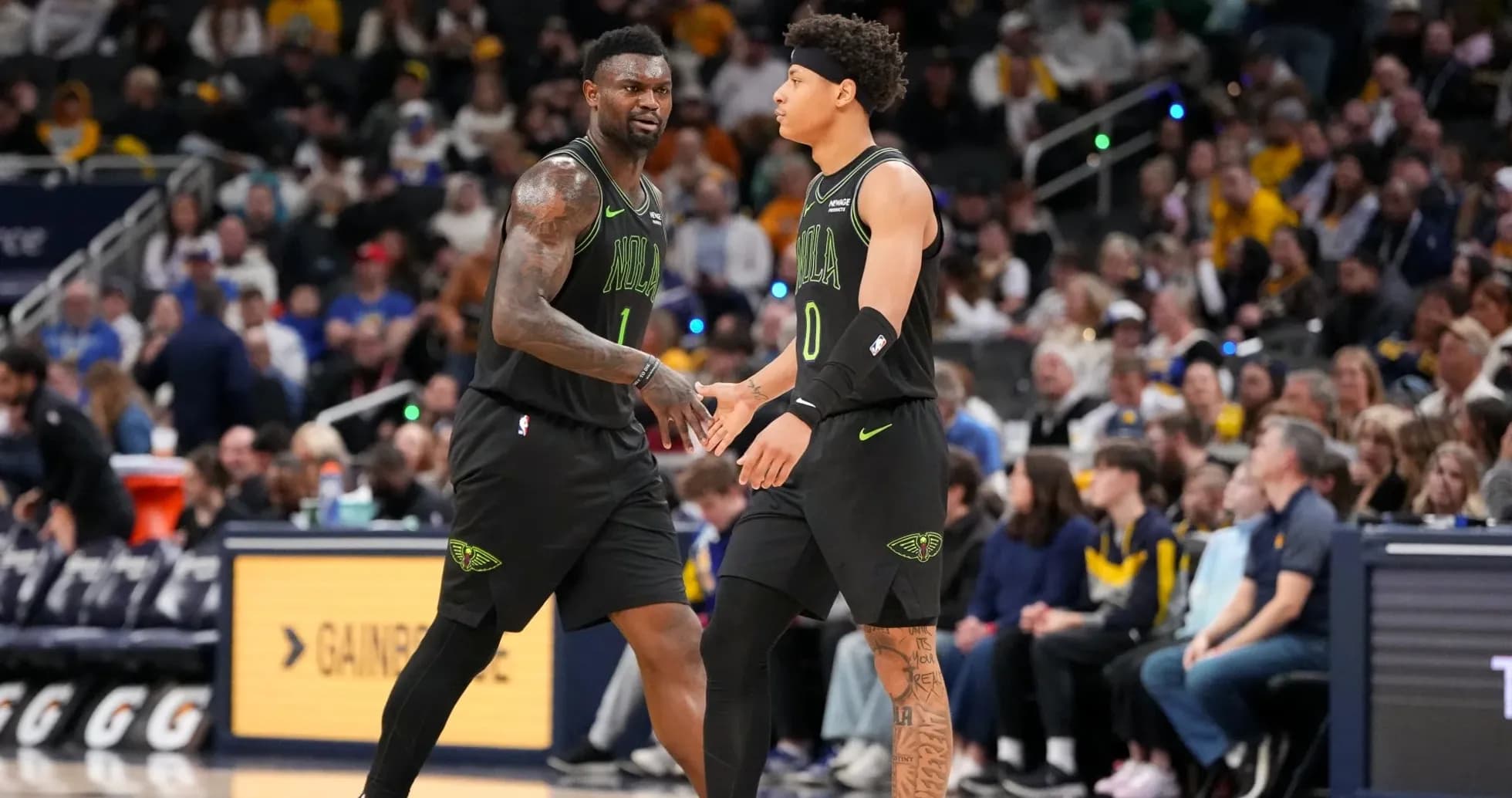
Around them, the hierarchy is clear. Trey Murphy’s shooting and versatility, Zion Williamson’s health and dominance in the paint, and the steady hand of Dejounte Murray — plus the scoring punch of newly arrived Mathurin — will decide close games. When possessions tighten and the game slows, those are the names that will have the ball.
If they don’t deliver, one name in particular will dominate February headlines. Murray, with his contract and pedigree, becomes the obvious trade-deadline talking point.
Herbert Jones at the Crossroads
Every team with playoff ambitions needs a swing player, someone whose season can tilt the entire project. For the Pelicans, that’s Herbert Jones.
Not long ago, Jones looked like one of the league’s rising defensive stars. His length, instincts and ability to guard up and down the lineup made him a nightmare matchup. In 2024, he was rewarded with a spot on the All-Defensive First Team and stood at the center of New Orleans’ improvement on that end.
Then the climb stalled. His impact dipped. The regression was subtle at first, but it was real.
Now he’s 28, squarely in his prime, and the franchise is about to find out exactly what he is — to them and to the rest of the league. This season will define his value, whether as a long-term pillar or as a premium trade asset.
The checklist is straightforward. His 3-point shooting has to bounce back after sinking to 31% over the last two years. That number drags on spacing, clogs driving lanes for Zion, and limits the Pelicans’ lineups in high-leverage moments. Defensively, he wants his name back among the very best stoppers in the league.
If Jones sharpens his shot and reclaims his defensive edge, New Orleans suddenly looks a lot more dangerous.
Living in the Paint, Dying in the Paint
The Pelicans know exactly where they want to attack. Last season, a league-high 58% of their shots came in the paint. That’s not a quirk; that’s an identity.
Zion led the charge. He ranked third in the NBA with 791 field-goal attempts in the paint and converted 60.3% of them — better than league average, and his best mark in three years. When he gets there, good things usually happen.
The problem is everyone else.
As a team, New Orleans shot just 55.4% in the paint, the second-worst mark in the league. That’s a brutal disconnect: plenty of shots at the rim, not nearly enough of them going in. Three of the 41 players who took at least 100 paint attempts and shot under 50% wore Pelicans jerseys — Herbert Jones, Micah Peavy and Jordan Poole.
That’s how an inside-focused team wastes its own philosophy.
Mathurin arrives with his own paint issues, hitting just 51.5% in that area over his career. He’s not a fix for the finishing problem. What he does bring is pressure. He gets to the free-throw line, and that knack can lift overall efficiency even if the raw paint numbers don’t spike.
For a team that already lives at the rim, turning those trips into more points is non-negotiable.
Five Nights That Will Tell a Lot
Some games on the calendar feel heavier than others. New Orleans has a handful that could shape the narrative early and late.
On Oct. 21, the season opens against the Pacers. It’s a measuring stick from the jump: where are the Pelicans headed, and how quickly? Mathurin faces his former team, while Dejounte Murray goes up against Tyrese Haliburton in a backcourt duel that will say plenty about both franchises’ ambitions.
Nov. 6 brings the Timberwolves to town. Zion and Anthony Edwards entered the league as No. 1 picks with sky-high expectations. Edwards has already stepped into superstardom. Zion is still fighting his way toward that same level, with health always the asterisk. Can he finally stay on the floor long enough to chase Edwards’ trajectory?
Starting Nov. 18, the Pelicans hit a three-game stretch against the Pistons, Thunder and Spurs. It’s an early-season stress test against young, ascending teams. That run will show whether New Orleans belongs in that conversation or is still trying to catch up.
On Nov. 29, the Trail Blazers arrive, and with them Ja Morant. He and Zion went 1-2 in the 2019 Draft and have spent the years since wrestling with injuries, expectations and the pressure that comes with generational billing. Both are still searching for the season that finally matches the hype.
Then comes Feb. 2 and a different kind of reunion. Jamahl Mosley returns to Orlando, where he led the Magic to the playoffs in each of the last three years. That night won’t just be about nostalgia; it will be a clear look at how far his new team has come compared to the one he left behind.
Mosley’s Mandate
This is where the Pelicans’ offseason truly pivots. The most important addition isn’t on the floor. It’s on the sideline.
Jamahl Mosley arrives with a clear brief: give this young roster direction and discipline. In Orlando, he helped shape Franz Wagner and Paolo Banchero into cornerstones and built a defense that consistently ranked among the league’s better units.
New Orleans has been nowhere near that level defensively, finishing in the bottom 10 in each of the last two seasons. That’s the first thing Mosley has to change.
This hire is a defining move for team president Joe Dumars. He isn’t just swapping coaches; he’s trying to reset the culture. If Mosley can connect with Fears, Queen, Zion, Murphy, Jones and the rest of the core, the front office can stop worrying about identity and start focusing on talent upgrades around a stable nucleus.
If he can’t, the Pelicans won’t just be running it back. They’ll be running in place, in a conference that doesn’t wait for anyone.