.svg&w=384&q=75 "logo")
Pakistan's Mid-Tour Reset After Lord's Defeat
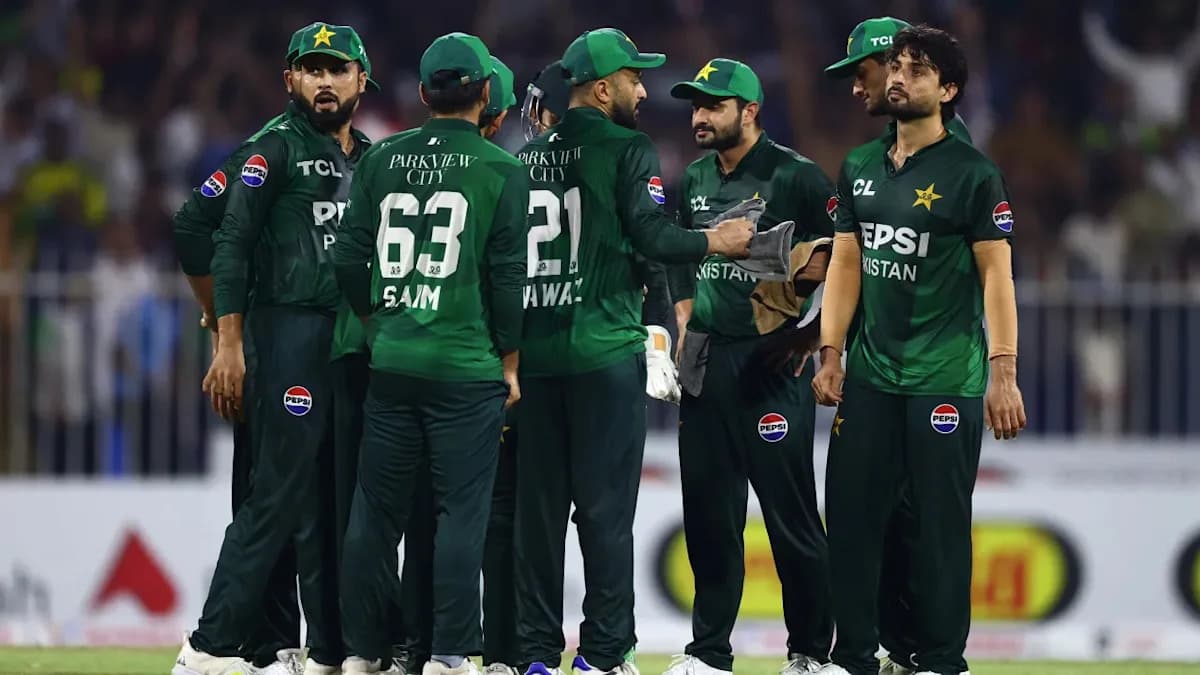
Pakistan have responded to their bruising tour of England with something close to a reset button. Two crushing defeats, five losses in their last six Tests, and a 194‑run mauling at Lord’s have triggered a mid-series clear-out that cuts deep into both the dressing room and the coaching staff.
Seven players have been released from the Test squad. Two members of the red-ball coaching team are gone as well. All of it comes before the third Test at Edgbaston on September 9, a match that now feels less like a dead rubber and more like a trial for Pakistan’s next phase.
Big names out as Pakistan swing the axe
The Pakistan Cricket Board confirmed on Monday that former white-ball captain Salman Ali Agha, senior wicketkeeper-batter Mohammad Rizwan and opener Imam-ul-Haq are among those sent home.
They are joined by Ali Usman, Aamir Jamal, Muhammad Awais Zafar and Khurram Shahzad, as Pakistan react sharply to the 0-2 deficit in the three-match series.
“The Pakistan Cricket Board has today announced that seven players have been released from the Test squad following completion of the Lord's Test. A total of seven replacements have been named including five uncapped players at Test level and two capped players,” the PCB said.
The timing underlines the level of frustration. An innings-and-103-run thrashing in Leeds was followed by a collapse at Lord’s that left senior players under intense scrutiny. Imam, who missed both innings with a calf injury picked up on day one, drew criticism when he appeared on the outfield for warm-ups on the fourth morning. Rizwan, under the microscope for a run of lean scores, only increased the noise with a second-innings dismissal lbw while attempting a slog.
Those moments have now fed into a broader judgement: this group, in this shape, is not working.
New faces, old caps: seven replacements named
Pakistan have not tinkered. They have rebuilt.
In come seven replacements, headlined by Test-capped batters Saim Ayub and Abdullah Fazal, and left-arm spin-bowling all-rounder Arafat Minhas.
“Among the players announced as replacements, batters Saim Ayub and Abdullah Fazal have played eight and two Tests, respectively, while left-arm spin-bowling all-rounder Arafat Minhas has represented Pakistan in three ODIs and four T20Is,” the PCB said.
Saim offers an attacking option at the top or in the middle order, already tested across eight Tests. Abdullah, with two caps, brings a more compact, orthodox style. Minhas, still at the start of his international journey, adds variety with his left-arm spin and lower-order runs.
Behind them stands a cluster of fresh, untested names at Test level. Left-arm fast bowler Mohammad Imran Jnr joins the squad, alongside wicketkeeper-batter Saad Baig, the player of the tournament in the Quaid-e-Azam Trophy 2025-26. Right-arm pace-bowling all-rounders Mohammad Imran, also known as Imran Randhawa, and Razaullah complete the group.
“The four other players are left-arm fast bowler Mohammad Imran Jnr, wicketkeeper-batter and player of the tournament of Quaid-e-Azam Trophy 2025-26 Saad Baig, right-arm pace bowling all-rounders Mohammad Imran (also known as Imran Randhawa) and Razaullah,” the PCB added.
It is a bold mix: two batters with Test experience, one white-ball all-rounder stepping across formats, and four men yet to feel the weight of a Test cap. Pakistan have gambled on hunger and form over reputation.
Sarfaraz and Gul removed as red-ball reset deepens
The overhaul does not stop at the boundary rope.
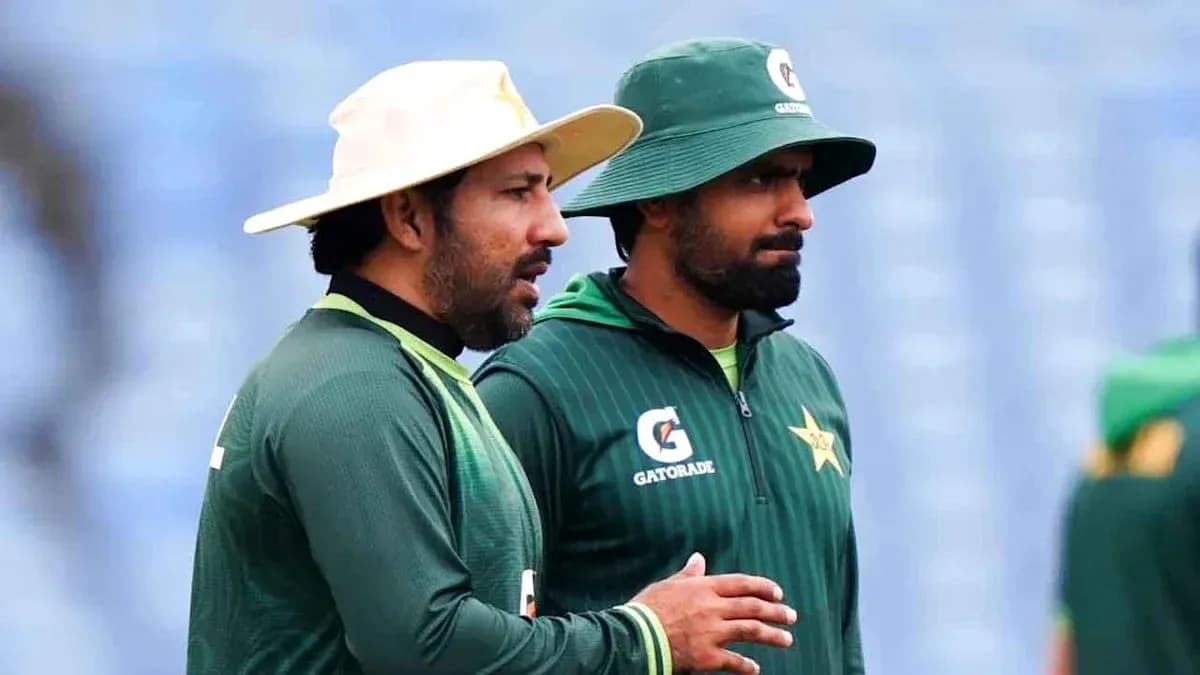
Red-ball head coach Sarfaraz Ahmed and bowling coach Umar Gul have both been relieved of their duties mid-tour, with white-ball head coach Mike Hesson and assistant Ashley Noffke stepping across to take charge for the rest of the England series.
“Additionally, Sarfaraz Ahmed and Umar Gul have also been released and will be replaced by Mike Hesson and Ashley Noffke in the backroom staff,” the PCB said.
It is an unusual move to split formats in theory, then merge them in practice when pressure bites. Hesson, tasked originally with sharpening Pakistan’s white-ball edge, now inherits a Test side reeling from back-to-back hammerings and searching for identity. Noffke, in turn, must revive a bowling unit that has lacked consistency and bite across both Leeds and Lord’s.
The message is unmistakable: no role is safe, no position guaranteed.
Edgbaston becomes a proving ground
All of this unfolds with one Test still to play. Edgbaston, often a cauldron for touring sides, now becomes Pakistan’s laboratory.
They arrive in Birmingham 0-2 down, their senior core shaken, their coaching structure reshuffled, their squad punctured and replenished. For some of the newcomers, it will be a first taste of Test cricket in one of its most unforgiving environments. For those who remain from the Lord’s defeat, it is a last chance on this tour to show they belong in the next chapter.
Pakistan cannot rescue the series. They can, however, decide what kind of team walks out after this one.
Edgbaston will tell them who is ready to stay on that journey.