.svg&w=384&q=75 "logo")
Pakistan's Historic Collapse in Third Test at Edgbaston
The skies over Edgbaston were heavy enough at lunch. Inside Pakistan’s dressing room, the atmosphere was darker still.
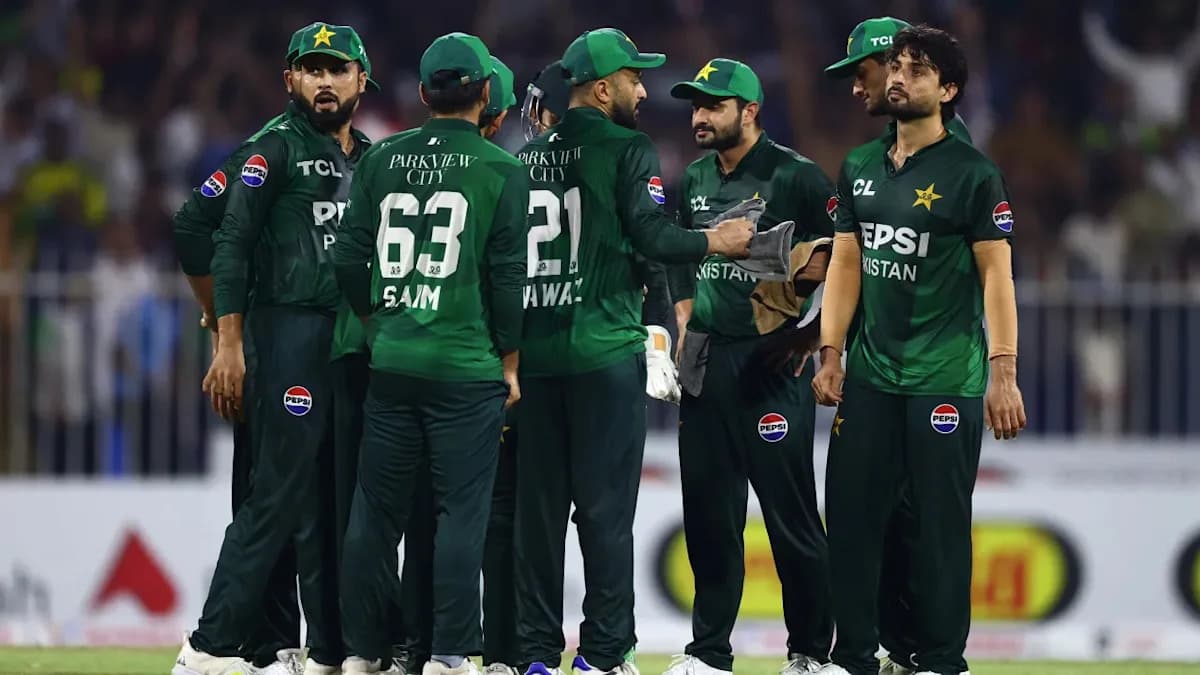
This was supposed to be the reset. A flurry of contentious changes from the Pakistan Cricket Board, billed as the jolt that would revive a listing side, instead left a team flat on its back at 100-7 in just 23 overs of the third Test. Shock therapy without the pulse.
By the time the players trudged off, Pakistan’s series in England already looked beyond resuscitation. If you’re holding a ticket for day three, you might be forgiven for eyeing alternative plans.
Records no team wants
The collapse was not just bad. It was historic.
Pakistan’s top five were all gone with only 48 on the Thwaite Memorial scoreboard, a stark line in the book and a brutal snapshot of a side bereft of confidence. It was the 12th time in Test history that a team’s top five have all fallen for single figures. Never before had it happened in a first innings.
Their pattern at the top of the order across this series in England borders on the unbelievable. The second wicket has fallen with the score on 6 and 13 at Leeds, 16 and 7 at Lord’s, and now 14 at Edgbaston. That’s 56 runs in total for the first two wickets across five innings, with an average opening stand of 5.6 and just 11.2 runs on the board when the second wicket has gone.
They are on course to undercut a record that has stood since 1888, when Australia averaged 16 for the fall of the second wicket in a series in England. That was Victorian-era struggle. This is modern-day disarray.
Former Pakistan captain Ramiz Raja did not sugar-coat what he was watching.
Pakistan’s “technique and mindset” were “pretty ordinary,” he told Test Match Special. He spoke of “mental fatigue and turmoil in the dugout” but reserved his sharpest words for the way individuals had handled the crisis.
“Pakistan have been waiting for the ball to come and damage them completely,” he said. “They have not been proactive at all. They have to have a plan. This is a flat pitch, it's not a demon-like pitch, like the third day at Lord's.”
England relentless, Pakistan brittle
To call the conditions benign would be wrong. Edgbaston had its quirks. CricViz’s bounce inconsistency rating clocked the surface at 5.7 – significantly higher than in 2025 against India (2.6), 2024 against West Indies (3.2) and 2023 against Australia (3.3). It was not a minefield, but it was lively enough to reward discipline and skill.
England’s seamers brought both.
With autumnal cloud hanging over Birmingham, Joe Root won the toss and sent Pakistan in. From there, the four-man pace attack locked in. Ollie Robinson, in particular, made the ball talk. The length was nagging, the seam upright, the questions relentless.
Former England captain Michael Vaughan could only shake his head at what he was seeing from the tourists.
Pakistan, he said, were “clearly shot for confidence” after a chaotic week off the field. “I feel for Pakistan because this is embarrassing with everything they've had to cope with in the last week.”
The pressure told quickly. Wickets fell in clumps, footwork froze, and shot selection veered from tentative to reckless. This was not just a team beaten by conditions; it was a team beaten by its own uncertainty.
A harsh stage for the unready
There is room for sympathy, too. Saim Ayub, one of the fresh faces drafted in for this Test, walked out for his first first-class innings since October 2025. His return to red-ball cricket came against Robinson, under leaden skies, on a pitch with variable bounce.
From the moment he marked his guard, his dismissal felt inevitable. This was not easing back into the long format; it was being thrown into the deep end with weights around the ankles.
Yet Pakistan’s problems were not limited to the newcomers. The mood in the middle sometimes resembled the last day of school, not a crisis session in a live Test. With four wickets down, Saud Shakeel and Babar Azam were flashing hard outside off stump, chasing width, flirting with risk that the situation simply did not permit.
Two players in their thirties. Two men with substantial experience. Two who should have been the ballast. Instead, they fed the chaos.
Pakistan’s false-shot percentage in the morning session was a staggering 40%, the second highest in the opening session of a Test since 2006. The numbers told the story: they were playing at balls they should have left, reaching for strokes they did not control.
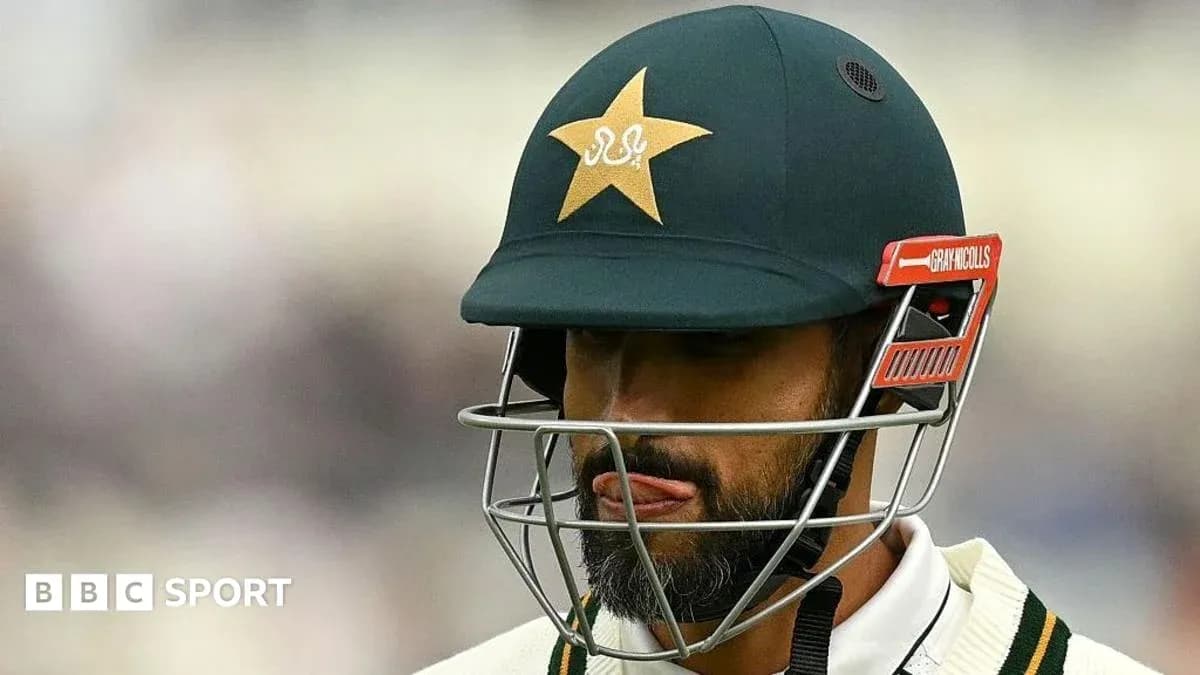
Saud survived until lunch. Babar did not.
Forty minutes before the interval, he was bowled by Josh Tongue, undone and then left gesticulating at the surface. It was the image of a captain fraying at the edges, searching for answers in the pitch when so many of them lay in technique and temperament.
“He [Babar] disintegrated. It's tough for him,” Ramiz Raja said. “He's got to explain all this mayhem and then he has to look after himself and then he's got to work with the lot that are more T20 in nature than Test cricket.”
A team in turmoil
By lunch, the scoreboard said 100-7. Ramiz’s verdict was even harsher: “This innings is in serious turmoil.”
It felt bigger than a bad session. This was a side caught between formats, between philosophies, between eras. A group trying to play Test cricket with T20 instincts, on a pitch that demanded patience and a series that demanded steel.
The clouds will lift over Edgbaston at some point. The question is whether Pakistan can do the same before this tour, and perhaps their red-ball identity, unravels completely.