.svg&w=384&q=75 "logo")

Pakistan Cricket Faces Brutal Reset After Defeats
Pakistan cricket is not just losing a Test series in England. It is being torn up and rewired in full public view.
Two crushing defeats – an innings and 103 runs at Headingley, then a 194‑run loss at Lord’s – have left England 2-0 up and out of sight in the three-Test series. For Pakistan, the scoreline has triggered something far bigger than a routine inquest. It has sparked a clear-out.
Seven sent home, staff swept out
Before the final Test at Edgbaston has even begun, the Pakistan Cricket Board has moved with unusual ruthlessness.
Sarfaraz Ahmed and Umar Gul are out of the coaching setup. Mike Hesson has been brought in to take charge, with former Australia seamer Ashley Noffke installed as his assistant. The dugout has a new voice, a new accent, a new direction.
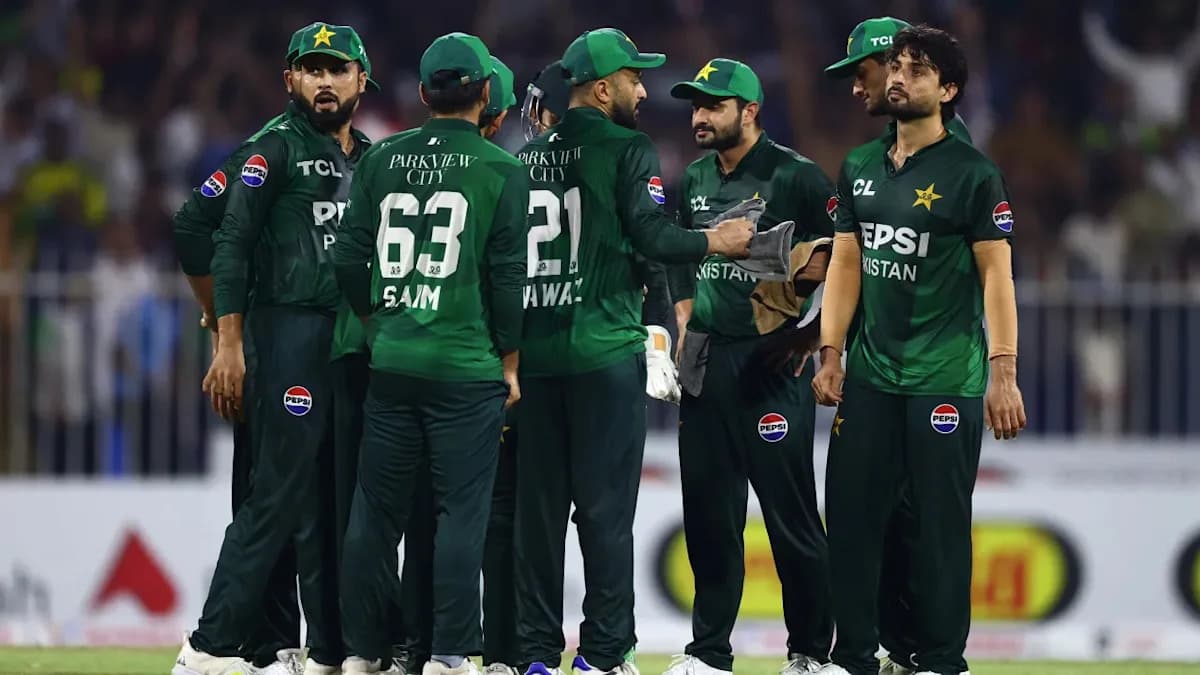
The squad has been cut even deeper. Seven players have been removed from the touring party for the third Test, including senior figures Mohammad Rizwan, Imam-ul-Haq and Salman Ali Agha. Established names, sent home mid-series. No gentle phasing out, no soft landing.
The message is unmistakable: this is a reset.
Shoaib Akhtar: ‘They don’t expect anything from this squad’
Watching all of this unfold, Shoaib Akhtar has given his own blunt reading of the situation.
Speaking on the OutSide EDGE show, the former fast bowler said the PCB has effectively lost faith in a large chunk of the current side, and is using the England tour as a fast-track into a new era.
“The PCB itself was very disappointed by these people, and they don’t expect anything from this Pakistan squad. The plan is to remove this squad and replace them with younger and newer blood. Players who just want to play for Pakistan. They are looking at the future now, and they are working at it in the right way,” Akhtar said.
This is not, in his view, a knee-jerk reaction to two bad games. It is a deliberate pivot, with the defeats in England serving as a brutal backdrop for change.
Yet even as he backed the idea of renewal, Akhtar sounded a warning. Transitions can chew up players as easily as they refresh a team.
“In this transition, I just want Shaheen Shah Afridi, Naseem Shah and Haris Rauf’s careers to be saved. These guys have a lot of cricket left in them,” he said.
Three fast bowlers, three potential pillars of the next generation. In a storm, Akhtar wants them ring-fenced.
‘Nothing’ expected from England tour
The most striking part of Akhtar’s assessment came from a private conversation he says he had with a PCB official.
He asked what the board expected from this tour of England. The reply, he claimed, was as stark as the scorecards.
“Nothing. We have expectations from the next generation of players that we are preparing for the big stage,” Akhtar quoted the official as saying.
No talk of pride, of fighting back, of saving the series. Just a cold shift in focus towards players not yet fully in the frame.
According to Akhtar, the same official went even further, describing Pakistan cricket as being “on a ventilator” and suggesting it could take around two years to revive the national setup. It is a grim metaphor, but it captures the scale of the rebuild the PCB believes it is facing.
The heavy defeats at Headingley and Lord’s have not just hurt. They have exposed a deeper malaise the board clearly feels can no longer be ignored.
‘We didn’t have the fight in us’
Akhtar’s criticism has not been confined to boardrooms and long-term plans. He has also taken aim at what he saw on the field.
Reflecting on the two losses to England, he stripped the performance down to its barest flaw.
“We didn’t have the fight in us,” he said.
No talk of conditions, luck, or missed chances. Just a damning verdict on mentality and resistance at the highest level.
That lack of fight, in his eyes, makes the current turmoil less of a shock and more of an inevitability. When asked whether the upheaval surprised him, Akhtar brushed the idea aside.
“What is the shock there? Didn’t you expect that?” he replied.
Work at home, chaos abroad
Akhtar also visited the National Cricket Academy in Lahore during the second Test and noticed something different there too – physical change.
“After 26 years, there is work being done at the academy now,” he said.
Bricks and mortar are finally moving at home while the national team unravels abroad. It is a jarring contrast: construction in Lahore, demolition in England.
Yet both point in the same direction – an admission that the old structures, on and off the field, are no longer enough.
Edgbaston and beyond
Pakistan now head to Edgbaston trying to avoid a 3-0 whitewash. On paper, there is still a Test to play, a contest to salvage, pride to claw back.
But the decisions already taken – staff removed, senior players sent home, a public embrace of a long rebuild – show that the PCB’s gaze has shifted well beyond Birmingham.
The third Test will offer one more glimpse of a fading era and, perhaps, the first hints of what comes next. The real question is not whether Pakistan can stop England sweeping the series.
It is whether this brutal reset can breathe life back into a team the board itself believes is “on a ventilator.”