.svg&w=384&q=75 "logo")
Pakistan Cricket Faces Crisis: A Call for Leadership
Pakistan cricket has lurched from concern to full-blown crisis in the space of a fortnight.
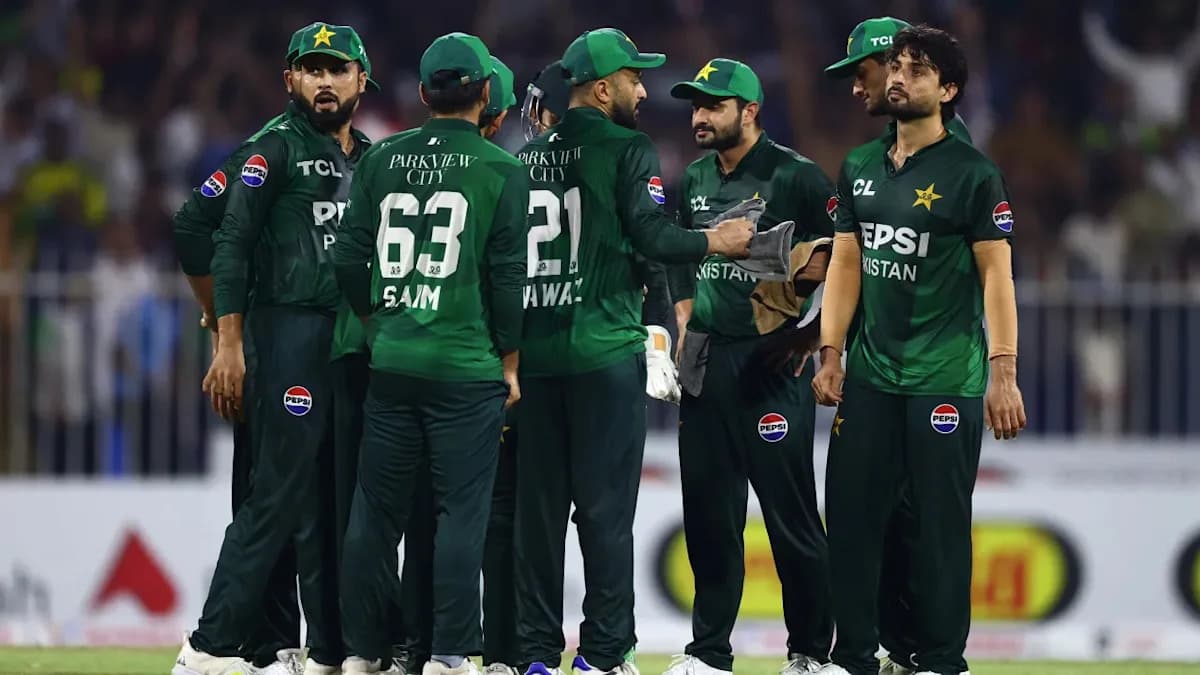
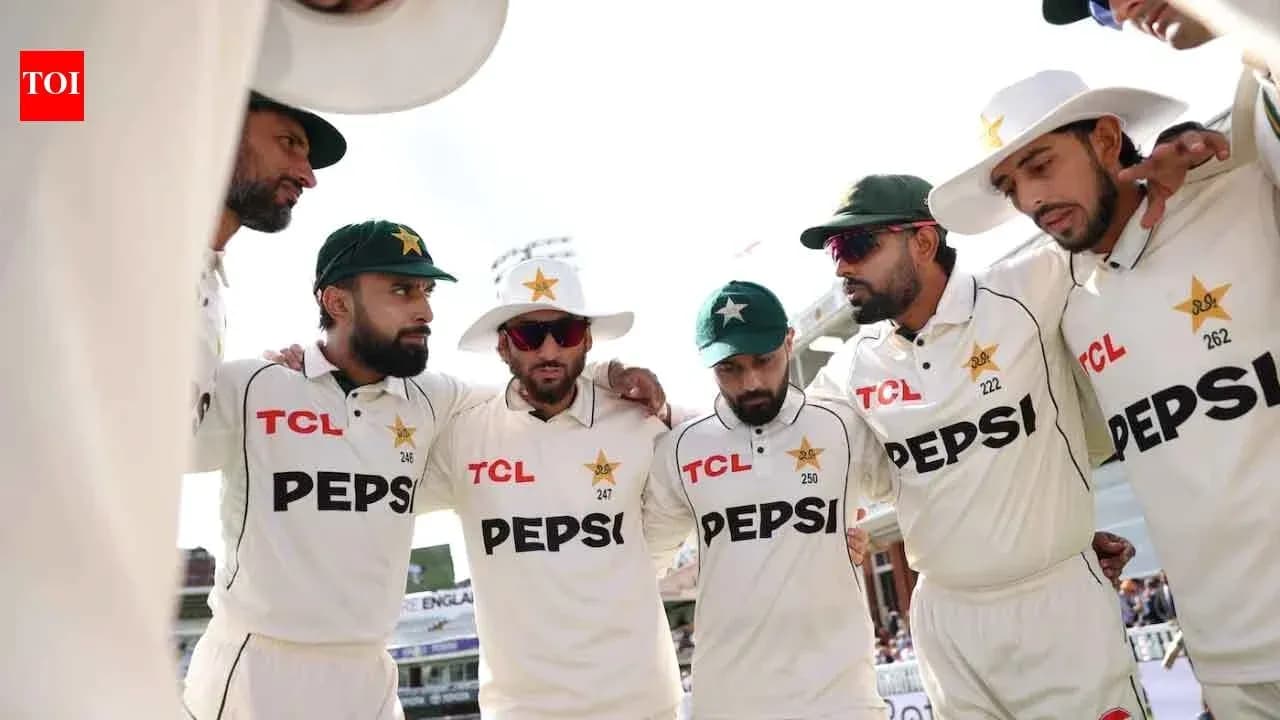
Already 2-0 down in the three-Test series in England and reeling from a 194-run hammering at Lord’s, the Pakistan Cricket Board has detonated a grenade in the middle of its own dressing room. Players axed, coaches sent home, roles reshuffled, senior figures walking away. Confusion everywhere, clarity nowhere.
For former Pakistan wicketkeeper-batter Atiq-uz-Zaman, watching from England, it is nothing short of a collapse.
“Pakistan cricket is in shambles at the moment,” he told IANS, calling this “an all-time low” for the national side.
Chaos after Lord’s
The Lord’s defeat felt brutal enough on its own. The response from the PCB turned it into something else entirely.
Seven players were sent home ahead of the final Test at Edgbaston, starting September 9. Head coach Sarfaraz Ahmed and bowling coach Umar Gul were also removed mid-series. White-ball coaches Mike Hesson and Ashley Noffke were abruptly handed control of the red-ball side. Misbah-ul-Haq resigned from the selection panel and stepped away from his batting consultant role at the National Cricket Academy in Lahore.
The message to the outside world? Panic.
The message to the dressing room? Nobody is safe.
Atiq could not make sense of the selection upheaval, particularly the treatment of Khurram Shehzad and spinner Ali Usman.
“I don't understand why Khurram Shehzad was dropped or why the spinner (Ali Usman) was sent home after taking the most wickets in the Leeds Test,” he said. “All of a sudden, now T20 bowlers are brought into the Test squad. Why? Because Mike Hesson has his personal favourites, and he brought those players into Test cricket.
“I don't understand what's going on.”
The sense of bewilderment runs through his assessment. A team already struggling across formats has now been plunged into deeper uncertainty by its own administrators.
‘Either you were wrong then, or you’re wrong now’
If the selection calls were puzzling, the coaching decisions infuriated him.
Sarfaraz and Gul, both World Cup winners for Pakistan in different roles and eras, were removed mid-series by the same system that had only recently elevated them.
“There is no justification for it,” Atiq said. “The same people who selected them are the ones turning around and deselecting them. That means either you made a mistake in the first place, or you are making a mistake right now.”
He stressed his own reservations about Sarfaraz’s appointment as Test head coach, not because of the former captain’s stature, but because of his lack of coaching experience and qualifications.
“I didn't support that appointment,” he admitted. “But once you make him the coach, you have to back him. Give him a fair chance before you disrespect him and send him home in the middle of a Test series. It is unacceptable.”
His sympathy for Sarfaraz and Gul is clear. In his view, they have been sacrificed for failures that belong elsewhere.
“I feel very sorry for Sarfaraz and Umar Gul because I don't think they did anything wrong. If the players on the field can't perform, or if you haven't selected a team capable of performing, what is a coach supposed to do? Let's see what Mike Hesson does now.”
The challenge has been laid down. The bar, in the eyes of one former international, has been set.
Imam under fire
Atiq’s frustration is not limited to the boardroom. It extends to the field, and to one player in particular.
Imam-ul-Haq, Pakistan’s opener, missed both innings at Lord’s after suffering a Grade 1 tear in his left calf. He did, however, come out for batting practice, and later appeared in front of the media in shorts, heavily bandaged and limping.
For Atiq, the optics and the decision not to bat were damaging.
“Look, I won't speculate on the exact severity of his injury, but in our culture, we are raised to be tough,” he said. “If you have a Grade 1, 2, or even Grade 3 muscle strain, you still step out there and bat for your team. Even if you get out on the first ball, it doesn't matter – the public sees that you showed heart, and they respect you for it.”
He pointed to examples from around the game: Glenn Maxwell’s double hundred while battling severe hamstring cramps, Chris Woakes batting with a fractured hand, Saleem Malik taking on West Indies fast bowlers with a broken arm.
“Imam-ul-Haq should have walked out to bat,” Atiq insisted. “Even if he got out immediately, nobody would have questioned his commitment because he was genuinely injured. But limping around in front of the media after taking criticism the day before just looks like a performance.
“It leaves a bad impression, and I have no sympathy for that behaviour. If you don't have the heart or bravery for international cricket, you shouldn't be playing Test matches. Test cricket isn't just a test of your skills – it's a test of your character.”
In a week already full of uncomfortable truths, that might be the harshest.
A tough system, and a thin lifeline
For all his anger, Atiq has not written off the players. He knows the environment they come from, because he came through it himself.
“To be honest, in Pakistan, players are used to this environment from domestic, U16, and U19 cricket,” he said. “We are raised in a tough system where you rarely get total freedom or backing, and you always feel like you are playing under threat just to survive.”
His message to the squad before Edgbaston is simple and, in its own way, forgiving.
“Enjoy your cricket, believe in your skill set, do what you can with bat and ball, and leave the rest to God.”
That, in his eyes, is the only way to function when everything around you is unstable.
‘Talent is undeniably there’ – but is the leadership?
Atiq’s criticism stretches right to the top of the PCB. Now working as a scout for England women, Lions and Young Lions, and coaching the Germany men’s team, he has seen structures elsewhere. He believes Pakistan’s raw material is as good as any – but the system built around it is not.
“Hopefully, the PCB chairman changes his approach and brings in someone with genuine expertise and leadership experience to drive real structural change,” he said. “If you surround the team with quality, professional individuals, they will instill high standards. The talent in Pakistan is undeniably there, but without the right resources and supportive structure, these players cannot reach the next level.”
Edgbaston will offer only a glimpse of what this shaken side can salvage from a wrecked tour. The deeper question hangs over Lahore, not Birmingham: will Pakistan finally match its talent with the leadership it demands, or let another generation drift in the chaos?