
Pakistan Cricket Board's Brutal Mid-Series Shake-Up
At Lord’s, where Pakistan’s past still lingers in every shadow, the old ghosts have stirred again.
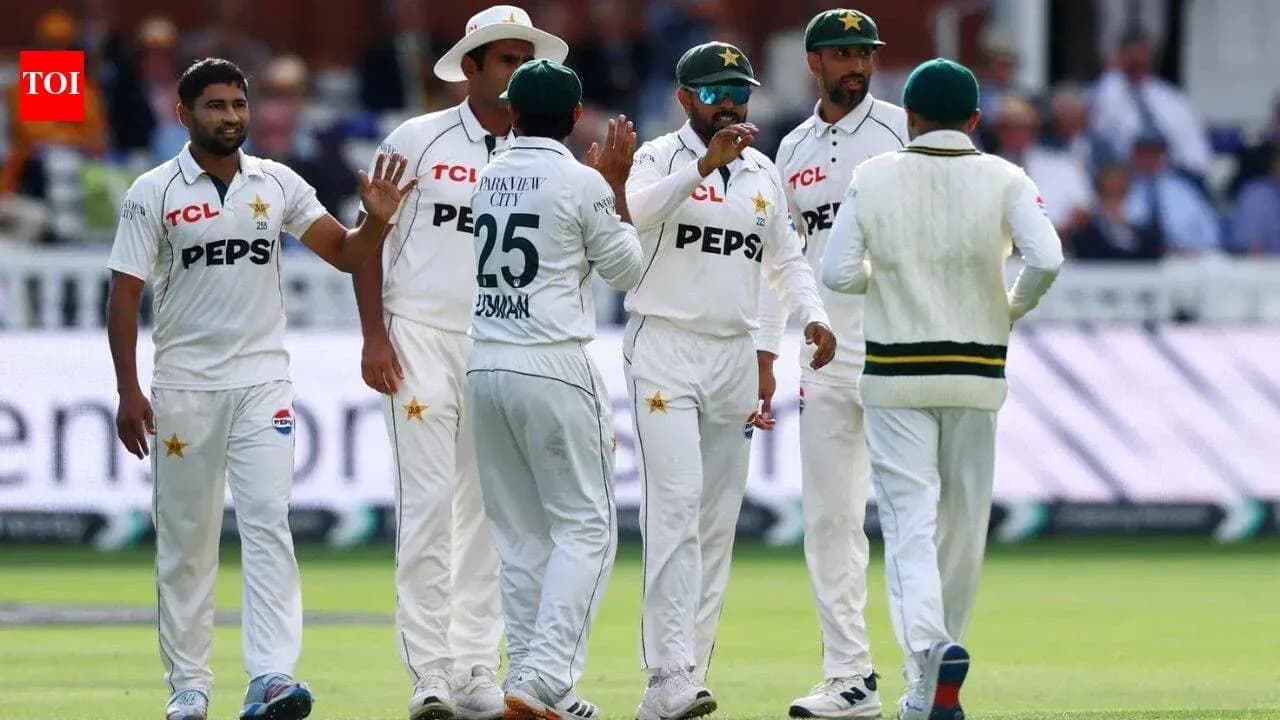
Babar Azam’s celebration after catching Ben Duckett in the second Test briefly felt like a standard Lord’s moment – a captain’s small victory in a long, grinding game. Then came the 194-run defeat. Then came the purge.
And suddenly, this wasn’t just about form.
A brutal cull mid-series
In the wake of that heavy loss to England, the Pakistan Cricket Board tore into its own squad with a ferocity rarely seen mid-series in Test cricket.
Seven players were dropped: Mohammad Rizwan, Salman Ali Agha, Imam-ul-Haq, Ali Usman, Khurram Shahzad, Aamir Jamal and Muhammad Awais Zafar. Head coach Sarfaraz Ahmed and bowling coach Umar Gul were also released from their duties.
In their place, a new-look group has been thrust into the spotlight. Two capped batters, Saim Ayub and Abdullah Fazal, return to the fold. Around them, five uncapped players step into a dressing room under intense scrutiny: pace-bowling all-rounders Razaullah Khan and Mohammad Imran, left-arm spinner Arafat Minhas, wicketkeeper Saad Baig and left-arm pacer Mohammad Imran Junior.
On paper, it could be framed as ruthless selection after poor performances. Inside Pakistan cricket, the whispers say otherwise.
It has emerged that these sweeping changes are driven by reasons described by those close to the situation as “more than cricket”. Not simply a reaction to a bad Test, but part of a deeper, more uncomfortable story.
Silence, statements and seized phones
Questions went out to the England and Wales Cricket Board and the PCB as speculation swirled. More than 72 hours passed. No answers came back.
Instead, the first formal word arrived from within the PCB itself. Director Media and Digital Communications Amir Mir confirmed that an internal process was underway.
"The Pakistan Cricket Board has initiated an internal disciplinary inquiry following media reports concerning discipline and conduct, which are currently being reviewed internally. The PCB handles such matters in accordance with its standard procedures. The process is being conducted under PCB regulations, ensuring that all concerned individuals are given due consideration."
No names. No specifics. Just the confirmation that something serious is being examined.
According to Pakistani outlet 365 News, players’ devices have been handed over to the PCB and will remain in the board’s custody until the end of the final Test. The report did not identify which players had their phones taken, and the PCB has not publicly explained why the devices were seized.
In a team already reeling from a heavy defeat, the atmosphere has shifted from disappointment to suspicion.
Aaqib Javed lights the fuse
As the dust from the selection overhaul settled, another storm broke.
PCB Director of High Performance Aaqib Javed turned his fire on opening batter Imam-ul-Haq, who suffered a low-grade calf tear at Lord’s and did not bat in either innings. For Aaqib, that was unacceptable.
"The Imam injury is a big question mark, and a deep disappointment. Players in the past used to get injuries, but they used to put on casts and still tried to play. We'll take action against this. How is it possible that a pulled muscle ruled you out of batting in both innings? He should have tried and fought. He'll have to face an inquiry; I can't say he faked it, but a muscle pull like that cannot stop you from batting altogether," he told Pakistan’s Geo network.
That was not a gentle reminder about standards. It was a public rebuke and a warning.
Aaqib also defended the sheer scale of the mid-series surgery on the squad. For him, this was a message as much as a selection call.
"The message we're sending to the recalled players is that you have to raise your game on important tours and compete, and we should be able to see some effort," he said.
In other words: no reputations are safe.
Mohsin Naqvi backs the hard line
PCB chairman Mohsin Naqvi has thrown his weight behind the shake-up, framing it as a necessary response to underperformance.
"Every match of a series is important for us and we are not left with any option if a player is not performing but to look for his replacement. The purpose behind these changes is not to axe players from contention, but just to replace them," Naqvi told Geo Network.
The message from the top is clear. This is not a gentle reset. It is a jolt.
Players dropped now are not, in theory, being cast aside forever. Yet when phones are taken, inquiries launched and senior figures speak of “action” and “deep disappointment”, the mood shifts from competitive pressure to existential threat.
Lord’s, again
All of this is unfolding at the very ground that once hosted one of cricket’s darkest chapters.
Lord’s was the stage for the 2010 spot-fixing scandal that engulfed Pakistan cricket. Then-captain Salman Butt, Mohammad Asif and Mohammad Amir were found guilty of taking bribes from a bookmaker to bowl no-balls at pre-arranged moments during a Test. Prison sentences followed. So did bans. The stain has never fully faded.
Now, in another England series, Pakistan find themselves back at Lord’s with questions swirling about discipline, conduct and internal investigations. No charges have been announced. No direct link has been made to any wrongdoing of that magnitude. But the echoes are impossible to ignore.
What began as a heavy defeat has turned into something far more complex: a team reshaped mid-series, a board seizing devices, a high-performance director publicly challenging an opener’s injury, and a chairman insisting every match is non-negotiable.
For Pakistan’s players, the next few days will not just be about salvaging a series. They will be playing under the long, cold memory of 2010, and under the harsh light of an inquiry that, for now, still sits behind closed doors.





