
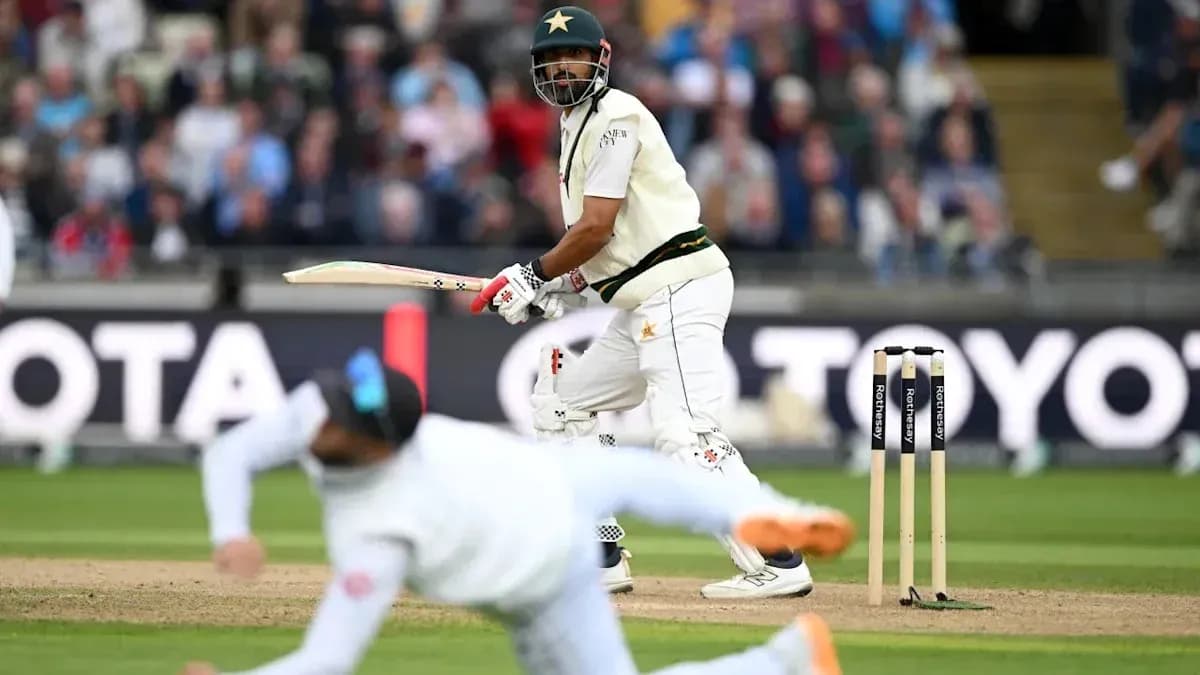
Pakistan's Collapse Against England: A 3-0 Whitewash
It takes a special kind of implosion to inspire Iceland Cricket, and Pakistan delivered it at Edgbaston.
On a final day that should have been a formality, England completed a 3-0 whitewash with an eight‑wicket win, chasing 130 with time and wickets to spare. Yet somehow, the abiding image is of a lower-order rearguard, a flurry of no-balls, and a minnow nation on social media announcing its long-term plan for world domination.
A fight, then a familiar fade
Pakistan began the day staring at an innings defeat. Razaullah Khan, playing with the freedom that often comes when the cause is already lost, lashed a brisk 81 to drag them past England’s first-innings total and force the hosts to bat again. It was spirited, defiant, and ultimately cosmetic.
The target of 130 should never have troubled England. For a few chaotic minutes, though, Pakistan turned a procession into a contest.
Mohammad Abbas struck with the very first ball of the chase, removing Ben Duckett. Five balls later, Emilio Gay followed in the same over. Two wickets, no runs. Edgbaston stirred. Pakistan, battered all tour, suddenly had England 0 for 2 and under genuine pressure with ten wickets in hand at the start of the innings.
That was the moment. It lasted barely half an hour.
Joe Root and Jordan Cox walked into the storm, took stock, and simply refused to give Pakistan anything more. They left well, defended late, and then, slowly, began to drive the game back into England’s control.
The pressure Pakistan had manufactured started to leak away.
Let-offs and a ruthless response
Pakistan’s window was narrow. They slammed it shut on themselves.
Root, on 23, was bowled by Mohammad Ali, only to be reprieved by the umpire’s call of a no-ball – Ali’s 17th of the series. It was the kind of basic error that has haunted Pakistan across formats and continents: discipline with the ball deserting them at the exact moment they needed clarity.
Root offered another chance on 38, edging Abbas between first and second slip. Neither fielder committed, both hesitated, and the ball flew untouched to the boundary. Two opportunities, both squandered. From there, the chase was little more than a training exercise.
Root finished unbeaten on 62, his 110th Test score of fifty or more, a number that underlines just how relentlessly he accumulates. At the other end, Cox, composed and unflustered, closed on 59 not out. England cruised home in the 25th over, the scoreboard reading eight wickets in hand and 3-0 in the series.
Root, speaking afterwards, was generous enough to acknowledge Pakistan’s brief surge.
“Fair play to Pakistan, they threw some punches last night,” he said. “They made it very difficult for us and in some ways it's a good thing to go through that.”
England could afford that perspective. Pakistan could not.
Iceland’s punchline cuts deep
While England celebrated a historic clean sweep, the sharpest line of the day came from thousands of miles away.
Iceland Cricket, never shy of a well-timed jab, took to X and delivered a withering verdict dressed up as a joke: Pakistan’s second-innings fight, they said, had given them “hope” that they, too, could rise – with an eye on “world cricketing domination by the year 2082,” before their board members, as they put it, would all be gone.
It landed because it felt uncomfortably close to the bone. When a team of Pakistan’s history and pedigree becomes the benchmark for a developing cricket nation’s long-term dreams, something is badly misaligned.
The punchline only works when the target has already spent months, even years, setting it up.
Chaos off the field, collapse on it
This was not just another bad tour. It was a case study in dysfunction.
Pakistan’s defeat at Edgbaston marked their 16th loss in 21 Tests. The series in England descended into turmoil: seven players removed from the squad after the second Test, head coach Sarfaraz Ahmed and assistant Umar Gul both sacked, and a disciplinary inquiry so severe that players had their phones confiscated. At one point, the off-field drama seemed to be running its own parallel series.
Babar Azam, fronting up after the latest defeat, did not hide from the cricketing basics.
“We had a couple of good moments. I think we have bowled well, but I think the first innings cost us. Too many soft dismissals,” he said, reflecting on a side bowled out for 133 on the best surface of the series.
He was right. The rot began there, not with the late-order resistance or the early strikes with the new ball. Pakistan did not lose this Test in England’s chase; they lost it when their top order surrendered on day one.
Yet the numbers and the quotes only tell part of the story. The deeper issue is structural. A captain learning about squad changes via press release. Coaches sacked mid-tour. A disciplinary crackdown that hints at mistrust rather than unity.
This is not a blip in form. It is an organisation pulling in different directions while expecting results at the highest level.
A warning, not just a whitewash
England’s 3-0 scoreline will sit in the record books as a triumph of clarity, consistency and ruthlessness. They identified Pakistan’s weaknesses early in the series and kept pressing the same bruises: discipline with the ball, resilience with the bat, composure under pressure.
For Pakistan, the lasting image is not Razaullah’s 81 or Abbas’s double strike with the new ball. It is Iceland Cricket, half a world away, looking at a fleeting fightback and treating it as a beacon for their own distant ambitions.
When a proud Test nation becomes the set-up line for a joke about 2082, the alarm bells are deafening.
The question now is not how Pakistan respond in their next Test, or who takes the coaching reins, or which young player emerges from the wreckage. It is whether the people running the game are willing to accept that this is no longer about selection tweaks or tactical shifts.
Without a coherent, long-term plan, the next tour could look a lot like this one. And somewhere in Reykjavik, they will be watching.





