
Pakistan's Batting Struggles in England Tour: A Call for Patience
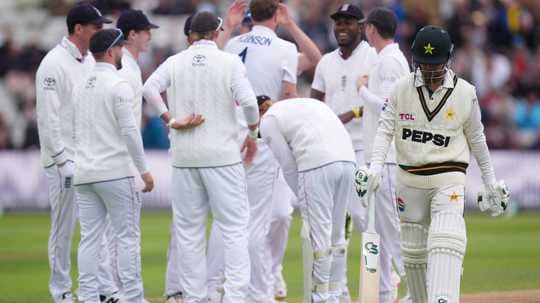
At Edgbaston, Pakistan’s tour of England has narrowed to something brutally simple: survive, or sink without even forcing England to bat again.
Five innings into the series, they have not reached 200 once. In the final Test, they closed the second day on 52 for 2, still 268 runs short of making England pad up a second time. The numbers are stark, the pattern familiar.
Inside the dressing room, though, Michael Smith insists the mood is anything but broken.
Runs scarce, questions plenty
This has been a grim tour with the bat. Pakistan’s top order has been repeatedly exposed by a relentless England attack in home conditions, and the visiting side has yet to find a method – or a mindset – that allows them to bat long.
The chaos has not been confined to the middle. The PCB has recalled seven players and head coach Sarfaraz Ahmed after the Lord’s defeat, and launched an inquiry into the conduct of some squad members. Turbulence off the field has matched the struggle on it.
Smith, brought in as batting coach just before the series, refused to be drawn into that storm.
“I know nothing about that [the inquiry] so I can't really comment on anything like that,” he told reporters after play on day two. “It's the first time I've heard of those things so I'm not too sure.”
He steered the conversation firmly back to the pitch, and to a batting group he believes has more to offer than this scoreline suggests.
“For me there's a lot of quality in Pakistan. We've seen it for many years and lots of countries go through slight changes. This is one where we've got some younger players with some experienced players but it's the learning and how quickly we can get them to learn and get comfortable in the Test environment to really help them from a long-term point of view.”
A raw top order on a brutal education
That learning curve is steep. Of the top seven in this Test, only Babar Azam and Shan Masood have toured England before. The rest are feeling their way through a first exposure to seaming Dukes balls and long, probing spells.
Smith did not hide from the reality: Pakistan are in a transition phase, and they are not batting long enough.
“We've shown some real good signs but just not for long enough and I think that's probably the biggest lesson is that we need some of our guys to be playing for hours at times and in certain game plans,” he said.
He picked out glimmers in the gloom.
“I think Saud [Shakeel] has shown us at times, Azan [Awais] has shown us and Shan [too], but we need that for hours and not just for half a session or so.
“Some of the players, it's their first tour of England and they haven't got a lot of Test experience so they are learning some challenging lessons along the way and they have to learn on the Test circuit which is a challenging one. We’ve got to keep making sure that we're showing small really good signs at times but we need to now put a big play in to really get that confidence going again.”
That “big play” has eluded Pakistan all tour. Partnerships have flickered, then vanished. Promising starts have dissolved under pressure. The technical flaws are obvious enough; the mental scars may take longer to heal.
Holding the line on morale
Given the results, you might expect a fractured group. Smith painted a different picture.
“It’s been tough, it’s been challenging but let’s not take away [the fact that] we've come up against a really good bowling unit in home conditions who've been excellent,” he said.
He pushed back against the urge to deliver verdicts on players still learning their craft abroad.
“I suppose we might not see the sort of success we want to see now but hopefully if a lot of these players are back on our next UK tour we'll really see an upward trend and I think that's the time to really judge them - especially some of the younger players who get their first taste of the English type of conditions.
“It's tough cricket but the one thing our boys are really doing is embracing being on tour and actually enjoying themselves on tour as well as a group, as a whole.”
So while the scoreboard screams crisis, the message from the batting coach is patience, perspective and a longer view.
A “bloody exciting” challenge amid the wreckage
Smith is new to this job, new to this group, and acutely aware that the problems run deeper than a single series. Asked whether Pakistan need structural change to better prepare batters for these kinds of conditions, he was cautious on specifics but clear about the scale of the task.
“I think I've got a bloody exciting challenge on my hands because there are some serious players,” he said. “Let’s not worry about what's happening here, we've got some really exciting players and [their] potential is exceptionally high. It's just how quickly can we get them to that level, especially playing outside of Pakistan. That's going to be a big challenge and something we're really excited about.”
That is the tightrope Pakistan now walk: absorbing the bruises of this tour without losing faith in a group they believe can grow into hardened Test cricketers.
The immediate reality, though, is far less romantic.
Pakistan’s “bloody exciting” project has to start by doing something they have failed to do in five attempts: get beyond 200. Only then can they drag this Test into a fourth innings and ask England to bat again.
If they cannot, this tour will not just be remembered for transition and potential. It will be remembered for a batting lineup that never quite turned signs of promise into a statement.





