.svg&w=384&q=75 "logo")
Pablo Torre’s Reporting Exposes NBA Violations and Clippers Punishment
Pablo Torre didn’t need the NBA to validate his work. He got it anyway.
Two months after his podcast “Pablo Torre Finds Out” detonated one of the most complex salary-cap stories in league history, the NBA delivered its verdict on the Los Angeles Clippers and Kawhi Leonard — and it landed almost exactly where Torre’s reporting said it would.
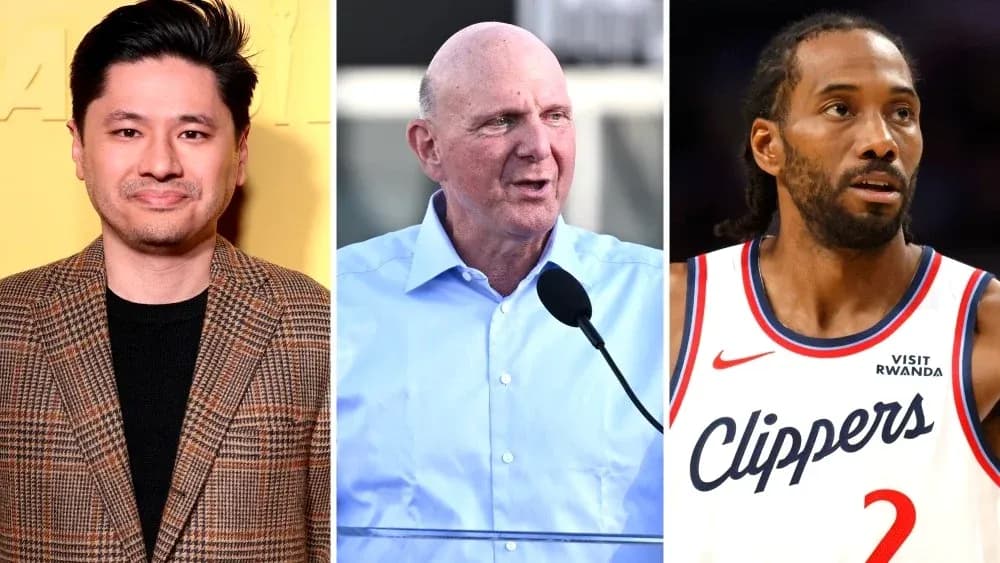
A $30 million fine. Five first-round draft picks stripped. A year-long suspension for Steve Ballmer, the richest owner in the sport. A formal finding that the Clippers had “committed multiple significant rules violations” and that Leonard, through his uncle Dennis Robertson, pushed the franchise to help secure off-court money and cover personal expenses.
The league called it “flagrant.” Torre had been calling it a problem for a year.
The podcaster vs. the billionaires
When Torre’s investigation first surfaced — anchored in documents, human sources and months of reporting — the blowback was swift and loud. Ballmer repeatedly and aggressively denied any wrongdoing. His friends and allies followed.
Mark Cuban, the former Mavericks owner and fellow billionaire, went after Torre in public. Ty Lawson, the ex-NBA guard turned podcaster, did the same. ESPN, Torre’s former employer, published a story on Aug. 17 under the headline: “Sources: NBA has no evidence Ballmer funneled money to Leonard via sponsors.” The piece framed the league as having essentially cleared Ballmer on the central allegation.
Puck joined in. Founding partner Peter Hamby used his podcast to paint Torre as a clout-chaser, suggesting the series was more about attention than accountability.
All of this came after Torre’s work had already won a Pulitzer Prize.
So when the NBA’s investigation — conducted by powerhouse law firm Wachtell Lipton — concluded that the Clippers and Leonard’s camp had indeed crossed major lines, it did more than punish a franchise. It exposed how aggressively parts of the media ecosystem had been willing to side with money and power over months of painstaking reporting.
Torre sees the irony, but he refuses to make the league’s ruling his scoreboard.
On one hand, he admits, it’s hard to ignore the feeling of vindication. On the other, he insists that journalism cannot be judged by whether the subject of an investigation, or a governing body, eventually agrees with it. The work, he argues, has to stand on its own.
For the people who actually listened to the multi-part series, he says, there was never much ambiguity.
ESPN’s framing and the Clippers’ spin
If the NBA’s punishment was historic, the media maneuvering that preceded it was revealing.
Torre describes his experience with ESPN’s August report as “not great” — a polite way of saying it cut directly against a year of his own reporting and amplified a narrative that now looks conspicuously like team-driven spin.
He points to a simple pattern: the Clippers, with the help of a crisis PR manager hired by Ballmer, appeared to be shopping a friendly version of events. That version made its way into ESPN’s framing and looked strikingly similar to the press release the Clippers pushed out at nearly the same time.
The NBA, Torre notes, immediately refuted the substance of what the team had been telling people.
What stings him most is not that ESPN got something wrong, but how it handled the process. The network did not call him before publishing, he says. After the story ran, he provided a statement — “We stand by our reporting. We look forward to the NBA’s ruling. And our investigation continues.” — and was told it would be included. It never was.
For a former employee who had just spent a year assembling documentary evidence and human testimony, it raised a blunt question: why did a major outlet find the Clippers’ framing more credible than a reporter they knew, whose work they could hear and see in full?
Puck, pile-ons and personal shots
If ESPN’s story felt like institutional coldness, the Puck podcast landed more like a personal attack.
Torre says those critics didn’t seem interested in actually consuming his work. They went after his standards and credibility anyway. To him, it felt “darkly poetic” to be lectured on journalistic rigor by people whose own handling of the story bore little resemblance to it.
He doesn’t bother, at this point, to parse whether their angle came from incompetence or malice. The difference, he suggests, is shrinking by the day.
The attacks did not all age well. Cuban and Lawson have both since issued public apologies, which Torre says he appreciated — not just the words, but the way they arrived.
A historic punishment, and a soft landing for Kawhi
The penalties themselves tell their own story.
The Clippers: crushed. Ballmer: sidelined for a year, fined and stripped of picks that will shape the franchise’s future. The organization: branded by the commissioner as having committed “flagrant violations” and suffered “institutional and leadership failures.”
Kawhi Leonard: a $700,000 fine. No suspension. Free to move on, including a path to the Toronto Raptors.
On its face, that gap looks absurd. Leonard’s camp allegedly secured tens of millions in off-court money and improper benefits. The league’s own findings tied him, through his uncle, to the pressure campaign that put the Clippers in this position. Yet the star walks away with what amounts to a financial speeding ticket.
Torre’s reporting offers an explanation that has nothing to do with mercy and everything to do with leverage.
According to what he’s uncovered, the NBA made a calculated choice: give Leonard a slap on the wrist to secure a settlement with him and the players’ union. That settlement, in turn, removed arbitration as an option — one of Ballmer’s most potent weapons to drag the league and its partners into a prolonged, messy fight.
By closing that door, the NBA boxed Ballmer in. When the hammer finally dropped on the Clippers, arbitration was off the table. His only move now is to go to court — against the league, the commissioner, Wachtell Lipton, Torre, or anyone else he believes he can pull into the legal crossfire.
From Torre’s perspective, that’s a legal strategy, not a moral verdict. It explains why Leonard’s punishment looks so light. It does not rewrite who did what, or how much they knew.
Kawhi’s statement and the documents that say otherwise
Leonard’s public response tried to split the difference.
“Integrity and respect for this game are fundamental to who I am,” his statement read in part. “I accept full responsibility for the lapses in judgment by people within my inner circle and regret the distraction this situation has caused the fans and my family.”
It sounded like contrition without true ownership — a star distancing himself from the specifics by placing the blame on “people within my inner circle.”
Torre doesn’t buy that framing. Not with the paperwork in front of him.
Leonard is 35. He sat in meetings with teams. He knew what his uncle was asking for. Torre says he has documents bearing Leonard’s signature in sections that explicitly attest to his knowledge and consent to the deals now being portrayed as if they were happening over his head.
On the page, it doesn’t add up. As a piece of damage control, though, Torre understands it. Leonard gets to say his piece, acknowledge regret in vague terms, and then walk away to his next chapter: “See you in Toronto.”
In the end, the whole saga circles back to one simple dynamic. Steve Ballmer wanted Kawhi Leonard so badly that he ignored how exposed he was making himself — and his franchise — to a player whose interests, and whose camp’s demands, did not align neatly with the rulebook.
What Torre isn’t chasing — and what comes next
The success of “Pablo Torre Finds Out” has inevitably sparked speculation about what, and who, he might go after next. One rumor he’s keen to swat away: he is not investigating the New York Knicks or Jalen Brunson.
“They are not a target,” he says. He’s “absolutely not focusing” on them.
His attention, instead, is already on another powerful figure in Los Angeles sports: Mark Walter, the Los Angeles Dodgers owner who is under federal investigation over $21 billion in undisclosed loans tied to two insurance companies he owns, and who recently sold the Lakers to Bob Iger and Josh Kushner for $12.5 billion.
Torre’s next series, dropping its first part on Friday, will dive into that world. He says it again touches federal agencies, the public interest, Hall of Fame basketball players, and both a Los Angeles basketball team and a Los Angeles baseball team. The challenge is the same as with the Clippers story: take something sprawling and technical and make it clear, urgent and impossible to ignore.
The sale of the Lakers to Iger and Kushner is part of the entry point, but not the whole picture. Torre and his team have spent months on the story, accelerating their work in recent weeks. This will not be a one-episode hit-and-run. It’s the start of another long investigation.
The Clippers case began as a podcast curiosity about a $28 no-show endorsement deal and ended with the harshest team punishment in NBA history. Now the league, its owners and its stars know that when Torre starts following the money, the story rarely stops where the powerful expect it to.