Nikola Jokic's Journey: Balancing Wealth and Normality
Nikola Jokic has spent two straight summers turning down Denver’s offers to extend his contract, and for a franchise built entirely around him, that was enough to trigger alarm bells. Eleven seasons, one city, one system. When the face of all that hesitates, people start imagining the worst.
The panic didn’t last.
Jokic made it clear his hesitation wasn’t about Denver, or about basketball, but about timing and numbers. Wait a year, and the numbers explode. By holding off until next summer, the three-time MVP positions himself for a projected $359.5 million supermax extension, the largest deal the league has ever seen. If he signs it, his career earnings should soar past $700 million, putting him ahead of LeBron James and Kevin Durant in the financial record books.
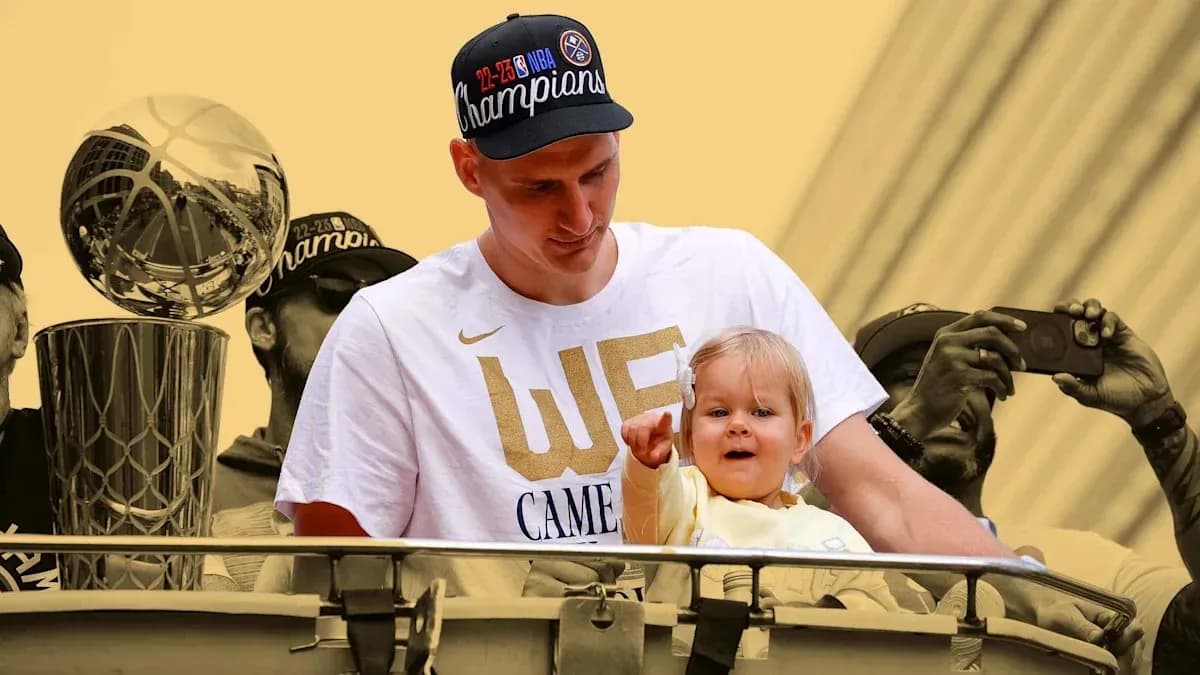
That kind of money bends reality. Jokic knows it. His kids will live inside it.
A different kind of problem
On the “Jao Mile” podcast, Jokic pulled back the curtain on what that means at home, far from the roar of Ball Arena.
"My parents taught me values I want to pass on to my kids. If I had to single something out, it would be a sense of 'normality.' For my kids, their baseline of what's normal is already set high: a swimming pool and a nice car are normal to them, whereas back in the day, we didn't even have a car," he said. "So I want them to learn to think about what true normality really means."
It’s a simple line, but it cuts straight through the highlight reels and contract figures. Jokic is trying to raise grounded children in a world where luxury is the default setting.
That stands in stark contrast to Sombor, the small Serbian town where he grew up. His parents were working-class, relying on hard, physical jobs to keep the family moving forward and to scrape together enough so their son could even get to basketball practice. They weren’t destitute, but there was nothing glamorous about that life. Every opportunity had a cost.
Now? His son and daughter wake up in a villa in Colorado. Their father earns tens of millions of dollars a year playing a game. The distance between those two realities is enormous, and Jokic is fully aware he can’t close that gap entirely, no matter how much he talks to them about “normality.”
He knows there are limits. However many stories he tells about Sombor, however many lessons he tries to recreate from his own childhood, his children will grow up with comforts he never even saw as a possibility.
The superstar who refuses to play the superstar
This tension isn’t unique. Generational wealth has reshaped the lives of almost every modern NBA star and their families. The league is full of players whose kids will never know the struggles that fueled their parents’ rise.
What separates Jokic is how little he seems interested in playing the traditional role of global icon.
He has no public social media presence. He doesn’t chase the mega-brand sneaker deals that define so many of his peers. While others build empires, he leans into anonymity whenever the schedule allows, disappearing back to Serbia, back to horses and quiet streets.
On the court, he’s a three-time MVP and an NBA champion. Off it, he moves like a man trying to keep his life as small and as ordinary as possible, despite the extraordinary numbers attached to his name and his bank account.
That understated approach has turned him into one of the most unusual superstars in modern sports. No curated persona. No constant stream of content. Just basketball, family, and a stubborn commitment to staying grounded.
His children are watching all of it. They may never know the Sombor of his childhood, or the grind that carried him from a modest home to the richest contract in league history. But they see the way he lives now—the way he resists the excess his status invites.
For Jokic, that might be the truest version of “normality” he can offer them in a world built on anything but.