New Zealand Breakers: A Club Rebuilt for Success
At Atlas Place, the New Zealand Breakers don’t feel like a club tweaking around the edges. They feel like a club that has torn everything down to the studs and is daring the rest of the NBL to notice.
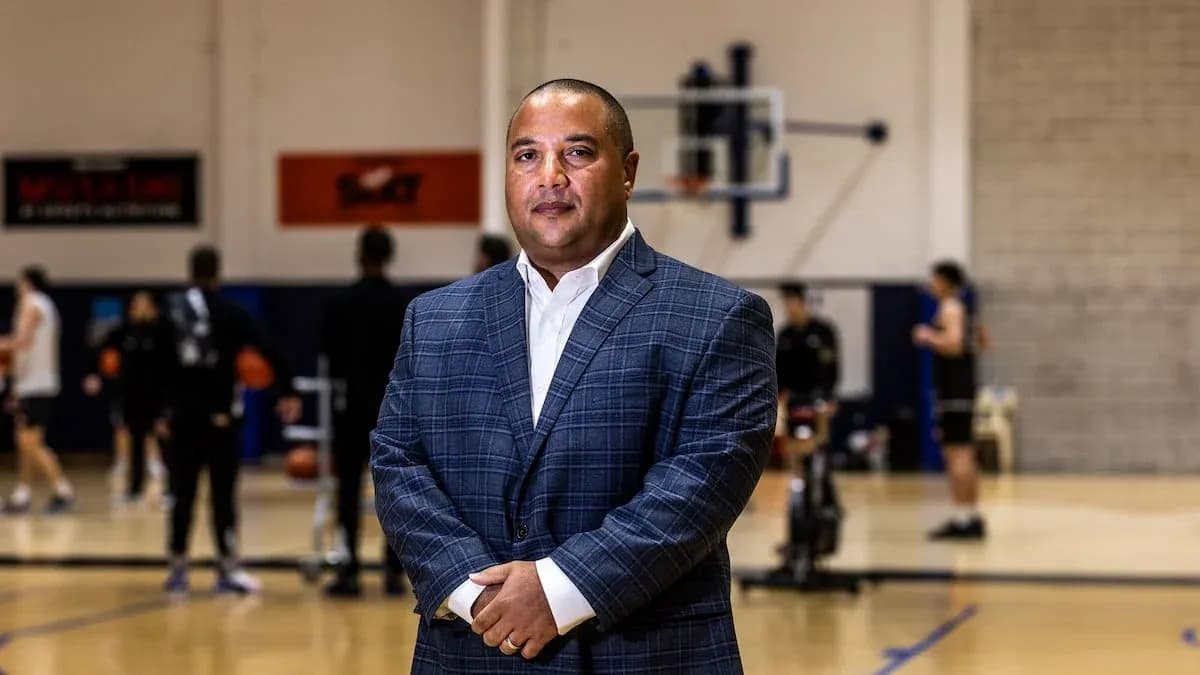
Owner Matt Walsh’s fellow investor, American businessman and film producer Jason Mitchell, has quietly turned the place into a construction site for ambition. New logo. New uniforms. New coaching staff. Largely new roster. A reborn academy. A refurbished headquarters with modern facilities and a gleaming new court donated by Steven Adams.
The Breakers used to be a good story. Mitchell wants them to be a statement.
A club rebuilt from the ground up
When Mitchell took over, he didn’t talk about tweaks. He talked about foundations. The first move was symbolic and practical: bring back Dillon Boucher, a figure woven through almost every chapter of the club’s history, and task him with restoring the old winning ethos.
From there, the hires kept coming. Staff across the front office and basketball operations, all pulled into a vision that leans heavily on connection and community. Mitchell talks about those two ideas as if they are non-negotiables, the pillars of a club that represents New Zealand, its people and its land.
The rebrand is not just about a sharper logo or fresher kit. It is about identity. The Breakers are the only New Zealand team in the Australian-based NBL; Mitchell wants them to feel unmistakably Kiwi every time they step onto the floor, whether that’s in Auckland, Perth or Cairns.
He mapped it out as a two-year plan: get the right people in the right roles, build the infrastructure for sustained success, then let that structure support a winning team. He believes that phase is complete. The foundations are in.
Now the lights go on.
Spark Arena, and a new era on the sideline
Attention now swings to Sunday’s home opener against the Illawarra Hawks at Spark Arena, the starting gun for a season in which expectation and scepticism are wrestling for space.
On paper, the roster has a sturdy spine. Parker Jackson-Cartwright and Sam Mennenga return as key pieces, familiar faces in a refreshed locker room. Around them, Mitchell and Boucher have added proven NBL championship experience in Kouat Noi and Dejan Vasiljevic, players who know what it takes when the season tightens and possessions start to matter more.
There is size and upside, too. Charles Bediako arrives as a rim-protecting big, the sort of presence the Breakers have often thrived around. Josiah-Jordan James comes in as a versatile defensive wing and shooter, though a hamstring injury will delay his debut and test the club’s depth early.
The headline addition, though, doesn’t lace them up.
Gordon Herbert, fresh from guiding Germany to the 2023 FIBA World Cup title, is the most decorated coaching appointment in the club’s recent history. His résumé runs through the top levels of Europe and includes a stint as an assistant with the Toronto Raptors. In a league where coaching experience is deep but rarely world-champion deep, his presence stands out.
Mitchell admits many doubted the Breakers could lure Herbert to New Zealand. They did, and the Canadian arrives into a staff that blends international know-how with local insight: New Zealanders Matt Lacey, Quinn Clinton and Josiah Maama, and lead assistant Sebastian Gleim, familiar with the country after his time in charge of the Franklin Bulls.
Herbert’s arrival underlines something Mitchell keeps returning to: this is no longer a club players and coaches glance past.
From afterthought to destination
Mitchell believes the Breakers have shifted their reputation. Where once international players might have looked at New Zealand as a distant outpost, he now sees them choosing the club as a serious stop in their careers.
The roster reflects that reach. Players with G League experience, players who have competed at high levels around the world, players who see the NBL as a genuine platform rather than a detour.
Across the Tasman, not everyone is convinced. Pundits have already started writing the Breakers off, tipping them to slide towards the bottom of the table. One reason keeps surfacing: they are the only team in the league without NBA experience on the roster.
Mitchell shrugs at that quirk. In his view, NBA minutes are a line on a CV, not a guarantee of success. He points to the calibre of his group, to the global paths they’ve taken, and insists the Breakers have found the right mix for this season – players who fit each other and the local core.
The NBL, he says, is in a strong place. For the Breakers, being the lone New Zealand representative in that landscape is a responsibility as much as an opportunity. They carry a flag as well as a game plan.
Expansion talk and a widening footprint
While the Breakers sharpen their focus on the present, the league’s horizon is stretching. The NBL has been openly flirting with expansion: the Gold Coast and Canberra are being floated, and there is talk of reconnecting with Asia.
The league’s requirement for arenas holding between 8000 and 12,000 fans makes a second New Zealand franchise unlikely in the short term unless existing venues are upgraded. Mitchell isn’t closing that door, but he senses the league’s immediate priority lies elsewhere: growing its global footprint and pushing more games into Asian markets, especially in pre-season.
For the Breakers, that fits neatly with his own ambitions. More international exposure, more chances to plant the club’s brand in new markets, more opportunities to sell New Zealand basketball to the world.
The academy returns – and the pipeline opens
Behind the chase for trophies, Mitchell has revived one of the club’s most important long-term tools: the Breakers academy.
Back after a six-year hiatus, its first intake features 20 male athletes from school years 11-13 across six Auckland high schools. History shows what that can mean. Previous versions of the academy helped unearth talents such as Mennenga, Reuben Te Rangi and Anzac Rissetto, all now part of the senior setup.
Mitchell wants the academy to serve the entire country, a spotlight for the best young players in New Zealand. Not all will become Breakers. That is not the point. The goal is to give them a pathway – to college scholarships, to professional opportunities, to the wider benefits sport can bring.
It is a philosophy that runs through almost everything he says about the club: build something that lasts, something that belongs to more than just the players on the current roster.
Roots in New Zealand, lessons from Los Angeles
Mitchell knows some will view his intentions through the lens of his involvement in the club’s previous ownership group. He leans on his personal ties to New Zealand to answer that doubt.
His wife Jessica is a Kiwi. They and their three children have lived here, including an 18-month stint during Covid when the borders were closed. He has been coming to the country for more than two decades and splits his time between Los Angeles and New Zealand, with plans to be in the stands for most home games this season.
He has also brought back familiar names from the club’s past. Boucher is one. Paul and Liz Blackwell, long-time pillars of the Breakers’ story, are another. Mitchell insists they will remain involved for as long as he is. History matters. So does doing things “the right way”.
His own love of sport, particularly basketball, was forged in Los Angeles during the Lakers’ Showtime era. Jerry Buss in the owner’s box, Magic Johnson and Kareem Abdul-Jabbar on the floor, a city wrapped around a team. Mitchell saw what that connection between success and community looked like. In Auckland, he wants the Breakers to echo that impact on a New Zealand scale.
His sporting interests now stretch beyond basketball. In 2023, he fronted a consortium that tried to secure an Auckland-based A-League football licence, only to lose out to a bid led by Bill Foley, Ali Williams and Anna Mowbray. He has since joined the ownership group at EFL Championship side Swansea City, alongside names as varied as Martha Stewart, Luka Modric and Snoop Dogg.
Swansea’s squad includes All Whites World Cup players Elijah Just and Marko Stamenic, a neat thread back to New Zealand. Mitchell has already spent time in Wales meeting coaches, front-office staff and players. As of Friday morning, Swansea sat second in the Championship table, a sign that project is moving in the right direction too.
As for Snoop Dogg, Mitchell has met him, though not yet in the context of their shared investment. That introduction, he says, is still to come.
Golf, growth and the chase for banner number five
Mitchell hints that his involvement in New Zealand sport may yet deepen. One concrete plan is already locked in: the Breakers’ first annual Celebrity Golf Invitational, scheduled for January.
The idea is simple and clever. Use golf to showcase the country, bring international names to New Zealand, and funnel the attention and resources back into basketball development. Early response has been strong. It fits neatly with the club’s broader push to expand its reach and influence.
Strip away the projects and the polish, though, and the target remains blunt. The Breakers want another championship. They already have four, all from the 2010s, and the distinction of being the first New Zealand team to win a title in an Australian sporting competition. Those banners hang as both pride and pressure.
Last season offered a reminder of how quickly momentum can fade. The Breakers started brightly, winning both the pre-season tournament and the in-season tournament. Those trophies looked like markers on the road to something bigger. They weren’t.
Mitchell is clear about what matters now. Those cups were steps, not destinations. The ultimate goal is a fifth title, another banner in the rafters at Spark Arena.
To get there, he says, the club is pulling best practices from around the world, then dusting them with something uniquely local.
Global standards. Kiwi edge. The foundations are laid. Now the Breakers have to prove that all this rebuilding leads somewhere only a championship can reach.