NBA Focuses on Stricter Calls for Push-Offs, Flopping in 2026-27 Season
As the new NBA season approaches, attention turns not only to players and teams but also to referees who are sharpening their focus on certain critical issues during games. The league aims to tighten calls particularly on push-offs, flopping, and other contact plays to improve fairness on the court.
James Jones, head of basketball operations, explained that the goal is balancing offensive chances with defensive integrity. This season, officials will closely monitor four specific areas that often impact the flow and outcome of games.
Four Main Points of Emphasis
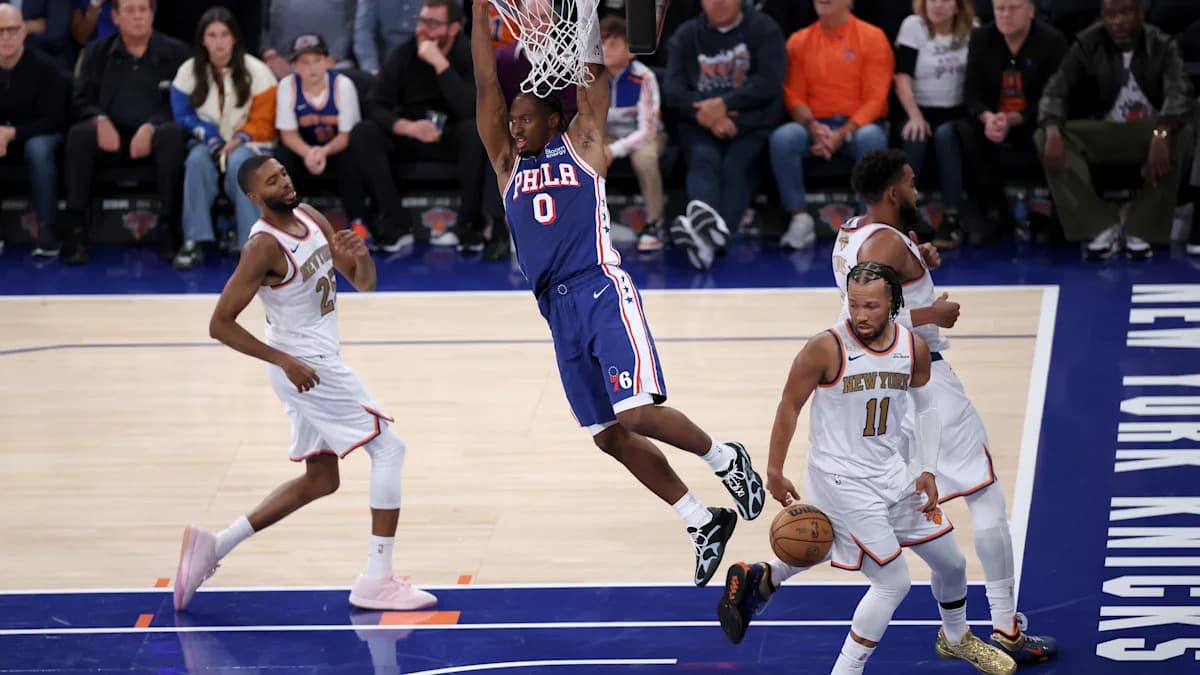
- Off-arm push-offs: Offensive players using their arm to shove defenders away to create shooting space.
- Two-hand screen shoves: Targeting a particular type of screening where players use both hands to push defenders, rather than all screens in general.
- Freedom-of-movement violations: Defenders grabbing or clutching offensive players off the ball to slow them down.
- Straight-line pathway plays: Both drivers and defenders initiating contact to prevent shots or draw fouls.
Monty McCutchen, head of referee development, shared that push-off calls will be guided by what he calls the "four Fs." If an offensive player is mostly using their legs to gain position or simply feeling the defender, play continues. But if forceful contact or full arm extension occurs, referees will blow the whistle.
The competition committee has stressed eliminating full arm extensions altogether. McCutchen admitted judging these can be tricky since different officials might see the same action as either firming up or forceful contact.
"I think reasonable people will think that one thing is firming up, while another person may say that it’s forceful," McCutchen said. "That’s fair."
The plan includes frequent early-season meetings with the competition committee to align interpretations and help calls become more consistent as the season moves toward playoffs.
McCutchen noted inconsistency was a problem last season, with some nights calling push-offs and others not, adding, "We have to get more consistent here. And we will."
Crackdown on Flopping
The NBA will take a tougher stance on flopping, which has long been an issue. Officials will apply technical fouls during games or issue fines and suspensions afterward when players exaggerate contact to draw whistles.
Jones expressed disdain for flopping, saying, "Coaches, players, fans, competitors—they don’t like it. We don’t like it. It’s not good for our game."
Officials will assess flops using the STEM criteria: secondary, theatrical, exaggerated movements, including arm flailing and excessive distance traveled, especially if it risks injuring another player.
McCutchen stressed the need to penalize obvious theatrics without ignoring legitimate contact. He explained both a flop and an offensive foul can occur simultaneously.
"What we can’t do is balance things out, ‘Oh, you flopped, therefore I’m not going to call the offensive foul.’ Both can be true," he said.
He also clarified that head snaps alone won’t count as flops, a note that might come to mind when watching Jalen Brunson.
McCutchen summarized, "We want to make sure the game is played on its merits, not the theatrics of the merits." The league aims to discourage embellishment while allowing players to highlight real fouls.
Screening and Physical Play
The league’s scrutiny extends to how screens are set. With more guard-to-guard screens in a five-out, positionless style of basketball, some screeners have used their arms aggressively to gain advantage.
Jones noted, "Rather than using their bodies, [guard screeners] were using their arms and pushing toward half-court, and it just created an advantage that the defense could not overcome. We wanted to stay diligent on that."
McCutchen emphasized that strength should not overshadow skill and positioning.
"Basketball is strong, but it’s also rooted in positioning, quickness, and getting to spots first," he said. "We want to make sure strength never overrides what makes our game beautiful."
Early Season Whistles and Player Adjustments
When these points of emphasis are introduced, whistles usually increase at first but taper off as players adapt quickly.
Jones commented on players’ ability to adjust rapidly within the 24-second shot clock, saying they excel at testing boundaries.
Officials also face challenges handling player communication, especially from younger refs.
"No answers is not acceptable," McCutchen said. "You can’t just be silent. It’s always interpreted as inapproachability or arrogance, and we have to work against that and build trust."
Building good relationships with players and coaches depends on calling games fairly and consistently.
McCutchen admitted perfection isn’t expected immediately but hopes for steady improvement.
"If we’re making 10 inconsistent errors now, we aim to reduce this considerably and get better at our work," he said.
Better refereeing allows players to shine and compete cleanly, giving fans memorable moments.
Jones concluded, "It just allows our players to go out there and compete, and when they compete, they give some really lasting, compelling plays and experiences for everyone."