.svg&w=384&q=75 "logo")
NBA Players Ready to Shine in 2026-27 Season
Every NBA season forgets a few players it shouldn’t.
A knee gives out. A trade shoves a starter into the shadows. A month of bad shooting stains an entire year. By August, the narrative has shifted more than the talent ever did.
This time, though, the league’s amnesia victims are walking into 2026-27 with leverage: fresh contracts, clean MRIs, bigger roles. The numbers say they never really went away. The opportunity says they’re about to remind everyone.
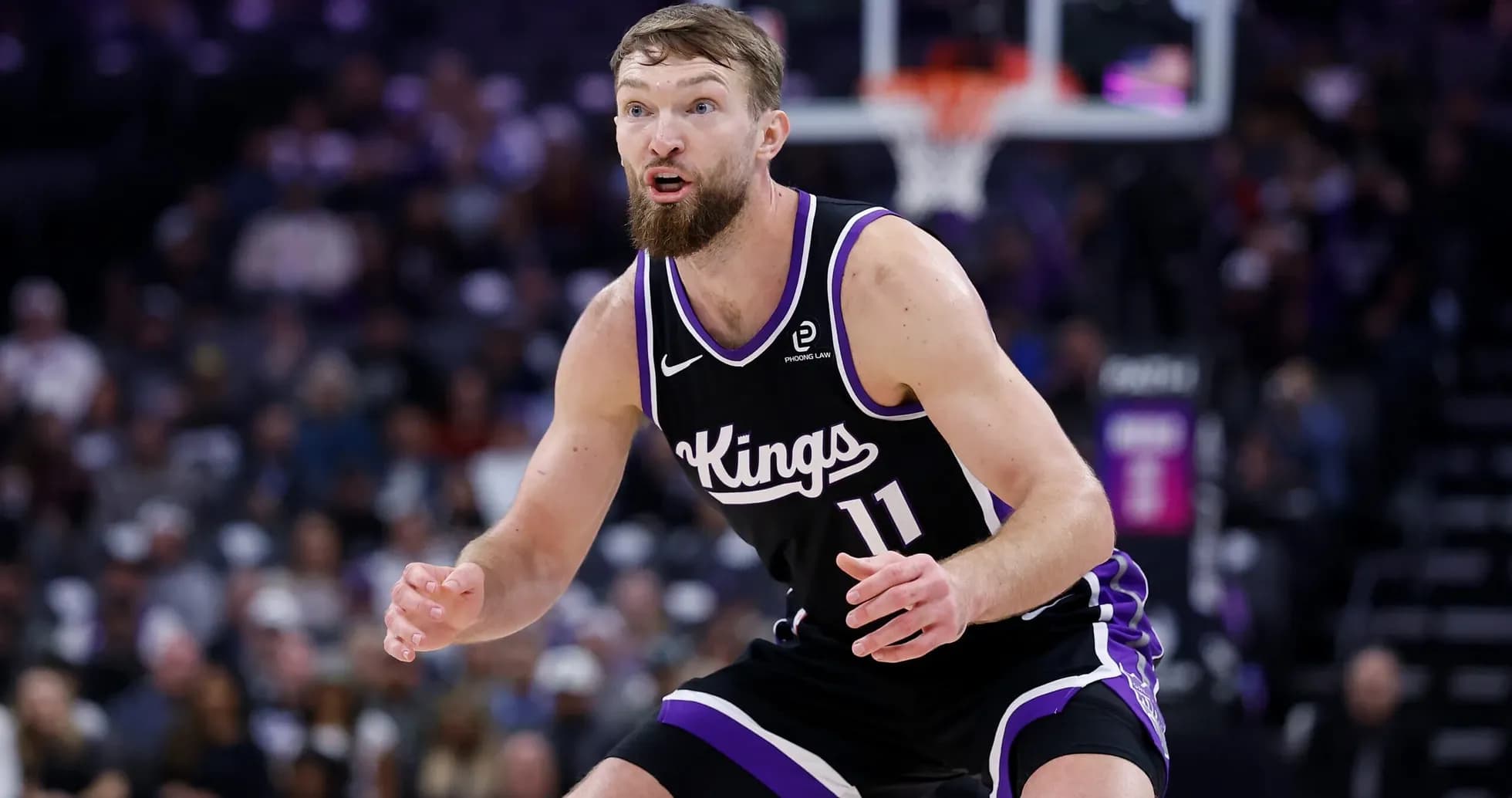
Domantas Sabonis, Kings
Triple-doubles don’t lie
Between 2023-24 and 2024-25, only one player in the NBA stacked more triple-doubles than Domantas Sabonis.
Nikola Jokić.
Sabonis logged 36 of them across those two seasons, a drumbeat of 20-10-8 nights that don’t just vanish because of one bad year. His did, temporarily, when a torn meniscus in his left knee wrecked 2025-26 and forced season-ending surgery. The timing was brutal. The profile is not.
He’s tracking toward full clearance for training camp at 30, an age where bigs with his passing and touch usually live in their prime. Sacramento is retooling around him, and that matters. With the roster in flux, Sabonis walks back into the building as the unquestioned hub, the No. 1 playmaker on a team that still runs best when the ball runs through him.
Fantasy outlook:
In points leagues, this is simple. When he’s right, Sabonis is a top-15 asset. Rebounds and assists carry most formats, and he floods both. Category leagues demand more nuance. He’ll drag you to the top of the board in rebounds and assists and boost field-goal percentage, but he gives you almost nothing in blocks and hands back value in turnovers. He’s the ideal centerpiece for builds that punt defensive stats and don’t care about giveaways.
High Score is where he becomes a cheat code. A routine Sabonis line — 20 points, 12 boards, eight assists — hovers around 50 fantasy points with assists doubled and no penalty for turnovers. Very few frontcourt players can touch that weekly ceiling. Almost none can live there.
Coby White, Hornets
From placeholder to franchise guard
Teams don’t hand out three-year, $74 million contracts for sixth men.
The Hornets didn’t either. With LaMelo Ball shipped to Minnesota, Charlotte’s backcourt now belongs to Coby White, and the franchise hasn’t been coy about it. They’re building around him and saying so out loud.
There’s evidence this can work. In Chicago in 2024-25, White finally got volume and answered with 20.4 points and 4.5 assists in 33.1 minutes across 74 games. His 21-game stint in Charlotte after the deadline barely counts as a trial run: bench minutes, rotating roles, a team in flux. Now he gets the opposite — a clear runway, a long-term commitment and a franchise desperate for its first playoff berth since 2015-16.
The ball, and the green light, are his.
Fantasy outlook:
Points leagues are the natural fit. Usage is the currency there, and White is about to get more of it than ever. Category managers need a sharper plan. He’ll bring scoring, threes and assists, but the field-goal percentage has been a persistent drag and he doesn’t pile up steals. He fits best on rosters already strong in efficiency and defensive stats.
High Score is kinder to him than traditional category formats. When assists are doubled and efficiency issues disappear, a 28-point, six-assist performance pushes into the mid-40s. That’s the kind of line he can post on nights when Charlotte lets him hunt. As a guard slot, he’s stable with a real spike ceiling whenever the Hornets lean into his offense.
Derrick White, Celtics
The glue guy with star-level impact
Strip away one cold number, and Derrick White just had one of the best all-around seasons of his career.
He averaged a career-high 16.5 points. He set career highs in steals (1.1), blocks (1.3) and assists (5.4). With Jayson Tatum missing most of the season, Boston leaned on White as a primary driver of both ends of the floor, and he answered.
The blemish is obvious: 32.7% from three. That’s a steep fall from 38.4% the year before and the kind of single-season variance that often snaps back. His playoff scoring dip followed the same cold streak and dragged his stock down with it, but the underlying role didn’t change.
Now comes another twist. Boston flipped Jaylen Brown for Paul George, a blockbuster on paper, but George turns 37 and has topped 70 games just once since 2019-20. White, by contrast, has cleared 73 games every season since 2021-22. Availability is an edge, and he has it.
Fantasy outlook:
In category leagues, a guard who delivers more than one steal and one block per game is gold. That combination shores up two of the scarcest categories in any build, and White does it while contributing points and assists.
High Score might be an even better playground for him. Steals and blocks are worth three points apiece there, so his defensive baseline alone gives him weekly viability. When the offense pops — say 20 points, five assists, two steals, two blocks — he sails past 45 fantasy points. His durability becomes a bigger advantage in points and roto formats, but it’s the multi-category profile that makes him a target everywhere.
Walker Kessler, Lakers
The rim protector with a runway
For five games, Walker Kessler looked like he was turning a corner.
Before his season shut down, he averaged 14.4 points, 10.8 rebounds, 1.8 blocks and 1.4 steals per night — the best stretch of his young career. The Lakers watched that tape, studied the trajectory and handed him a four-year, $130 million deal in July after trading for him.
The shoulder surgery is the asterisk. So is the broader pattern: availability has flickered on and off since his rookie year. The skill set, though, travels anywhere. He protects the rim, finishes at an elite rate and inhales rebounds at a level only a handful of centers can match. At 25, he now walks into the best spacing and playmaking environment he’s ever had.
If he stays on the floor, the role writes itself.
Fantasy outlook:
In category leagues, Kessler is a specialist you build around, not a plug-and-play all-rounder. He can almost single-handedly win you blocks, rebounds and field-goal percentage. The cost is at the free-throw line, where he has the potential to hurt you enough that he becomes a classic punt-FT% anchor instead of a universal solution.
High Score is his sweet spot. With blocks and steals tripled, a standard 16-point, 13-rebound, three-block night lands around 40 fantasy points, even if he doesn’t record a single assist. With three frontcourt slots to fill, that profile — heavy on defensive events, light on playmaking — is exactly what the format rewards.
Christian Braun, Nuggets
The quiet metronome in Denver
Denver didn’t lock up Christian Braun for five years and $125 million in October 2025 on a whim.
He was 24, coming off a season as a starter on a contender, averaging 15.4 points, 5.2 rebounds and 1.1 steals. He defended, cut, hit enough shots and did it all without needing the ball to dominate possessions.
Last season looked different. Only 44 games. A three-point mark of 30.1%, well below what he’d already established. Taken together, those numbers read like a disrupted year, not a new baseline. Trade rumors have bubbled around him, but the most likely outcome is the simplest one: he stays in Denver, in a role he’s already proven he can handle. DeMar DeRozan will soak up some possessions, but Braun’s value has never hinged on high usage.
He fills gaps. Every good team needs that.
Fantasy outlook:
Braun is the most format-neutral name on this list. Category leagues squeeze the most juice out of him: points, threes, steals and a respectable field-goal percentage across four columns, with that three-point rate sitting as an obvious bounce-back candidate. In points leagues, he profiles as a steady late-round starter who rarely kills you.
High Score is the one place where his game doesn’t translate as cleanly. His ceiling games usually land in the low 30s because he doesn’t stack enough assists or blocks to create spikes, and that format punishes players whose value comes from doing several things well rather than one or two things spectacularly. There, he’s a bench piece. Everywhere else, he’s the kind of quiet, reliable contributor winning rosters are built on.
In a league obsessed with the next big thing, this group has already shown it. Now they get something rarer: a second chance to prove the first breakout was real.