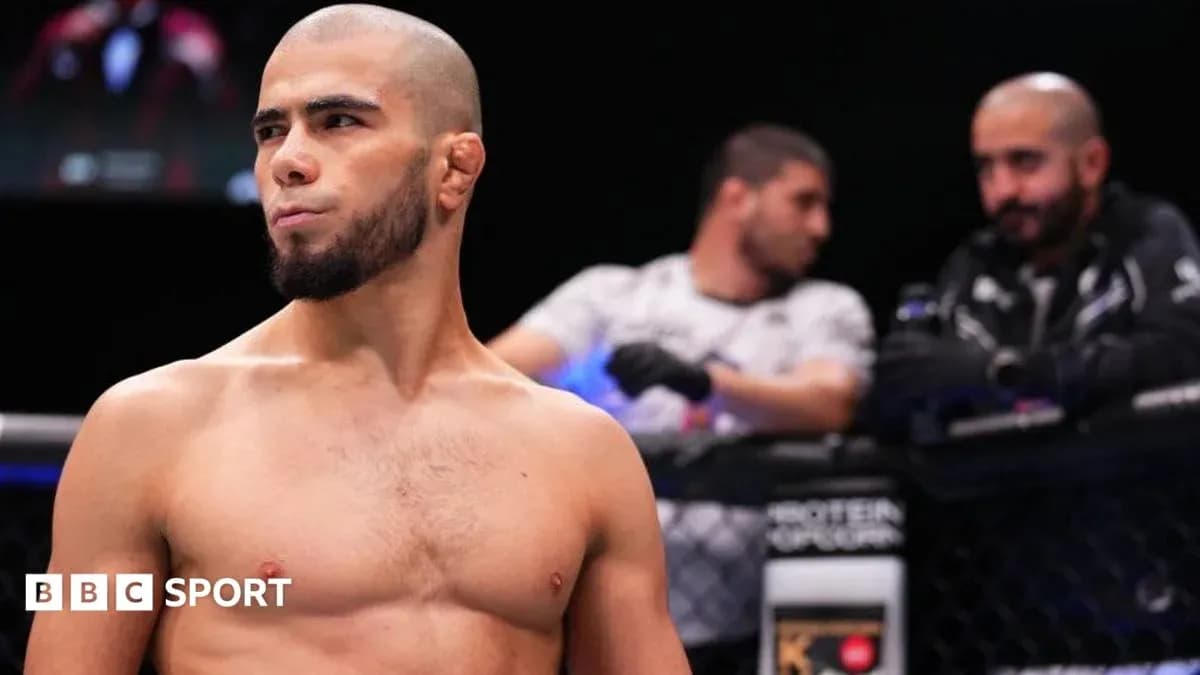
Muhammad Mokaev's Uncertain Future After UFC Release
Muhammad Mokaev still doesn’t have an answer.
More than two years after the UFC cut him loose, the Russian-born Briton is still trying to make sense of the night his career with the promotion abruptly ended – a night that should have been a springboard, not a full stop.
From contender to cast-off in a single night
July 2024. Manchester. UFC 304.
Mokaev had just done what the UFC keeps saying it wants fighters to do: win, and win consistently. He outworked Manuel Kape over three rounds, took a unanimous decision, and stretched his promotional record to seven straight victories.
On paper, he was everything a modern contender is supposed to be. Young. Marketable. Riding momentum in a flyweight division that constantly needs fresh title threats. A title shot felt close enough to touch.
Then Dana White walked into the post-fight press conference and dropped the bomb: the UFC would not be re-signing Muhammad Mokaev.
No warning. No obvious public falling-out. Just a clean break from a fighter who, by every visible metric, had done his job.
From the outside, it made no sense. Inside Mokaev’s world, it still doesn’t.
“If I’m a bad guy, why let me fight seven times?”
In the immediate aftermath, whispers followed him. The build-up to the Kape fight had been heated, spilling into confrontations at the fighters’ hotel and again at the weigh-ins. The narrative quickly formed: maybe the UFC had simply tired of his behaviour.
Mokaev rejects that outright.
“If we talk about behaviour, right – if I'm a bad guy, why would you let me fight seven fights and renew my contract twice?” he told BBC Sport. “If I'm a bad guy in the company and organisation, they would cut me after one or two fights.”
He doesn’t see a disciplinary case. He sees a stylistic one.
The flyweight, who arrived in Britain as a 12-year-old refugee, built his rise on suffocating wrestling and relentless pressure. His UFC debut ended in a submission in just 58 seconds. His second fight, against Charles Johnson, went the distance in a clear unanimous decision.
That, he says, is when the tone shifted.
According to Mokaev, the UFC texted his manager after the Johnson win with a pointed message: “he needs to stop wrestling – we don't want these decision guys”.
The numbers tell a different story to the stereotype.
“I have around a 60% finish rate in the UFC. Four out of seven fights were finishes against top guys,” Mokaev said. “I don't know what else I need to do to show them – I was 21 when I was fighting these veterans and now I'm much better and much stronger.
“From 21 to 23, I beat all these guys. Even Manuel Kape, and he is ranked number two right now. I really don't understand the politics. I really don't know. I wish I knew the full story behind everything.”
Eight fights, four promotions, zero call-backs
Look at his schedule since that night in Manchester and one thing becomes obvious: he refused to sulk.
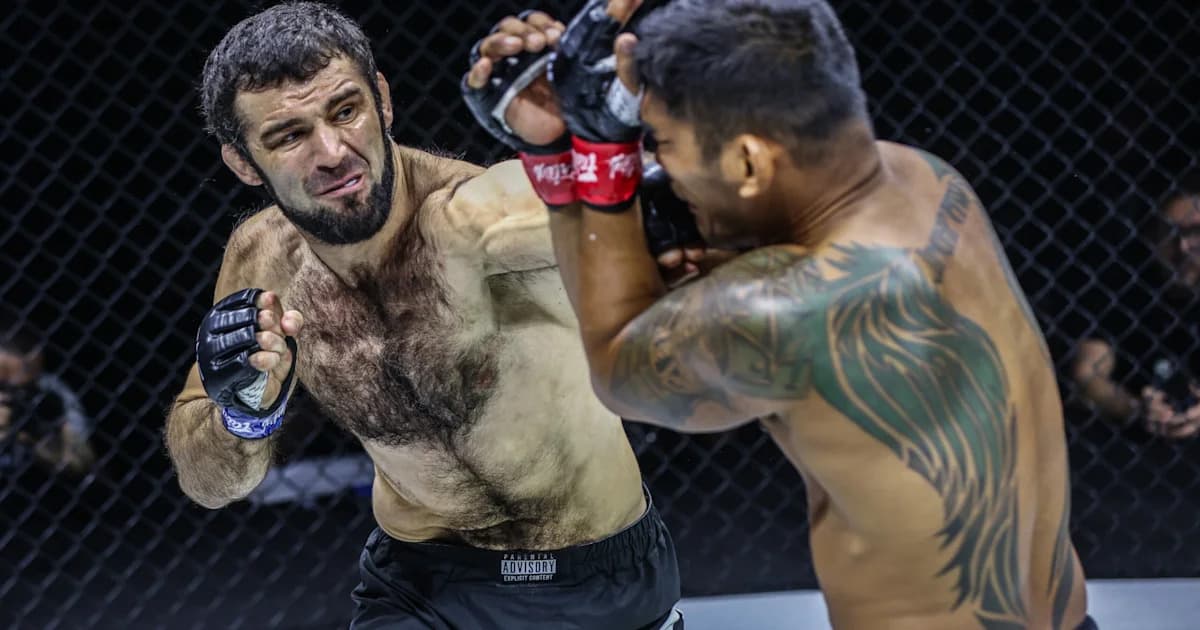
Few fighters on the planet have matched his output. Eight fights in two years. Different cages, different continents, different rulesets. Same objective – force the UFC to look his way again.
He has finished opponents with chokes. Folded them with body kicks. Switched lights off with head kicks and punches. He has picked up titles in Brave CF and ACBJJ and built a résumé that, for most flyweights, would be more than enough to at least reopen the conversation.
The phone has stayed quiet.
The names that matter – Hunter Campbell, Mick Maynard, Sean Shelby – have not moved. Mokaev is even in a WhatsApp group with Campbell and Shelby, a modern reminder of how close he once was to the inner circle. That proximity only makes the silence sting more.
From his perspective, every time he hits a target, the UFC shifts it.
“Hunter made me a promise. They basically wasted two years of my life,” Mokaev said. “That's how I feel right now. I don't think what they are doing is right.”
A $10,000 offer and a hard line
The only concrete proposal he points to from the UFC orbit came with a very different rule set.
Mokaev says he was offered $10,000 (£7,399) to compete in UFC BJJ, a Brazilian jiu-jitsu event, against bantamweight champion Mikey Musumeci – a five-time world champion and one of the sport’s elite grapplers.
The fee, in his eyes, bordered on insulting for a bout of that profile. Still, he was prepared to take it if it opened the door back to the Octagon.
His condition was simple: a UFC contract afterwards.
The answer, he says, was just as simple. No. BJJ is different. Separate plans. No pathway back to the roster.
“They said, 'no, this is different. BJJ is different. This is different. We have other plans.' I told them where to go,” Mokaev admitted, adding that his reply was laced with expletives.
That exchange hardened his stance. If the UFC wouldn’t commit to him, he would stop committing to anyone else.
One-fight deals and a looming decision
Since 2024, Mokaev has turned down the security most fighters crave. He has signed one-fight deals, refused to be tied down, and kept his calendar busy on his own terms.
The offers have been there. Multi-fight contracts. Bigger money. Longer guarantees. He has listened, but not signed. The UFC door, as long as it remains even slightly ajar in his mind, dictates everything.
He will only lock himself into a long-term deal if that door finally slams shut.
One serious option sits with the Professional Fighters League. The PFL has sounded him out about fighting in its bantamweight division, as it does not currently run a men’s flyweight bracket. For now, that weight jump doesn’t fully convince him.
The equation might change.
Mokaev says he would be tempted to commit if the PFL launches a 125lb division off the back of its merger with Jake Paul’s Most Valuable Promotions in July. A proper home at his natural weight, a clear route to a world title, and a platform with growing US visibility – that combination could finally outweigh the lure of a UFC return.
Until that happens, he walks a tightrope between ambition and patience.
“I want to stay active because I'm still young. I just turned 26 – most people start their careers at this age,” he said. “I'm going to do what's best for my family.”
For now, that means fighting often, winning emphatically, and waiting to see who blinks first: the man who believes he has already proved himself, or the organisation that once had him on the brink of a title run and chose to let him go.