Mitchell Santner on India’s Long New Zealand Tour
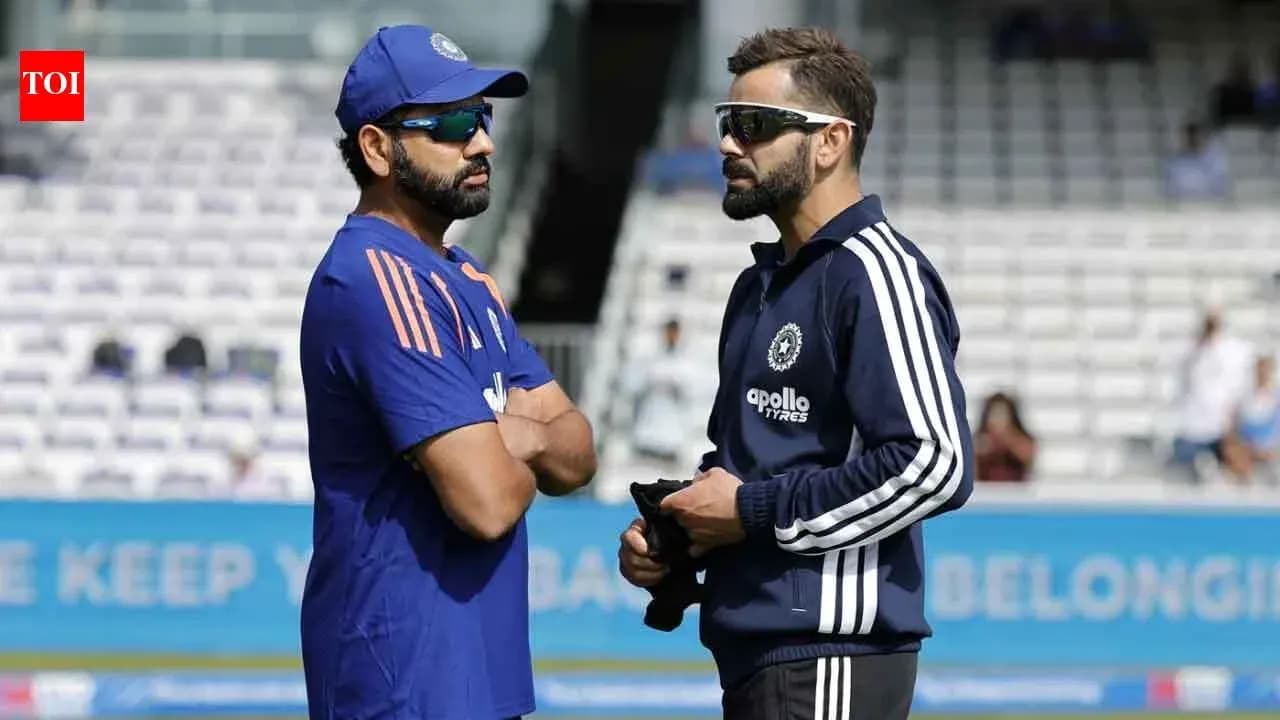
Mitchell Santner has seen enough of Virat Kohli and Rohit Sharma in full flow to know what is coming. And he is under no illusions.
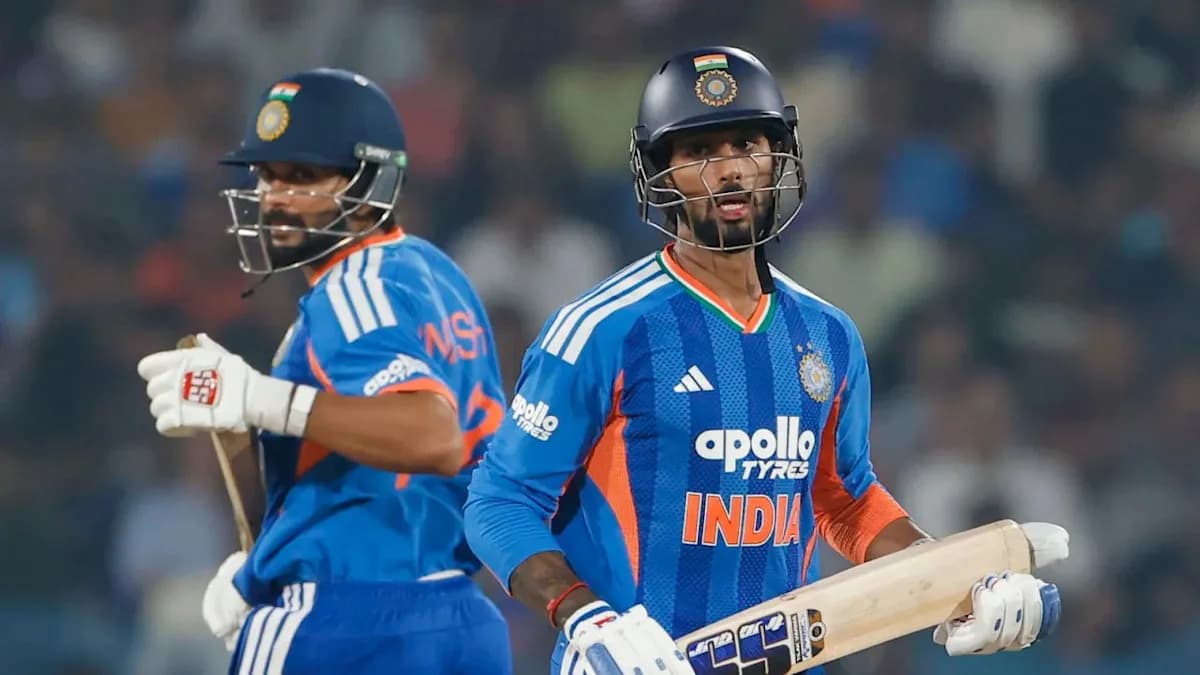
Later this year, India’s one-day giants return to New Zealand for a marathon tour – five T20Is, five ODIs and two Tests across October and November – with Kohli and Rohit now dedicated ODI specialists. For a New Zealand side desperate to land a statement series win at home, the challenge could hardly be clearer.
“It is going to be a challenge,” Santner told PTI, summing it up without sugar-coating. “They are still very good players as we have seen for a long time; masters of the ODI game. They have taken a liking to some New Zealand pitches in the past. Hopefully, not this time around.”
Kohli has peeled off big runs in these conditions before. Rohit has bullied white balls in New Zealand skies. Santner knows it. The dressing room knows it. That is the backdrop to a tour that doubles as a dress rehearsal for next year’s ODI World Cup.
“It is going to be a great series, no doubt. It is all a lead-up for the World Cup next year in ODIs,” Santner said. “Everyone is trying to figure out their best team; what that might look like for October next year with limited games.”
Beating India at home: “first things first”
New Zealand’s calendar is stacked, but Santner has parked the long-term talk. The immediate target is blunt and simple: beat India in a home ODI series.
“We’ve got five (matches) against India, three against Sri Lanka at home and then it is World Cup prep in England (in September 2027), right before the World Cup,” he said.
Then came the line that will sit on the Blackcaps’ dressing-room wall.
“(But) first things first, you want to win a series against India at home, which would be an awesome thing. Then it is (about) trying to find what the make-up might look like come October next year.”
The itinerary gives New Zealand no hiding place. India’s tour opens with five T20Is – starting October 22, 2026 at Hagley Oval in Christchurch and winding through Wellington, Auckland and Hamilton – before the ODIs take over in November.
Eden Park hosts the first ODI on November 4. Sky Stadium, Seddon Park and Bay Oval share the rest, with back-to-back games at Mount Maunganui on November 13 and 15. Then the format hardens. The first Test begins at Basin Reserve on November 19, the second back at Hagley Oval from November 27.
It is a long, demanding swing through New Zealand’s cricketing spine. India will see everything: drop-in pitches, coastal wind, green seams, and, by late November, the kind of Test-match mornings that bowlers dream about.
Memories of 3–0 and a changing India
When Santner talks about India in Tests, there is a particular series that still glows in his memory. New Zealand’s 3–0 sweep in India – a result that snapped a 12-year, 18-series unbeaten home run for the hosts – remains one of the high-water marks for the Blackcaps in red-ball cricket.
Santner was central to that triumph, grabbing 7/53 and 6/104 in the second Test in Pune to shut the door on India.
“I think what we spoke about before is trying to adapt quickly,” he said, revisiting the lessons from that tour.
This time, the adaptation test may fall more heavily on India. The visitors are in the middle of a generational shift in Test cricket. Some of the names who board the plane later this year will be experiencing red-ball cricket in New Zealand for the first time.
“For a new-look India side, it is probably going to be the first time some players have been playing red-ball (cricket) in New Zealand, where the pitches will be a little bit foreign,” Santner pointed out. “They will probably do a bit more than they might do back home.”
Green tinges, lateral movement, and a Dukes ball that never quite feels dead – it is a different world from flat decks and abrasive surfaces on the subcontinent.
“Very well-rounded”: Santner’s verdict on India’s Test squad
There is no complacency in Santner’s voice when he talks about India’s Test resources. If anything, there is a touch of respect bordering on admiration.
“If you look at their squad, it is a very well-rounded squad,” he said. “You throw (Jasprit) Bumrah back into the bowling attack, you have got (Mohammed) Siraj, (Prasidh) Krishna with the bounce. You have got (Ravindra) Jadeja and (Manav) Suthar to bowl spin. You have got probably a fourth seamer in there as well.”
That is pace, hostility, and variety, backed by two frontline spinners who can control games and exploit any wear in the surface.
“It is shaping up nicely. I think it is going to be a great series,” Santner added. “Traditionally, it can do a little bit in New Zealand at that time of the year.”
For New Zealand’s batters, that means living with Bumrah’s angle and nip, Siraj’s relentlessness, and the constant threat of Jadeja if conditions flatten. For India, it is a rare chance to unleash a full-strength attack in conditions that should reward them as much as the hosts.
Fighting fire with fire in New Zealand Tests
Santner’s view on how to survive – and win – in New Zealand’s Test conditions is clear. Caution alone will not cut it.
“It could be trying to fight fire with fire, playing your shots,” he said. The message is not a licence to slog. It is a demand for intent.
“There might be times we need to sit back and let the bowlers go for a bit, try to get the shine off the ball,” he continued. “There is a lot that can go on in the Test matches in New Zealand. It is going to be an exciting series and one that we can't wait for.”
The balance is delicate. Attack when the ball is in your areas, absorb when it is not. Ride out the new-ball spells, cash in when the sun comes out and the seam softens. Misjudge that rhythm, and the match can rush away in a single session.
Only two Tests – and why it still matters
One question lingers over the schedule: why just two Tests between two heavyweight sides?
Santner did not dodge it. He pointed straight at New Zealand’s long-standing reality in the longest format.
“For a long time, New Zealand played two-match series. There’s obviously the money side of it as well,” he said. “I know it costs a lot to play Test cricket. (It is about) timing as well; white-ball brings in the crowds in New Zealand, it brings the money. That's why I guess it is the 10-2 split.”
Ten white-ball games. Two Tests. A reflection of modern economics as much as cricketing appetite.
Yet even within that squeeze, the significance of those two red-ball matches is obvious to Santner.
“Whenever India come, even if it is only two Test matches, it is going to be exciting,” he said. “Everyone wants to challenge themselves against the best in the world and they are up there. For us, it is going to be an important series like it is for India with the (World Test Championship) points that are on offer.”
Kohli and Rohit hunting ODI runs. Bumrah back at full tilt. New Zealand chasing a landmark home series win and vital WTC points. Two Tests that could swing a cycle.
If this is only a “short” series, what will a long one feel like?