.svg&w=384&q=75 "logo")
Minnesota Timberwolves Reinvent Roster Around Anthony Edwards
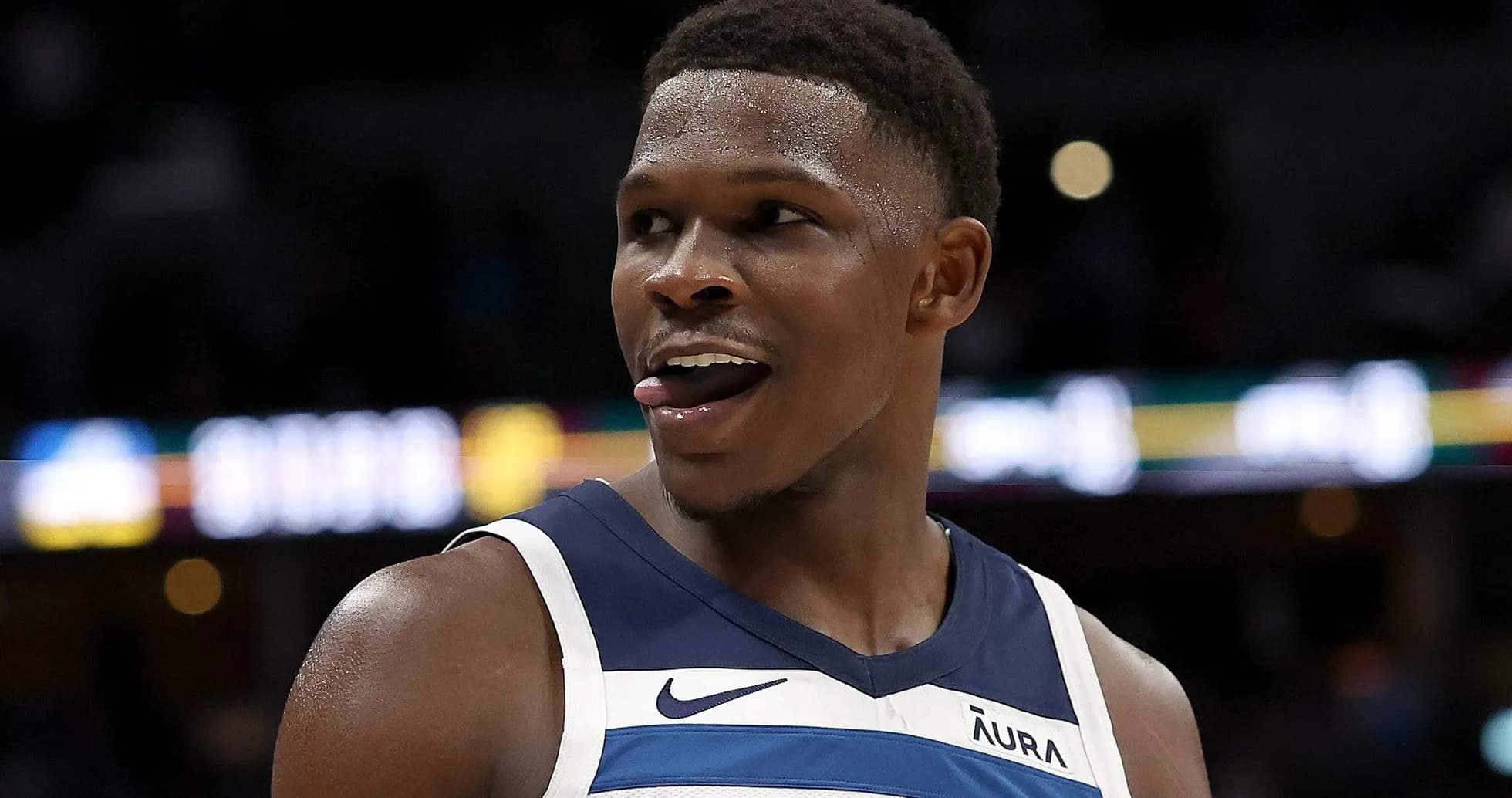
Anthony Edwards has made his feelings clear: he likes what the Minnesota Timberwolves just did. A lot.
The organization has ripped up the old blueprint and handed him something far more suited to his rising superstardom – a guard-driven, attacking machine built around his talent and temperament. The moves have been bold, noisy and, in the eyes of the franchise player, overdue.
A New Backcourt, A New Identity
Minnesota didn’t tinker. It detonated.
Julius Randle and Naz Reid are out. LaMelo Ball and Jonathan Kuminga are in, a seismic shift that drags the Wolves toward a faster, more perimeter-heavy identity. Around Edwards, the front office has drawn a clear line: this is his team, his timeline, his style.
ESPN’s Brian Windhorst summed up the reaction from the face of the franchise on the “Hoop Collective” podcast.
“[Edwards] is very pleased with the Wolves offseason,” Windhorst said, pointing directly to the Ball and Kuminga deals as the kind of aggressive swings that speak to a star. He even floated a telling hypothetical: if Edwards’ extension were on the table right now, this kind of summer might be enough to push it across the line, with the belief that Ball could be “a perfect fit.”
The idea is obvious and tantalizing. Ball’s vision and deep range next to Edwards’ downhill force. Two high-usage guards, both comfortable handling and creating, both capable of bending defenses in different ways. It’s the kind of pairing that gets opposing coaches reaching for the whiteboard in July.
Behind them, the Wolves have tried to make sure the second unit doesn’t sag. Ayo Dosunmu and Bones Hyland stay in the fold. Jaylen Clark gets an extension. Trey Lyles arrives to add size, spacing and playoff-tested versatility. The roster now looks less like a traditional, big-heavy Western Conference outfit and more like a modern, switchable, pace-and-space contender.
Edwards the Recruiter
The most telling development of the summer didn’t happen in a boardroom. It happened in conversations.
Jonathan Kuminga had options. Real ones. The Los Angeles Lakers, Chicago Bulls and Portland Trail Blazers all loomed as potential landing spots, and his camp knew he was walking away from significant money by choosing Minnesota.
He still chose Minnesota.
“Ant was super active in the recruitment of him,” Kuminga’s agent Aaron Turner told The Athletic. This wasn’t a cursory text or a polite check-in. Edwards leaned into the pitch, and he didn’t sell the easy stuff.
“One thing he did was focus his message on, we’re gonna really guard here,” Turner said. While the league buzzed about offensive upside, Edwards and Kuminga talked about stops, not shots. They talked about building something rugged on the other end.
That resonated.
Turner described a simple moment in the gym this week. He asked Kuminga where the best basketball situation was. The answer came back quickly: Minnesota. “Well, nothing else matters. Why would you go anywhere else?”
The Wolves didn’t rely on Edwards alone. Jaden McDaniels and LaMelo Ball also reached out, Turner noted, adding to a full-court press that framed Minnesota as a serious, unified destination.
“It was such a solid respect factor from top to bottom,” Turner said. For a franchise that once struggled to keep stars, that kind of comment lands almost as heavily as a max contract.
From Wounded Contender to Western Threat
Minnesota enters this season with scars and credibility.
Back-to-back trips to the Western Conference Finals had already pushed the Wolves into the league’s inner circle. Last season’s second-round exit to the San Antonio Spurs, though, came with asterisks all over the medical report. Edwards played through a bone bruise in his left knee. Donte DiVincenzo never saw the floor in the series. Ayo Dosunmu watched with a calf injury.
The run stalled, but the foundation didn’t crack.
Now, with a retooled roster and a star who feels heard, the Wolves sit in a familiar but uncomfortable place: chasing giants. San Antonio and the Oklahoma City Thunder have emerged as the early favorites in the West, with Minnesota slotted just behind them in many projections.
ESPN has forecasted the Wolves to finish third in the conference. Tim MacMahon went even further with his praise, labeling the Edwards–Ball tandem the “league’s most talented backcourt.” Sports Illustrated’s Charlie Walton landed on the same seed line, projecting Minnesota as the West’s No. 3 team.
“Things can still change between now and the start of the season. Much more will inevitably change before April rolls around,” Walton wrote, acknowledging the volatility that defines every NBA year. But he didn’t flinch on the core point: this version of the Wolves belongs near the top.
Yes, Tim Connelly’s swing for Ball could whiff. So could the bet on Kuminga. That’s the nature of big-game hunting in the modern NBA. But for now, the Wolves have done what ambitious franchises are supposed to do around a 23-year-old star: they’ve pushed their chips in and reshaped the team in his image.
Edwards is pleased. The roster is louder, faster, bolder. The West is unforgiving and crowded.
So the question isn’t whether Minnesota has the talent to chase the top.
It’s whether this group, built around Ant’s voice and vision, can finally kick the door down.