Miles McBride Trade Talks: Knicks and Pelicans Consider Yves Missi
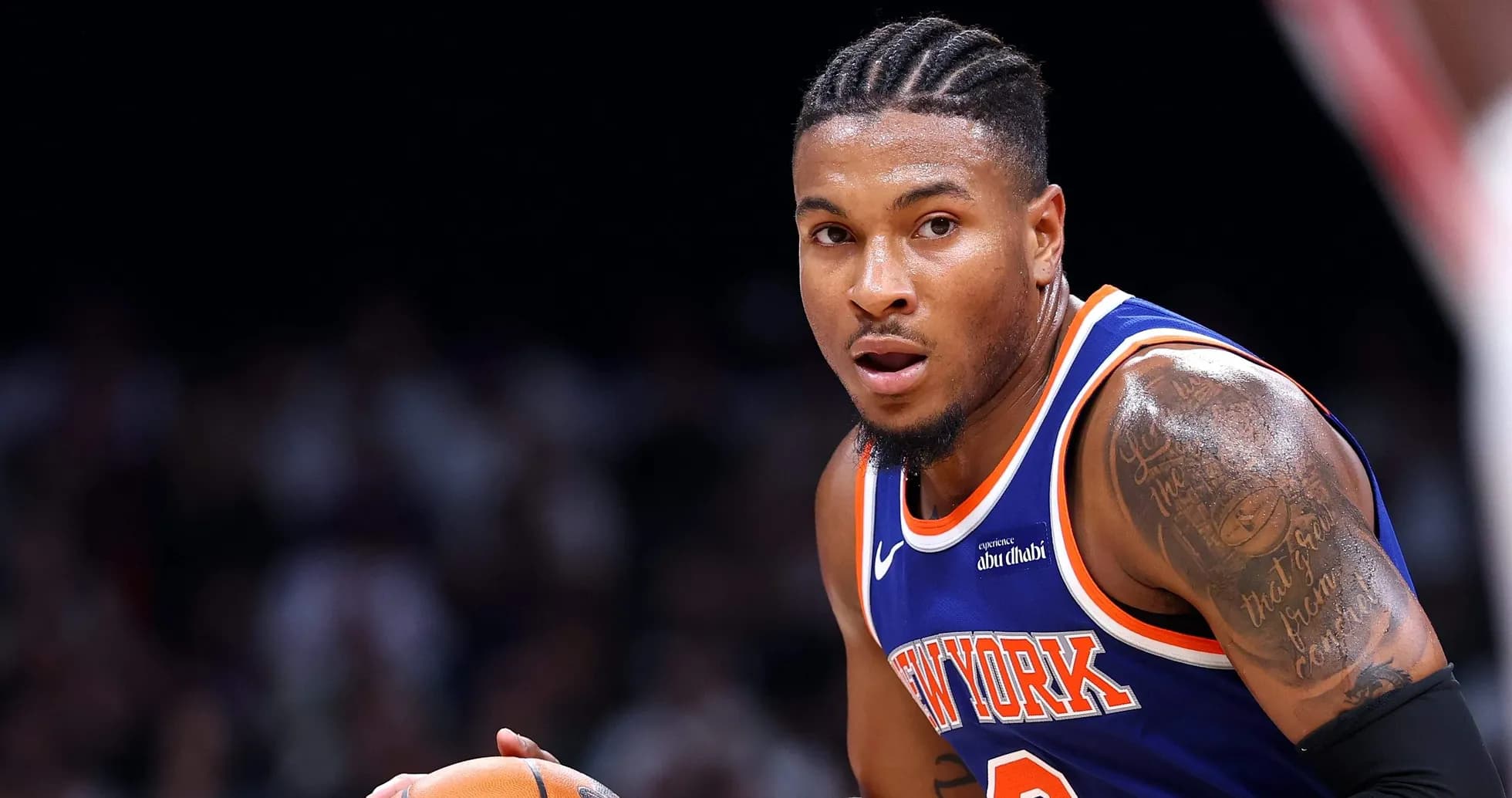
The clock is ticking on Miles McBride’s time in New York.
Barring a surprise U-turn from the front office, the 25-year-old guard looks headed for the exit either by February’s trade deadline or next offseason, with league insiders expecting him to command a payday the Knicks are in no position to match. After already letting Mitchell Robinson walk to dodge the NBA’s punitive second apron, New York is operating with the calculator always in hand.
That’s where an increasingly popular idea comes in: flipping McBride for a young center the Knicks already covet.
A Clean Swap With New Orleans
The framework is simple.
- Knicks receive: Yves Missi
- Pelicans receive: Miles McBride (via TPE)
On the cap sheet, it’s almost too neat. New Orleans would take on McBride’s expiring $3.9 million deal using the $4.5 million trade exception created in the Jose Alvarado move. The Knicks, in turn, would slide Missi’s rookie-scale contract onto their books without creeping into second-apron territory.
No picks. No bloated salaries. Just a straight basketball trade with financial sanity on both sides.
Why New York Circles Back to Missi
This isn’t a new name for the Knicks. They chased Yves Missi hard before last season’s February deadline, with some around the league labeling him a “dream” target for Leon Rose’s group. New Orleans held firm then, reluctant to part with a 22-year-old Cameroonian big who had already shown starter-level flashes.
A year later, the Knicks’ motivation has only grown.
Mitchell Robinson is gone. The rim protection and rebounding he provided left with him. For a team that leans heavily on defense, that’s not a minor hole; it’s a structural one.
Missi checks those boxes. Across his first two seasons with the Pelicans, the third-year center averaged 10.9 rebounds and 2.2 blocks per 36 minutes, numbers that hint at a disruptive interior presence even in a limited role. He’s young, mobile, and still on a team-friendly deal—exactly the kind of frontcourt piece a cap-conscious contender hunts.
The cost, of course, is McBride.
That stings. Over the last three seasons, he’s been arguably New York’s best bench player, a tough, two-way guard who hits big shots and guards up a position. But the backcourt picture has shifted. Landry Shamet’s postseason surge and Jordan Clarkson’s decision to re-sign have crowded the rotation. Tyler Kolek, heading into his third year, is also expected to see more minutes.
With that many mouths to feed, McBride moves from indispensable to expendable. Not because he isn’t good enough, but because the roster around him has changed.
If the Knicks believe Missi can anchor bench units, close certain games, and grow into a long-term answer at the five, this is the kind of calculated pain contenders accept.
Why the Pelicans Finally Listen
For New Orleans, this deal is less about McBride than it is about Derik Queen.
The Pelicans have been edging toward a choice at center. Queen, with his higher ceiling and star potential, has increasingly looked like the franchise’s preferred long-term anchor. Missi, who started 67 games as a rookie, saw his second season squeezed as the team shifted minutes and touches toward Queen.
He didn’t take it well.
Back in January, Brett Siegel of ClutchPoints reported that Missi and his camp were unhappy with the demotion: “The 21-year-old big man and his camp feel disrespected by the Pelicans for his major decrease in minutes, and tension has formed between the two sides, sources say.”
That kind of friction doesn’t just disappear. At some point, an organization has to pick a lane.
New Orleans’ lane is clear. Queen is the center of the future. Missi is the asset who no longer fits that timeline, at least not happily.
Swapping him for McBride gives the Pelicans a different kind of young piece. At 25, McBride is still firmly in his developmental window and fits their youth movement. He can back up Dejounte Murray and Jeremiah Fears, or share the floor with either as a combo guard, bringing defense, shot-making, and toughness to a backcourt that has often lacked all three at once.
For a team that wants clarity in the frontcourt and more reliability on the perimeter, that’s a compelling trade-off.
A Deal That Matches Both Timelines
Strip this down, and the logic is blunt.
The Knicks need a cost-controlled big who can protect the rim and rebound without wrecking their cap sheet. The Pelicans need to clear a path for Derik Queen and turn a frustrated young center into a guard who fits their core’s age and style.
Missi for McBride does all of that in one clean stroke.
The question now isn’t whether the trade works on paper. It does. It’s whether New York is ready to let go of one of its most trusted reserves—and whether New Orleans is finally willing to cash in on a big man who no longer sees his future there.
If both sides are honest about where they’re headed, this is exactly the kind of deal that tends to get done.