.svg&w=384&q=75 "logo")
Lakers Roster Changes: Can They Compete Without LeBron?
The Lakers tore up their script this summer. Now comes the hard part: finding out if the new one makes any sense.
LeBron James is gone, a seismic exit by any measure, and in his place the franchise has doubled down on a different kind of star power. The roster now orbits Luka Doncic and Austin Reaves, with a supporting cast that looks deeper on paper but lighter on certainty.
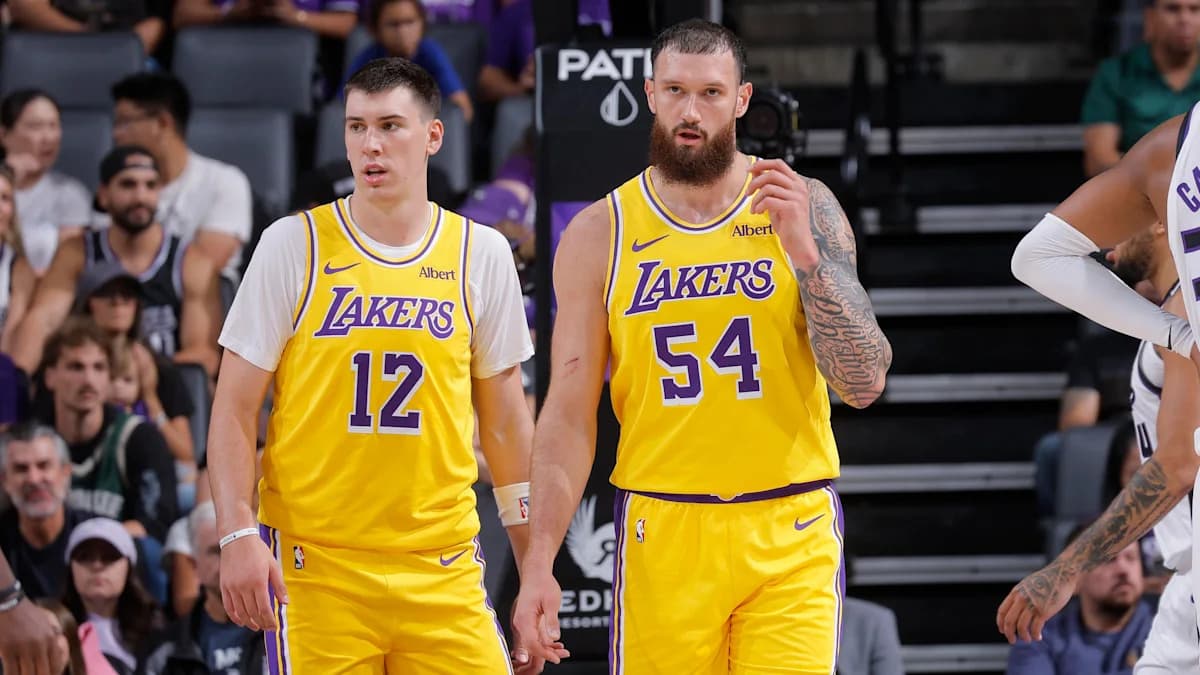
ESPN’s Zach Kram summed up the dilemma. The Lakers churned through one of the league’s busiest offseasons, bringing in Walker Kessler, Sandro Mamukelashvili, Quentin Grimes, Collin Sexton, Kevon Looney, Jaden Hardy, Matisse Thybulle and Ziaire Williams. Out went James, Rui Hachimura, Marcus Smart, Luke Kennard, Deandre Ayton and Jaxson Hayes. Activity? Undeniable. Clarity? Less so.
The depth pieces draw praise. Thybulle and Williams, in particular, give Los Angeles more length and defensive juice on the wings. But no matter how you slice it, there is no like-for-like replacement for James’ production, leadership or gravitational pull, even as he moves through his 40s. The Lakers have tied up more of their flexibility, and it’s difficult to argue they are definitively closer to a title than they were a few months ago.
That judgment will come later. For now, the question is narrower and more urgent: have they truly maximized the ecosystem around Doncic?
Sexton’s Fit Under the Microscope
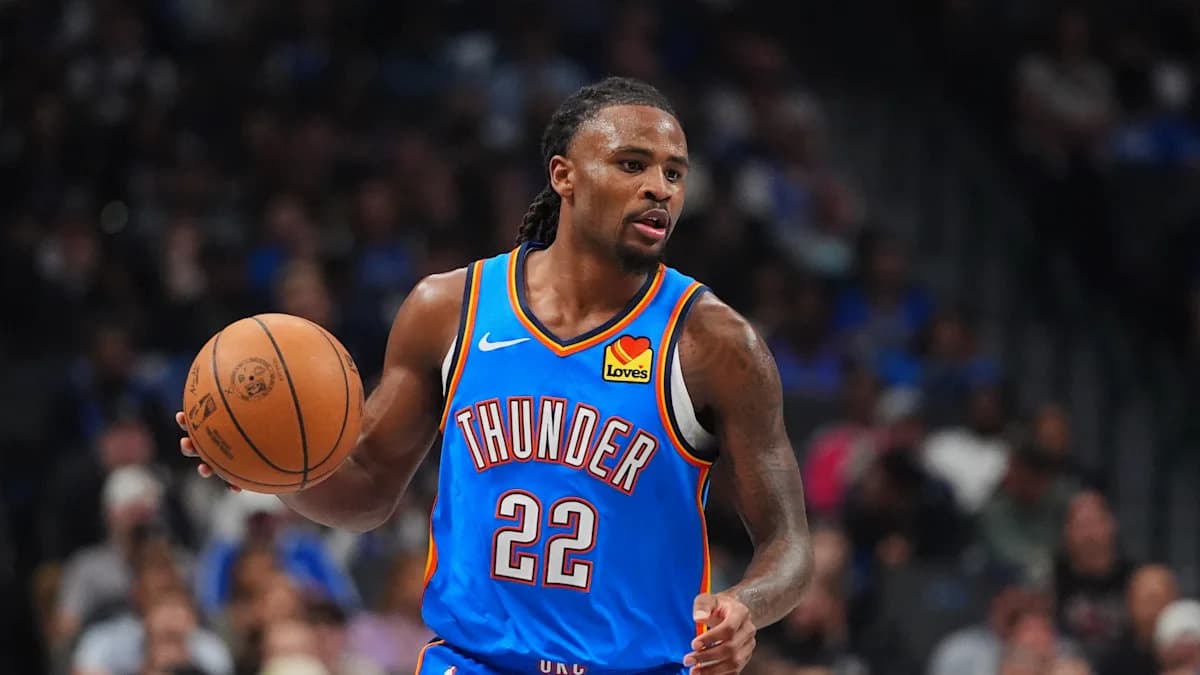
One of the most intriguing – and divisive – moves was the addition of Collin Sexton. On the surface, it makes sense. At 27, he’s a proven scorer and capable playmaker, a guard who once put up over 24 points and four assists per game for the Cleveland Cavaliers in 2020-21. Last season with the Charlotte Hornets, he averaged 14.2 points and 3.7 assists. Those aren’t empty numbers.
The Lakers signed him to stabilize the offense when Doncic sits. Strip the roster down and, outside of their All-NBA centerpiece, Sexton might be the only other true point guard capable of consistently initiating sets. For an 82-game grind, that insurance has real value.
Yet inside the building and around the team, the conversation quickly shifts from “What can Sexton do?” to “When can he actually be on the floor?”
Team insider Jovan Buha has raised that concern more than once. His issue isn’t with Sexton’s talent, but with what happens when you try to close a playoff game with him next to Doncic and Reaves.
Buha points to the defensive side of the ball. A three-guard lineup featuring Doncic, Reaves and Sexton is vulnerable against elite postseason opponents, the kind of long, physical, switch-happy units you see in Oklahoma City, San Antonio and New York. Those are the series that define a season, and those are the matchups where hiding multiple small or defensively limited guards becomes almost impossible.
In Buha’s view, that reality caps Sexton’s role when the stakes rise. He projects more as a 16-to-18 minutes-per-night piece in the playoffs, not the 24-to-26 minute presence he might enjoy in the regular season. That’s a meaningful gap. It’s also the crux of the criticism.
If the Lakers knew Sexton would sit in crunch time, should they have invested that roster spot and salary in a different archetype – say, a starting-caliber power forward who could close alongside Doncic and Reaves, defend up a position and clean the glass?
Ceiling vs. Insurance
The front office clearly valued insurance. Doncic and Reaves both shoulder heavy on-ball responsibility and are no strangers to the injury report. You can almost pencil in missed games for each over a full season. In that context, Sexton’s presence makes sense. He can carry the offense for stretches, prop up bench units and keep the system from collapsing when one star sits.
Buha doesn’t dismiss that logic. He just argues that the trade-off hits the Lakers where it hurts most: their ceiling.
Playoff series are rarely decided by how well a team survives a Tuesday in January without its star. They’re decided by who’s on the floor in the final five minutes in May. If Sexton can’t consistently share the court with Doncic and Reaves against the best teams, the move becomes less about elevating the group and more about stabilizing it.
Sexton still offers versatility. He can score at all three levels, pressure the rim, run pick-and-rolls and toggle between on-ball and off-ball roles. But if the rest of the roster has glaring holes – particularly in size, rebounding and frontcourt scoring – his impact gets squeezed. The Lakers might find themselves rich in guard play and poor in the areas that usually separate contenders from pretenders.
That’s the tension running through this new-look team. The Lakers have added pieces. They’ve added depth. They’ve added a safety net behind their superstar.
What they haven’t answered yet is the only question that matters in Los Angeles: did they add enough to make the final five minutes of a playoff game feel inevitable again?