.svg&w=384&q=75 "logo")
Kurtis Campbell: From Bullied Schoolboy to UFC Fighter
The first time Kurtis Campbell walked into a gym, it wasn’t with dreams of UFC glory. It was damage control.
He was seven, small for his age, and an easy target in a Liverpool primary school playground. The bullying wore him down. His parents, Jay and Michelle, watched their son’s confidence drain away and decided enough was enough. They took him to a Muay Thai class so he could learn how to defend himself.
That decision changed everything.
“From there, I've never looked back,” Campbell told BBC Sport. “I've been in love with the sport ever since.”
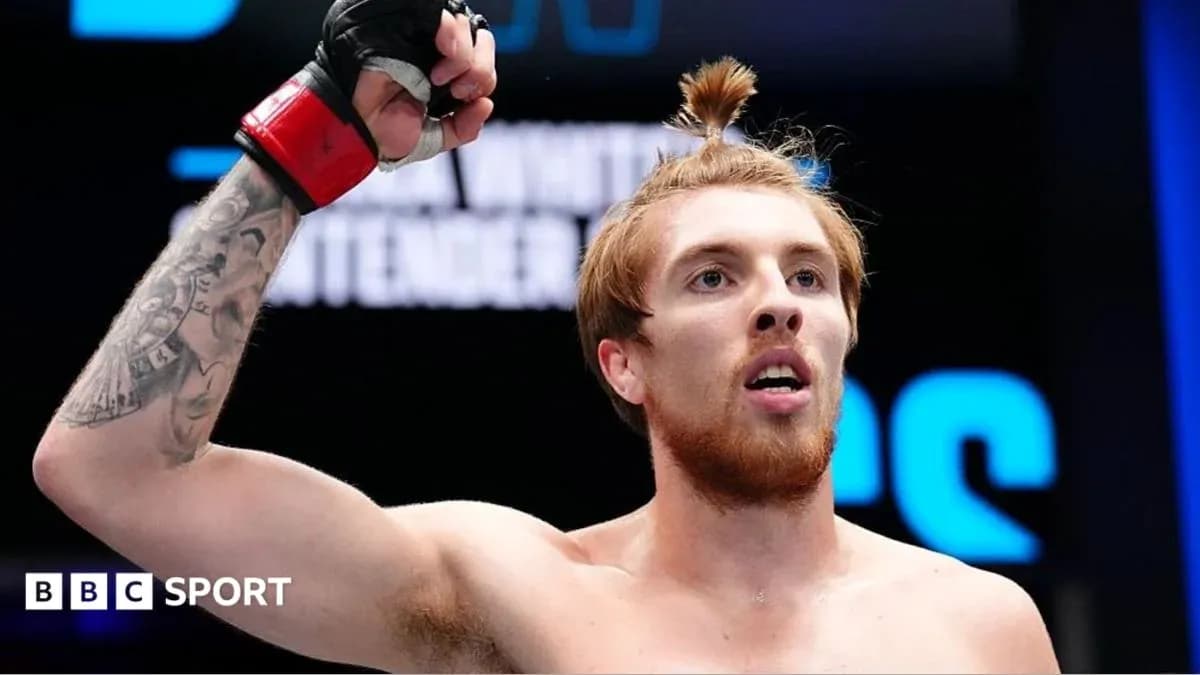
Today, at 24, Campbell is no longer the quiet kid trying to avoid trouble in the corridor. He is a UFC lightweight preparing for his second outing in the promotion, facing American Trevor Peek at UFC Paris on Saturday. The stakes are higher, the lights brighter, but the motivation is still rooted in the same family bond that pushed him into that first session.
“I’m not going to stop until my mum and dad are on a beach somewhere, sipping cocktails and doing nothing else for the rest of their lives,” he said. “They can enjoy it, knowing that they've created this monster. That's my plan.”
From bullied schoolboy to ring obsession
At the start, Muay Thai was supposed to be a short-term fix. A few classes, a bit of confidence, then on to secondary school with enough self-defence to cope.
That plan didn’t last long.
Campbell started entering amateur competitions. Weekends that might have been spent on games consoles or hanging around with friends turned into trips to small halls and sports centres, the air thick with liniment and nerves. Slowly, the sport stopped being a shield and became an escape.
“I was quite a soft kid, in the sense that I didn't really like the violence or the fighting,” he said. “I felt like when I did fight, and when I really did go into it, everything changed and I never looked back.”
The ring gave him something school never did: clarity. There were rules, there was structure, and there was a direct link between effort and reward. At 15, that effort produced his first international Muay Thai title. The boy who once hated confrontation suddenly had a passport, a belt, and a very different idea of what his future might look like.
With his parents’ blessing, combat sports stopped being a hobby and started to look like a career.
No Plan B
Campbell never pretended to be an academic star.
“I was never the cleverest kid. I was always in the bottom sets at school, so I wasn't really focused,” he said. “All of the teachers told me, ‘you need to do something else. You have to have a plan B.’”
He heard them. He just didn’t agree.
While teachers pushed him toward safety nets, his performances in the ring were turning heads across Merseyside. That attention only hardened his resolve. If there was going to be a Plan B, it would be another way to fight, not another way to sit behind a desk.
His lifestyle followed that conviction. Campbell regularly ran almost five miles to and from school, folding roadwork into the fabric of his day. On one occasion, while studying for his GCSEs, he skipped school entirely to attend a coaching seminar in Liverpool led by John Kavanagh, the man who helped guide Conor McGregor to two UFC titles.
It was a clear choice: if it involved fighting, he made time. If it didn’t, it had to fight for space.
Dodging the pitch, chasing the cage
After finishing his GCSEs at 16, Campbell enrolled on a college course built around sport and football. On paper, it looked like a traditional route for a teenager who liked physical activity but hadn’t clicked with the classroom.
Reality was different.
He struck an agreement with the course leaders: he would turn up for the academic side, then leave when the football started so he could train in combat sports instead. While his classmates pulled on boots and jogged out to the pitch, Campbell was already thinking about pads, bags and sparring rounds.
“I was always avoiding anything just for fighting,” he said. “I really didn't like school. It wasn't me. But I made a good few mates there, so you've got to take the pros with the cons.”
That line sums him up. The friends were welcome. The qualifications were useful. But the real education came under fluorescent lights in gyms across Liverpool, where a once “soft kid” learned how to turn a painful childhood into a ruthless ambition.
Seventeen years on from that first Muay Thai class, Campbell walks into UFC Paris not as a wide-eyed newcomer, but as a man who has built his entire life around combat. The bullies are long gone. The doubts from teachers are, too.
What remains is a fighter with a single plan, a single focus, and a promise to his parents that he intends to keep.