Kevin Pietersen's Spin Coaching Revolution for England
Kevin Pietersen has spent most of his life tormenting spinners. Now he’s teaching England how to do the same.
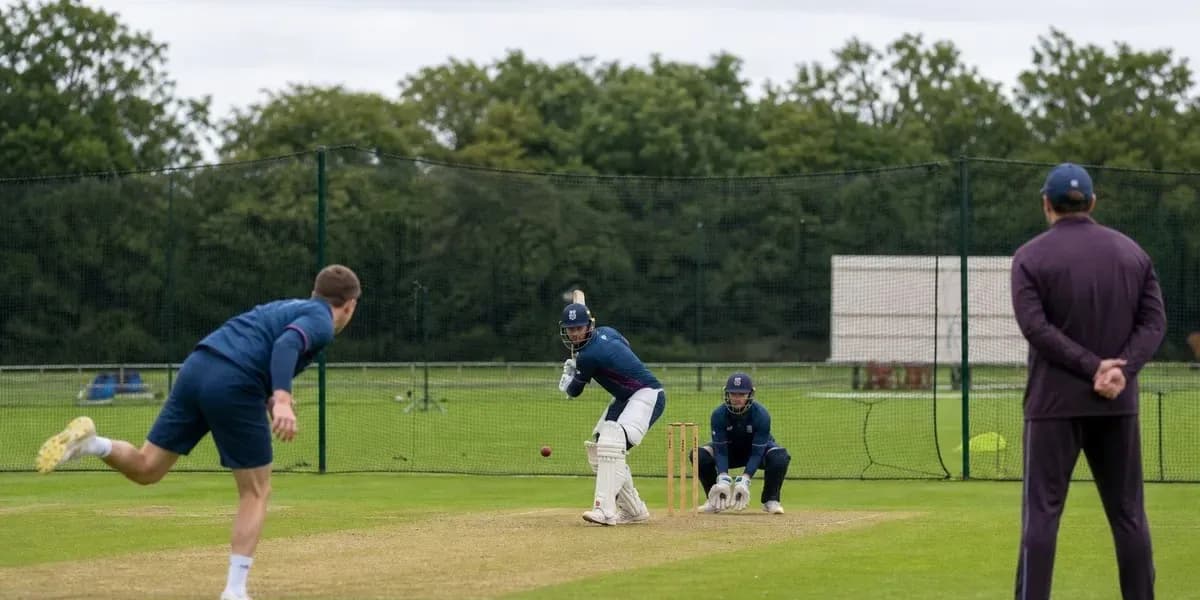
Brought in this month as a specialist coach for England’s limited-overs sides ahead of next year’s World Cup, the 46-year-old has dived straight into his brief: making this batting unit far more ruthless against spin. Captain Harry Brook, who has inherited both the armband and the responsibility of reshaping England’s white-ball identity, has wasted no time in hailing the impact.
Brook spoke glowingly about a recent Pietersen-led masterclass focused on one deceptively simple skill: judging length. Not mystery spin, not exotic variations. Length.
Get that right, the captain stressed, and everything else follows – the ability to rotate the strike, to disrupt the bowler’s rhythm, to turn a strangling spell into a scoring opportunity. Get it wrong, and even an average spinner can dictate terms in the middle overs, especially in One Day Internationals.
Brook was blunt about where England must improve. In ODIs, he said, their play against spin can swing results, and too often in recent years it has held them back. This is the area he wants to sharpen, the detail he believes can separate a good side from a world champion.
If anyone knows how to do it, it is Pietersen. England’s third-highest run-scorer across all formats built a career on taking spinners apart, whether by skipping down the track or sweeping from outside off stump. Brook placed him in the same breath as Joe Root and Marcus Trescothick when it comes to reading spin and manipulating fields – a small, elite group whose methods the current squad are eager to absorb.
The early signs suggest the message is landing.
In their first series since Pietersen joined the setup, England swept Sri Lanka 3-0 in T20s, dismantling a side that leans heavily on its spinners. The result did more than just bank a clean sweep; it lifted England above India to the top of the Twenty20 world rankings, a tangible marker of momentum with a World Cup on the horizon.
Now comes the next examination: a three-match home ODI series against the same Sri Lankan side, starting later on Tuesday. Different format, same challenge. Can England maintain the intensity and clarity that defined their Twenty20 wins when the game slows, the fields spread, and spin becomes a longer, more nuanced battle?
Brook made it clear there will be no easing off. He spoke of playing at a higher tempo, of putting opponents under pressure with both bat and ball, and of using this Sri Lanka series as another step towards becoming one of the best-prepared teams on the planet.
That preparation, he underlined, cannot be confined to nets and match days. It has to stretch off the field as well – analysis, fitness, mental sharpness – all of it pointing in the same direction. In his view, England are moving the right way.
With Pietersen drilling the fine margins of spin play and a captain demanding more speed, more pressure, more edge, England’s white-ball cricket is being nudged into a harder, sharper shape.
The question now is simple: when the World Cup arrives and the pitches slow, will all this work against spin turn into the runs that matter most?