Kevin Pietersen Returns to England Cricket as a Mentor
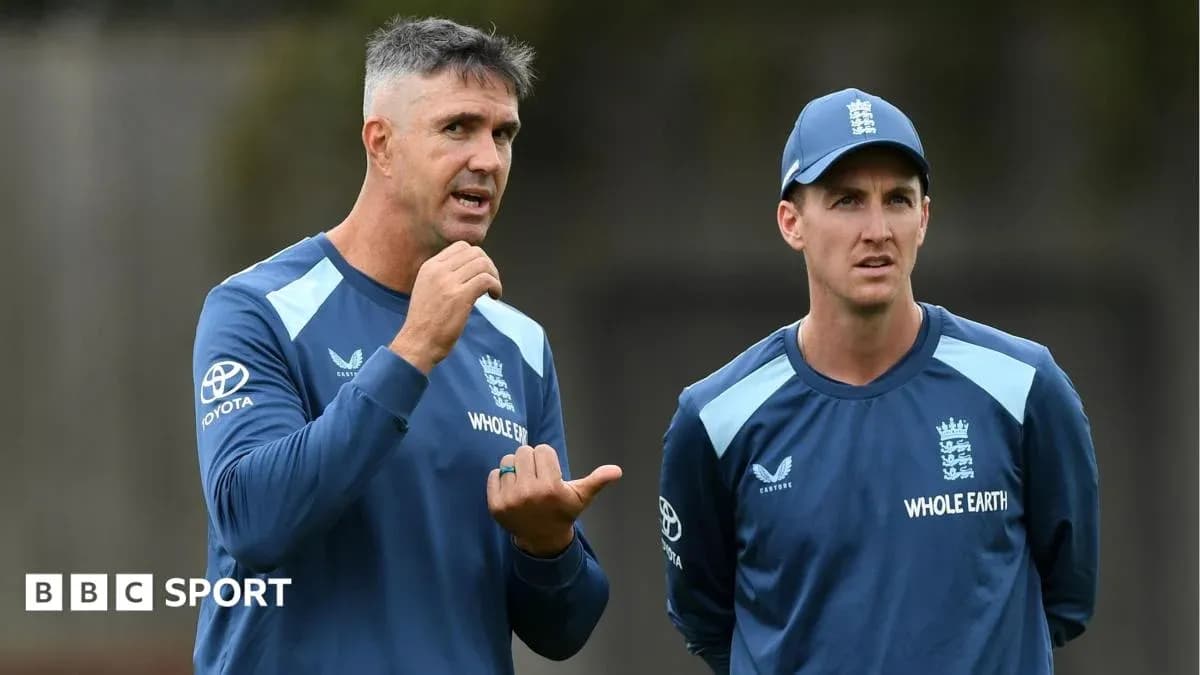
Kevin Pietersen is back in England kit. Not with a bat in his hand and fireworks in his boots, but as a mentor, parachuted into the build-up for next autumn’s 50-over World Cup in South Africa.
On the face of it, the reunion feels improbable. His last meaningful interaction with the ECB was in a Lord’s office in 2014, being told his England career was over. Since then, he has built a lucrative media profile, fronting his YouTube channel, The Switch, and carving out a life that didn’t seem to leave much room for the grind of international cricket’s inner sanctum.
Look a little closer, though, and the move starts to make sense.
A Dressing Room That Needs a Spike
Pietersen can be blunt. He can be confrontational. He has never been one to sugar-coat a bad session or tiptoe around a soft dressing room. But elite environments do not thrive on politeness alone. They need friction. They need challenge. They need someone who will say, “This isn’t good enough,” and mean it.
On England’s white-ball tour of India last year, working for the host broadcaster, he made no secret of his frustration at what he saw: players skipping external practice in the build-up to games, sessions that lacked edge. For a man who built his career on intensity, it jarred.
His own practice was never casual. He walked into nets with a statement, not a warm-up. “I’m going to smash you everywhere and not get out,” he would say as he took guard, a grin masking a very real intent. It wasn’t just bravado. It was a challenge. Bowlers would respond by cranking up their pace, desperate not to be dominated. Suddenly a routine net became a contest.
That was the point. Raise the temperature. Steel the mind. Prepare for the chaos of the middle, not a gentle hit-around under fluorescent lights. Those battles, ball after ball, against one of the best players in the world, hardened bowlers and sharpened batters.
Ahead of His Time, Obsessed With the Craft
Pietersen’s cricketing persona is often reduced to the highlight reel: the audacious switch hit; the flamingo flick through mid-wicket in a Test; the image of him sending Glenn McGrath back over his head for six at Lord’s in 2005. Shots that looked like they belonged to a different era, and yet would slot seamlessly into 2026.
But behind the bravado sat a relentless worker. He never behaved as if he had cracked the game.
In 2012, on tour in Sri Lanka, he turned up early at the SSC in Colombo for a warm-up game. While most were easing into their routines, Pietersen had already been in the nets for an hour, facing local left-arm spinners. The flaw was familiar – left-arm spin had troubled him on and off – and he wanted it fixed. Andy Flower, the coach with whom relations would later sour, oversaw the session.
That slog in the heat paid out in runs. In the second Test, he produced a staggering 151 against Rangana Herath, dismantling one of the craftiest left-arm spinners of his generation. He hit him to all parts, an innings that felt like a personal exorcism. Later that year in India, he repeated the trick in a series that became one of England’s most cherished away triumphs. His runs, particularly in Mumbai, formed the spine of that victory.
Those innings did not appear from nowhere. They were built in empty nets, with no cameras, no applause, just repetition and discomfort.
Not Just About Him
Pietersen’s hard edge was not limited to his own game. In Perth during the 2013-14 Ashes, when Mitchell Johnson and his moustache were terrorising England’s order, the mood in the dressing room swung between dread and resignation. Tailenders, in particular, looked shellshocked at the thought of facing another barrage of short-pitched aggression.
KP didn’t sit and watch. He walked over, picked out a teammate who wasn’t even in the starting XI, and said, “Let’s go practice facing the short ball in the nets.” Out in the practice area, he fired bouncers at his head, working through methods to survive – or, more accurately, to evade. It might have been a distraction for him from a grim tour, but it helped someone else find a way to cope.
That instinct – to drag others into the fight, to confront the problem rather than skirt it – is exactly what he can bring now. He will see flaws, technical or mental, and he will not leave them alone.
A Voice That Refuses to Sit Quietly
Inside team meetings, Pietersen never hid. Debriefs, tactical discussions, fitness blocks – he spoke his mind. Players and staff saw it in his dissent over a fitness fielding session in the build-up to the 2014 Sydney Test, one of several flashpoints that coloured the end of his England career.
Some will look at that history and wonder why you would inject such a volatile personality into a white-ball set-up that appears settled and on an upward curve. Why risk disturbing a dressing room that, under Brendon McCullum and others, has rediscovered its identity?
The answer may lie in what McCullum himself has learned. The Test side only truly turned a corner when comfort was stripped away and standards were raised, not just in public rhetoric but in daily habits. It was not a revolution built on harmony alone. It came from hard questions, honesty, and a demand for more.
Pietersen belongs to a generation that had no shortcuts. Test cricket was the primary currency. If you wanted to make a decent living, you played the longest format, and you survived it by nailing your technique and then stretching it across formats.
Now the balance has shifted. The power sits with players who can criss-cross the globe, stacking up franchise deals. T20 dominates the calendar and the imagination.
Yet the 50-over game still asks old-fashioned questions. Its rhythm is closer to modern Test cricket than to the crash-and-burn of T20. It rewards batters who understand tempo, bowlers who can work through spells, teams that can ride out periods when the ball is on top. That demands fundamentals. It demands work.
The Unfiltered Edge England Have Invited In
Over the next 14 months, as England build towards that World Cup in South Africa, Pietersen will be in the room, on the practice wickets, in the debriefs. He will not allow this side to simply maraud on unchecked, carried by talent and habit.
This is the moment to introduce a challenging voice, not when the wheels start to wobble. A team that wants to stay ahead of the curve cannot surround itself with agreement. It needs someone who will question, provoke, and occasionally infuriate.
England know exactly what they are getting. A sharp cricket brain. A work ethic forged in a tougher, less forgiving era. And a tongue that has never known a filter.
They have invited Kevin Pietersen back into the fold. Now we find out who is ready to be challenged – and who isn’t.