Kawhi Leonard Returns to Toronto: Raptors Make Bold Move
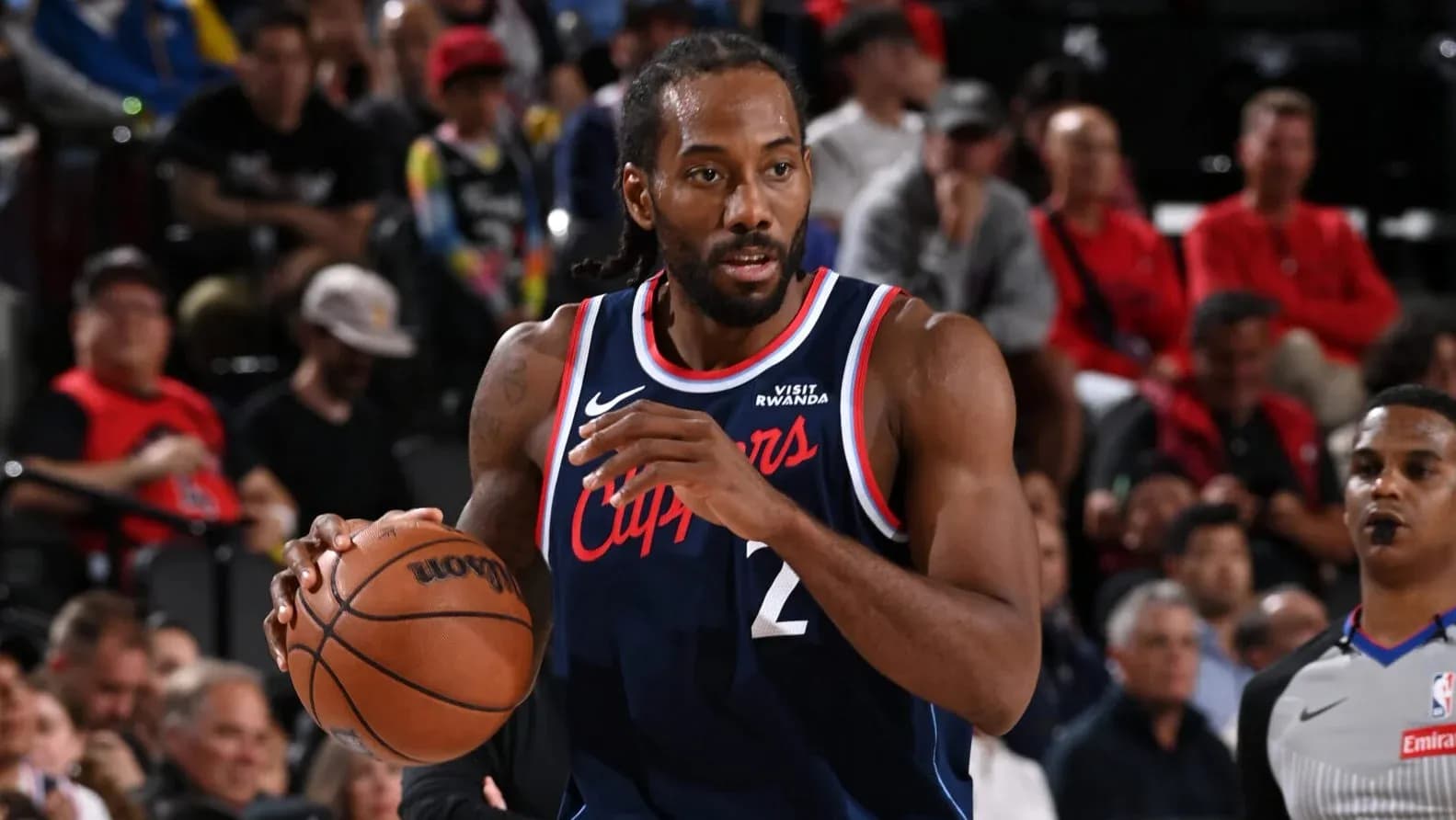
Kawhi Leonard is coming back to Toronto. Seven years after he delivered the Raptors’ only championship and walked straight into free agency, the franchise has pushed its chips in again for the same, familiar bet: when it matters most, Kawhi changes everything.
On Monday, the Raptors made it official, re-acquiring their former Finals MVP from the LA Clippers in a blockbuster that sends Gradey Dick and Brandon Ingram the other way, along with two unprotected first-round picks, a first-round pick swap and two second-rounders. That’s not a tweak. That’s a franchise resetting its ceiling.
This isn’t nostalgia. It’s timing.
Toronto just ripped off its best season in six years, winning 16 more games than in 2024-25 and posting a plus-2.9 net rating per 100 possessions. The defense already sat among the league’s elite. The front office clearly believes Leonard is the piece that turns a plucky riser into a genuine Eastern Conference threat.
Defense with teeth — and now discipline
The Raptors built their identity on that end of the floor. Fifth in defensive efficiency last season, allowing 112.1 points per 100 possessions, they hounded ball-handlers, flew at shooters and turned live-ball turnovers into a track meet.
But against the league’s best, the armor cracked.
Against top-10 offenses, Toronto slid to 12th in defensive rating (117.3 allowed per 100). In the playoffs, same story: only the 12th-ranked defense in the first round, and they put Cleveland on the line far too often. Over the regular season they ranked 23rd in opponent free throw rate, giving up 27.9 free throws per 100 field-goal attempts. That climbed to a punishing 31.8 in the postseason.
Leonard doesn’t solve everything. He’s not the turbo-charged wing terror from five or six years ago. But he still tilts the floor, and he does it without hacking.
Last season he piled up 122 steals and 27 blocks against just 78 personal fouls. Among 378 players who logged at least 500 minutes, no one had a better ratio of combined steals and blocks to fouls. Nobody was close. He reads plays early, gets hands in lanes, and stays out of whistle trouble. For a defense that already thrives on pressure but pays for its aggression at the stripe, that profile is gold.
The front line around him is evolving. Jakob Poeltl has long been a smart positional defender, yet the last two years have exposed his limitations in space. This past season, opponents shot 63.9% at the rim with Poeltl as the primary protector — the worst mark of his career. In the playoffs, the shift was stark: Poeltl started all seven games, but rookie Collin Murray-Boyles logged 191 minutes to Poeltl’s 134, a clear signal of where the staff believes the future lies.
Imagine a frontcourt of Leonard, Scottie Barnes and Murray-Boyles. Small by traditional standards. Miserable to play against. All three can switch, all three compete, all three close space in a hurry. Swapping Ingram’s length and scoring for Leonard’s two-way edge gives Toronto a real shot not just to stay in the top five defensively, but to hold up better against the league’s heavyweights when the matchups tighten.
The closer they’ve been missing
Defense got the Raptors running. They finished third in the league in transition scoring, pouring in 28.6 points per game on the break. That’s their comfort zone: steal, sprint, score.
The problem came when the game slowed down and the clock didn’t cooperate.
Only the Indiana Pacers shot worse in the last six seconds of the shot clock. Toronto’s effective field-goal percentage in those late-clock situations: 43.3%. That’s where playoff series go to die — when your set breaks down, the first option is gone, and someone has to manufacture a decent look out of nothing.
Leonard has made a career out of those possessions.
Over the last three seasons, he’s posted a 53.0% effective field-goal percentage in the final six seconds of the shot clock, ninth out of 131 players with at least 250 such attempts. Those are the shots defenses want you to take. He turns them into efficient offense.
The isolation numbers tell the same story. Leonard and Ingram both rank among the 28 players who’ve isolated at least 1,000 times over the past three years. On Leonard’s isolations, the Clippers scored 1.07 points per chance, sixth-best in that high-usage group. On Ingram’s, the Pelicans and Raptors managed 0.99 points per chance, 24th out of 28.
That gap is the difference between a good look and a bailout heave, between a stop and a foul, between a team that can close games and one that keeps letting them slip.
Toronto has fielded the league’s sixth-worst offense over the last three seasons. That’s the drag that has capped their progress. If they can keep punishing teams in transition and let Leonard own the late-clock, late-game possessions, this could be their sharpest half-court attack since his original one-year stay.
One of the great playoff scorers, back where the legend peaked
Leonard’s 2019 run in Toronto still hangs over the franchise: the shot against Philadelphia, the relentless march through Milwaukee, the cold-blooded closeouts against Golden State. It wasn’t a one-off.
Across his career, Leonard has averaged 21.5 points over 146 playoff games. Among the 89 players in league history to put up at least 20 points per game across 10 or more postseason games, he owns the second-best true shooting percentage at 62.1%, just behind Anthony Davis at 62.2% — and Davis has played in fewer than half as many playoff games.
Since 2017, Leonard has elevated again: 28.6 points per game on 63.2% true shooting over 71 postseason contests. Only four other players in NBA history can match his résumé of at least three separate postseasons (2017, 2019, 2021) with 25-plus points per game and 60% true shooting or better across 10 or more games.
This is what Toronto is paying for. Not the memory, the math.
In their seven-game first-round loss to the Cleveland Cavaliers, the Raptors actually scored a bit more efficiently than the series average at 111.9 points per 100 possessions. But they lacked a primary scorer who could both carry volume and maintain elite efficiency when the Cavs loaded up. Leonard has done exactly that, repeatedly, against better defenses on bigger stages.
If his body holds up, the Raptors now have a playoff scorer of the rarest kind, in a city that already knows what that looks like when everything clicks.
Clippers hit reset after the title window closes
On the other side of the deal, the Leonard trade feels like the last door closing on an era that never quite delivered.
Over his seven years in LA, the Clippers owned the league’s fourth-best regular-season record. That sounds like sustained excellence. It also makes them the best team of that span that never won a title. The gap between expectation and reality never really shrank.
A year ago, the franchise doubled down. Bradley Beal, John Collins, Brook Lopez and Chris Paul arrived to join Leonard, James Harden and Ivica Zubac. On paper, it was a veteran core built to chase a championship immediately.
Today, Lopez is the only one of those seven still on the roster.
Harden and Zubac were moved at the deadline. Paul’s return to LA barely lasted. Leonard is now back in Toronto. Beal and Collins are unrestricted free agents and are unlikely to return. For a team that once prided itself on star power and continuity, the floor has shifted.
As of Tuesday night, with Kobe Sanders expected back, the players under contract or verbally committed for 2026-27 account for just 42% of the Clippers’ minutes from last season. No other team in the league is turning over more of its rotation. Even if restricted free agents Bennedict Mathurin and Jordan Miller re-sign, that continuity rate only climbs to 52%, still the second-lowest in the NBA, just above the Lakers.
Five months ago, the Clippers sat near the bottom of the league in youth investment, ranking 24th in the percentage of minutes played by rookies or second-year players (12%). They were an old team trying to squeeze one last run out of a veteran core.
That picture is gone. Since Feb. 1, the front office has stripped the roster down and pointed it in a new direction, one centered on Darius Garland and rookie guard Keaton Wagler. The Leonard trade isn’t a shock move; it’s the logical endpoint of a slow pivot toward something younger, cheaper, and more flexible.
Toronto, by contrast, has chosen a different path. The Raptors know exactly what kind of burden they’ve invited back into the building. They remember how heavy it felt in June 2019, and how worth it it was when the confetti fell.
Now the question hangs over both franchises: did the Clippers finally move on too late, and did the Raptors go all-in at just the right time — or one season too soon?