.svg&w=384&q=75 "logo")
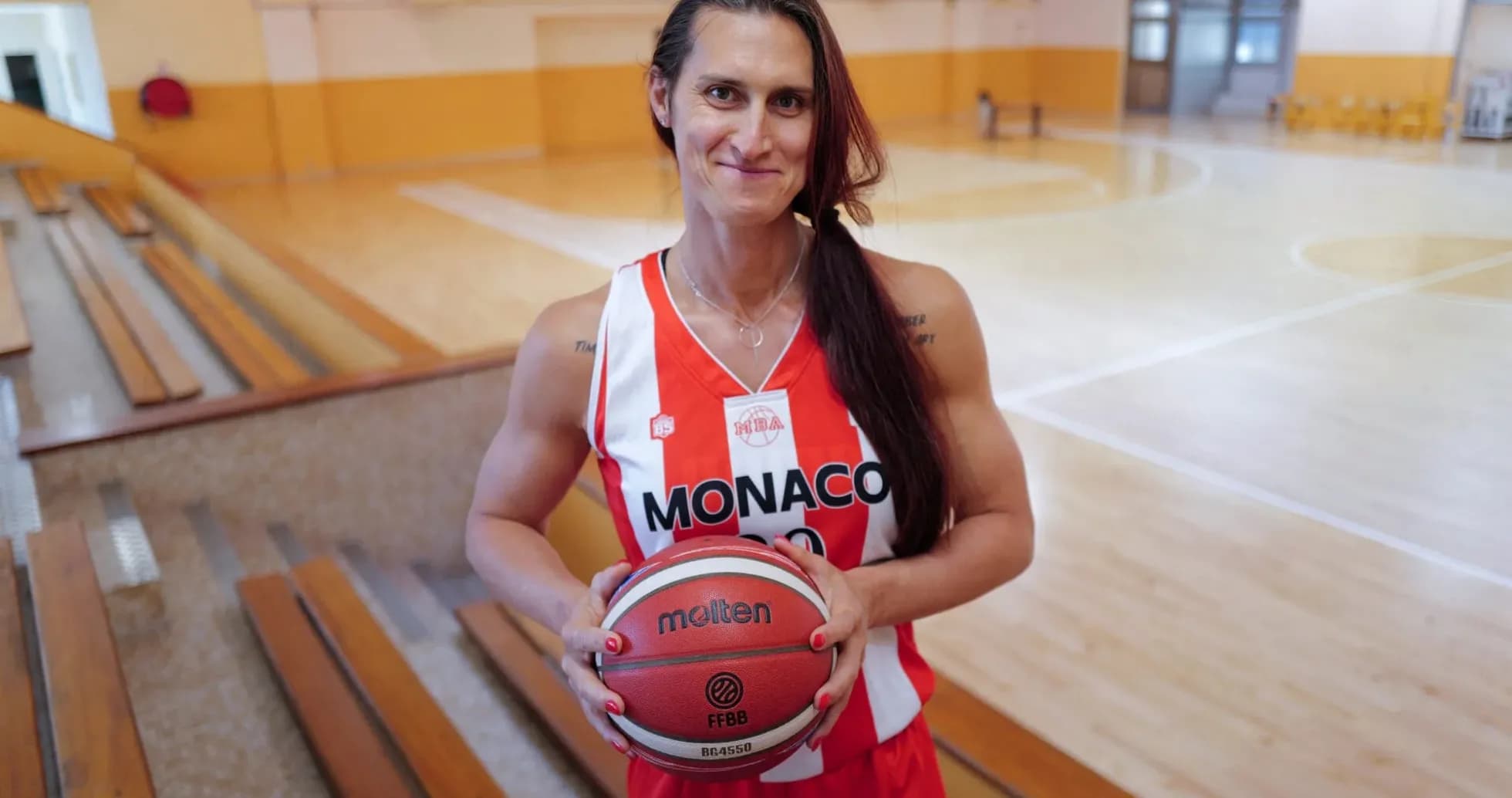
Julie Tetart: Monaco's Trailblazing Trans Athlete Dominates Basketball
Julie Tetart is rewriting her own story long before anyone in the WNBA even has to think about it.
Three years after stepping away from basketball to transition from a man to a woman, Tetart returned to the court in 2024 and instantly made history as Monaco’s first openly trans athlete. She didn’t just come back. She dominated.
With Monaco Basket Association in France’s second division, Tetart has been putting up video‑game numbers: 21.2 points and 20.2 rebounds per game. Those are the kind of stats that don’t just win games; they light up timelines. Clips of her performances spread fast, and with them came the inevitable question: could this lead to the WNBA?
For now, the honest answer is no. And Tetart knows it.
Viral numbers, real-world limits
Her performances have sparked a wave of speculation online, including claims that she has already filed paperwork for the WNBA Draft. Those claims are, at this stage, completely unverified. No official documentation, no confirmation from the league, nothing from any franchise.
Tetart has been clear enough when asked. Playing in the United States would be a dream, and if a WNBA team ever called, she would listen. But she also understands the scale of the leap. At 34, she’s not a rising prospect. She’s a late‑career force in a second-tier league, fully aware of the gap between online fantasy and professional reality.
The odds of seeing her in the WNBA remain extremely slim. There has been no public interest from any franchise, and the league itself has yet to set out a clear stance on her specific gender situation. Until that happens, a move across the Atlantic sits firmly in the realm of hypotheticals.
Monaco first, everything else later
What is real, right now, is Monaco’s playoff push.
Tetart and her teammates are in a fight to extend their season, and that battle is taking priority over any distant dreams. The schedule is heavy, the margins tight. There is no room in that grind for obsessing over what might happen in another league, on another continent.
In France, the questions have shifted to something more immediate: can she climb one more rung at home?
In a recent interview with French media, Tetart was asked about the possibility of playing in the elite division of women’s basketball in France and even pushing for a place with the national team. She didn’t dress it up.
“It would already be huge for me,” she admitted, before quickly pointing to the reality of the competition, acknowledging that there are “many more young people, stronger than me.”
That mixture of ambition and realism defines her current chapter. She’s chasing the highest level she can reach, but she isn’t pretending the pathway is clear or that age and depth of talent don’t matter.
A story still waiting for its next twist
Around her, the wider women’s game keeps moving. In the WNBA, debates rage on different fronts. Fans are arguing over awards — some insisting Caitlin Clark was robbed of Player of the Week honors after averaging 35.5 points, 11 assists, and 4 rebounds, while Angel Reese put up 14 points, 3.7 assists, and a monstrous 17.7 rebounds. That’s the noise at the very top of the sport.
Tetart’s world is different. Quieter. Closer to the grind of bus rides, video sessions, and playoff math.
Strip away the viral clips and unverified rumors, and her situation becomes clearer. She is a 34‑year‑old, trailblazing, high‑impact player in France’s second division, trying to drag Monaco into the postseason and dreaming, realistically, of a shot at the top French league and maybe, just maybe, a national team jersey.
The WNBA? For now, that’s not the story. The real question is whether this remarkable late‑career surge can carry her from a viral sensation into a fully established force in French elite basketball.