Jersey Cricket's Ambitious Path to ODI Status and World Cup
On an island better known for finance and coastal views than cover drives, Jersey cricket has drawn a bold line in the sand: One-Day International status and a World Cup place within three years.
This is not a marketing slogan. It sits at the heart of the island’s new strategic plan, which maps out the sport’s ambitions through to 2029. And it comes from a programme that has already been brushing shoulders with Europe’s established powers.
From near miss to clear mission
Jersey came agonisingly close to this year’s T20 World Cup, falling just short in qualifying. That disappointment has not dulled the ambition; it has sharpened it.
“We have to dream big and we have to think we have a place at a World Cup in the T20 format,” said Jersey Cricket chief executive Sarah Gomersall, speaking to BBC Jersey.
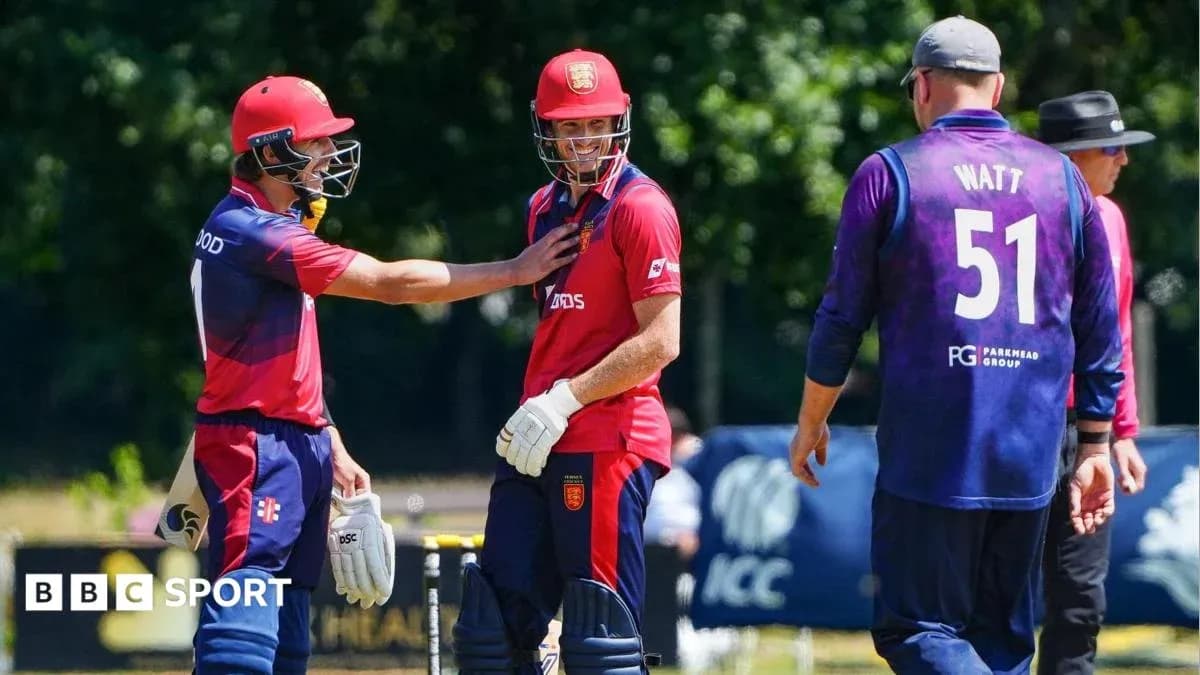
The evidence on the field backs up the rhetoric. Jersey’s men are ranked 29th in the ICC T20 rankings and are “holding their own”, as Gomersall put it, against the likes of Scotland, Ireland and Netherlands. These are not glamour friendlies. They are regular, hard-edged contests that have convinced Jersey’s hierarchy that the island belongs in that company.
“We can sustain ourselves up there with the very, very best in Europe,” Gomersall said. “Each time we play them we’re learning, we’re improving.”
That learning curve now leads to Kenya.
Kenya tour carries World Cup weight
Next month, Jersey’s men fly to East Africa for the decisive round of fixtures in ICC Challenge League A. They arrive with a target on their backs: top of the table, five matches to go, and everything on the line.
Finish in the top two, and the door swings open to the 2027 Cricket World Cup qualifier play-off. Perform strongly there, and the prize is huge: coveted ODI status. Go one step further with a top-four finish in that subsequent event, and Jersey will stand in the final qualifying stage for the 50-over World Cup in South Africa, Zimbabwe and Namibia next autumn.
The pathway is brutally simple. So is the ambition.
“Achieving ODI status is one of our goals through the next iteration of our strategic plan,” Gomersall said. “I think we can get to a World Cup in the next three years with the men and, longer term, with the women as well.”
For a small island, that is a big statement. But Jersey’s model is unusual – and deliberate.
An island-only talent pool, by design
There are no vast scouting networks, no sweeping trawls through overseas leagues. Jersey’s players come from Jersey. All of them.
“We talk about it a lot that all Jersey’s talent comes from the island,” Gomersall said. The implication is clear: if the island is the only talent pool, the island must be the academy, the high-performance centre and the finishing school.
That has driven heavy investment in junior pathways, coaching structures and facilities. Gomersall believes Jersey now boasts “one of the best junior pathways in Europe”, a system built not just to produce the odd standout but to keep a constant stream of players “playing, improving, enjoying their cricket and wanting to play more”.
The philosophy is straightforward: volume and quality of cricket feed the national teams. The next World Cup squad, if it comes, will not be imported. It will be homegrown.
Women on the brink
The men’s rise has attracted most of the attention, but the women’s side has been quietly edging towards its own breakthrough.
Ranked 32nd in the ICC T20 standings, Jersey’s women have finished one place short of the top tier of European qualifying for a T20 World Cup in each of the last two cycles. One rung away. Twice.
The targets are now clear. Break into the top 25 of the ICC rankings. Stay there. And secure a stable place in Division Two – or its equivalent – within the ICC pathway.
“We’d like to see them breaking into the top 25 of the ICC rankings and holding their own in that position,” Gomersall said. “We’d also like to see them sustaining their position in Division Two, or whatever the equivalent of that is within the ICC pathway structure.”
The optimism around the women’s game on the island is tangible. Gomersall talks about a “genuinely exciting” group of current players and a growing wave of girls choosing cricket as their first sport, not a seasonal extra.
On an island where sport competes fiercely for attention, that shift matters. “People can play a lot of sport in Jersey, it’s a very active island and it’s very pleasing that people are choosing to play cricket for the first time,” she said. The surge in girls’ cricket, she believes, is only just beginning.
Europe’s next serious player?
There is another thread running through Jersey’s plan: a place in a potential new European nations competition, featuring the likes of Italy, Scotland, Ireland and possibly the ECB. Gomersall is convinced Jersey’s players “collectively can compete at that level” and that they must prove they deserve a permanent seat at that table.
Jersey’s men already trade blows with Europe’s established sides. The women are straining at the ceiling of their current division. The junior system is churning out players who see cricket not as a pastime, but as a primary sporting identity.
The next few months will reveal whether that belief can survive the pressure of a decisive tour and a ruthless qualification ladder. Kenya will not decide Jersey’s future on its own.
It may, though, tell the rest of world cricket whether this small island is just dreaming big – or about to arrive.