.svg&w=384&q=75 "logo")
Jaylen Brown's Emotional Farewell to Boston at 741 Frequency Fest
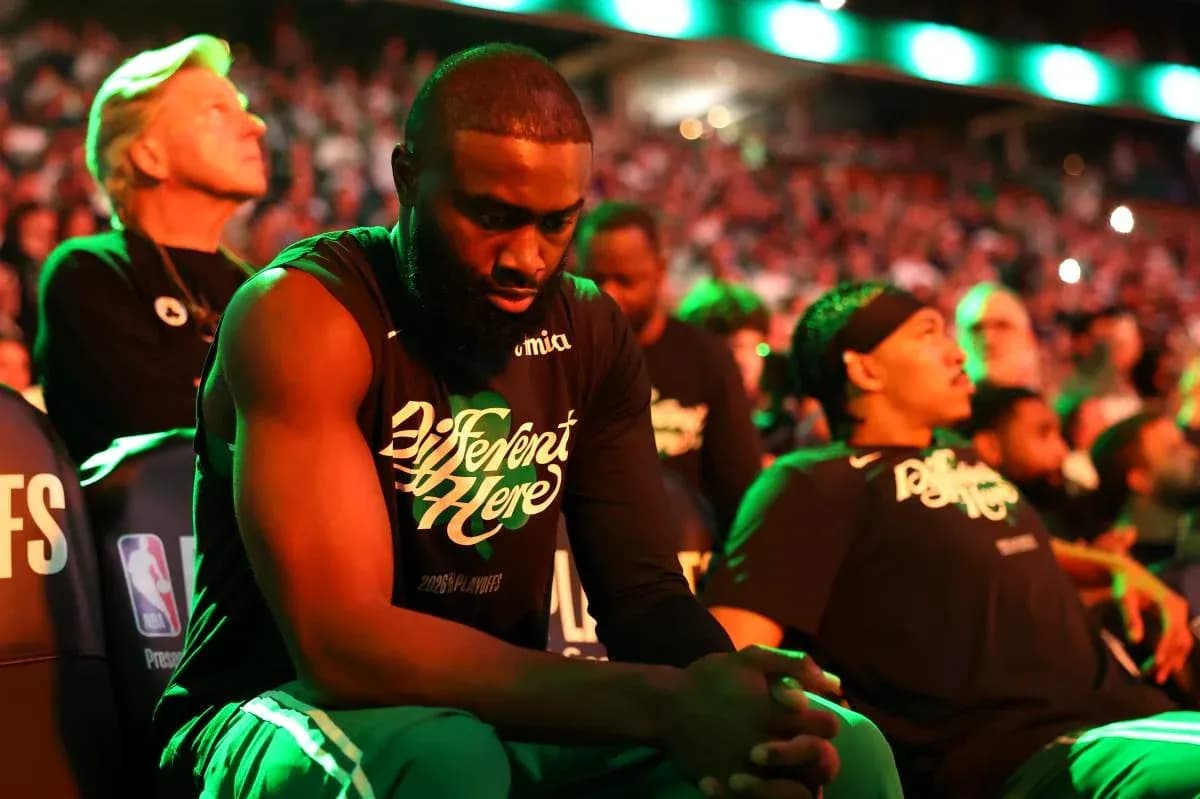
Jaylen Brown came back to Boston on Sunday with no jersey, no banner to chase, no game to play. Just a microphone, a park, and a city that still feels like his.
On the grass at Boston Common, a decade of shared history gathered around him. Kids in oversized Celtics shirts, adults in faded No. 7 jerseys, families who knew him more for his work in their neighborhoods than for his step-back jumper. Brown called it “741 Frequency Fest: A Love Letter to Boston Block Party.” It felt more like a final chapter.
He did not stroll in like a visiting star. He arrived like someone coming home for the last time.
A Trophy in the Crowd, a Lump in the Throat
Near the Charles Street entrance, music thumped, carnival games buzzed, and back-to-school giveaways moved from tables into eager hands. Merch from his 741 brand dotted the crowd. On paper, it was a free community festival, running from 2 to 7 p.m.
In reality, it turned into a goodbye that neither side had been granted when the trade went through.
At one point, fans hoisted a replica of the Larry O’Brien Trophy above the crowd, a gleaming reminder of 2024 and the title run that finally pushed Boston to banner No. 18. The symbol cut through the noise. This was the man who helped bring the championship back.
When Brown took the microphone, the five-time All-Star — usually composed, usually measured — stalled. Words did not come easily.
“Listen, I’m at a loss for words,” he told them. “When I got to the city, I said I’m going to go to war for this city.”
He had. For 10 seasons.
He thanked the people who backed his community work, who pushed him when his game drew criticism, who stayed with him through playoff heartbreak and breakthrough. Then he went straight to the point.
“I just want to say thank you to Boston,” Brown said. “Thank you to the city.”
The crowd answered with cheers that sounded less like applause and more like closure.
A Sudden Exit, a Deliberate Farewell
The trade that ended Brown’s Celtics career landed with the blunt force of a breaking-news alert. In July, Boston sent him to the Philadelphia 76ers for Paul George, two first-round picks and two second-rounders. Just like that, the franchise broke up the nine-year partnership between Brown and Jayson Tatum and shipped a Finals MVP to one of its oldest rivals.
Brown did not hide how hard it hit him. At his introductory press conference in Philadelphia, he admitted he threw his phone across the room when he found out. He made clear this was not his decision. He had spent roughly a third of his life in Boston and wanted to stay a Celtic.
The block party gave him a chance to separate the front office’s calculation from the city’s connection.
“I’m seeing all these people out here, and honestly, I love each and every one of y’all,” he told the crowd. “I appreciate y’all for coming.”
There was no speech about trades, no veiled shots at management, no public airing of grievances. The organization ended his tenure with a transaction. Brown chose to end it with gratitude.
From Question Mark to Champion
When the Celtics drafted Brown No. 3 overall in 2016, he was 19 and raw. Doubts followed him into the league — about his shooting, his handle, his ability to fit on a contender. He walked into a locker room with expectations that outpaced his résumé.
He walked out a champion, a Finals MVP, and a five-time All-Star.
Across Brown’s 10 seasons, no NBA team won more combined regular-season and playoff games than Boston. He helped drag the Celtics deep into May and June year after year: seven trips to the Eastern Conference Finals, two appearances in the NBA Finals.
The defining stretch came in 2024. Brown tore through the Eastern Conference, claimed the Eastern Conference Finals MVP, then rose again on the biggest stage to secure NBA Finals MVP as Boston clinched its record 18th title. For a franchise built on legends, he carved out his place.
Yet his legacy in the city stretches beyond TD Garden’s parquet.
Work That Outlasts the Jersey
Brown did not limit his presence to game nights. He poured time, money, and voice into Boston’s underserved communities. He launched initiatives around education and economic inequality, often pressing the city to look directly at its racial history and its present.
His Bridge Program helped connect Black and Latino students with opportunities in science, technology, and entrepreneurship — a pipeline that has nothing to do with box scores and everything to do with futures.
That is why Sunday felt different. Not like a routine farewell event, not like a star dropping in to promote a brand. More like two sides closing a shared story, aware of how much had changed since a 19-year-old prospect first arrived.
Brown’s bond with Boston was never just about the Celtics. It was about who he chose to be while wearing their colors.
The Next Meeting Won’t Be a Party
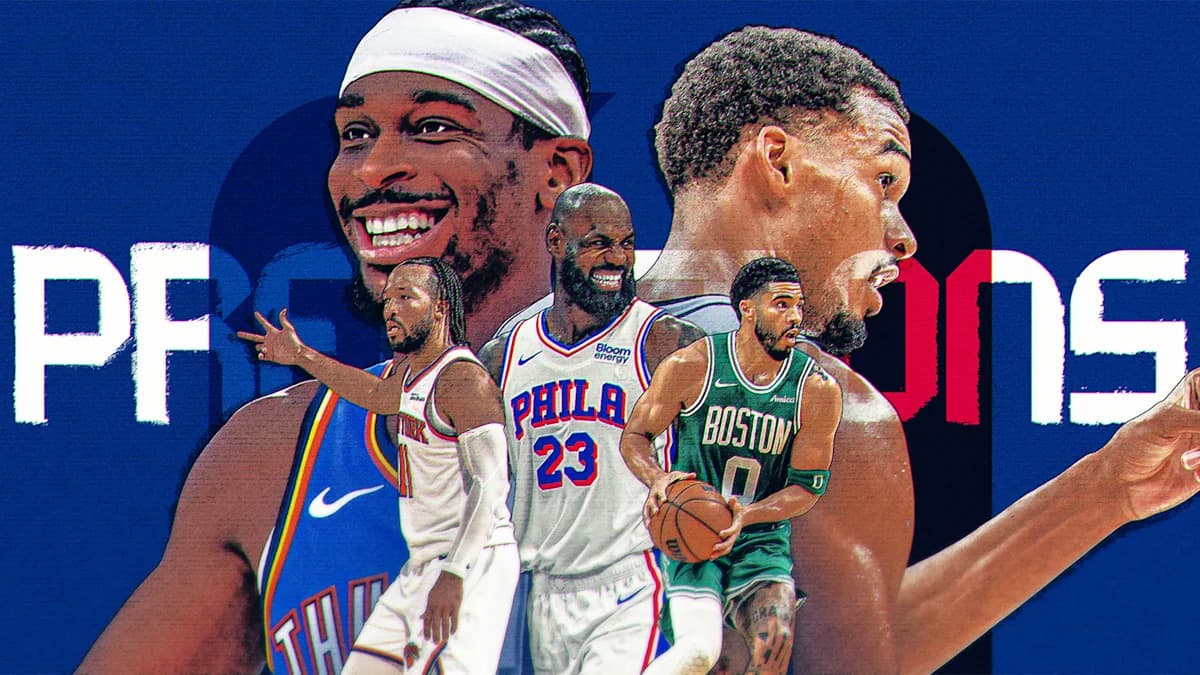
Soon, he will come back under very different lights. Brown will step onto the TD Garden floor in a Philadelphia 76ers uniform, flanked by LeBron James, Joel Embiid, Tyrese Maxey and VJ Edgecombe on a roster built to hunt the very team that traded him.
That night will bring edge, tension, and noise — the kind that only comes when a former Finals MVP stares down the franchise that moved on from him. Every possession will feel personal. Every cheer and every boo will carry history.
Sunday was the opposite. No scoreboard. No clock. No bitterness.
Just a player standing in front of the people who watched him grow from a teenager into a champion, choosing to say thank you rather than why.
The Celtics closed the book on his time in Boston with a deal. Jaylen Brown closed it with love — and the next chapter, in Philadelphia and back at TD Garden, promises to be anything but quiet.