
Japan Asian Games Squad Features Homegrown Talent
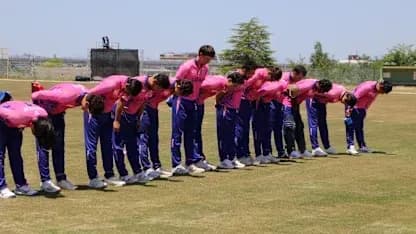
Japan have taken a deliberate, uncompromising route into their Asian Games build-up, drawing a hard line on eligibility and backing a core of pathway and domestic performers to carry the flag.
In selecting their squad, the management have left out players who qualify for T20Is under ICC regulations but fall foul of Asian Games rules. No half-measures, no loopholes. If you cannot play at the Games, you do not play in the preparation.
That decision has opened the door for some of the most intriguing talents in Japanese cricket.
Kusuda-Nairn steps into the spotlight
Emerging spin-bowling all-rounder Jake Kusuda-Nairn is the headline beneficiary. His strong domestic form has forced the selectors’ hand, and this call-up feels less like a gamble and more like overdue recognition. Japan want a squad that will grow together through the Games cycle, and Kusuda-Nairn fits that brief perfectly.
Alongside him, there is a familiar name returning to the international frame. Tsuyoshi Takada, who first pulled on the Japan shirt at the ICC East Asia-Pacific Twenty20 Championship back in 2013, is back. His recall underlines how Japan are blending experience with fresh energy, leaning on players who understand both the regional landscape and the demands of tournament cricket.
Bukatsu graduates and a Warne disciple
The squad list also carries a distinctly local flavour. Wataru Miyauchi and Makoto Taniyama both come through Japanese schools with cricket Bukatsu programs, a pathway that has quietly become one of the sport’s most important pipelines in the country.
Taniyama’s story, in particular, captures the modern face of Japanese cricket. A leg-spinner who honed his craft by watching Shane Warne on YouTube, he bowls in shirt number 23 as a nod to the Australian legend. The tribute is more than cosmetic. Taniyama is already Japan’s leading wicket-taker across all pathway and international competitions, the statistical anchor of their attack and proof that digital inspiration can translate into real-world impact.
Charlie Hara-Hinze, part of the U19 Cricket World Cup side that famously beat Tanzania, also makes the cut. That result marked a statement moment for Japan on the global age-group stage; now, players from that generation are being trusted to shape the senior team’s future.
Key spinner returns from injury
There is another important name back in the fold. Spinner Benjamin Ito-Davis returns after his East-Asia Pacific T20 World Cup 2028 Sub-Regional Qualifier campaign ended abruptly with a hand injury. His absence was felt there; his presence now gives Japan vital depth and variation in their spin department, an area that will almost certainly decide tight matches in Asian conditions.
Japan finished second in that qualifier, level on points with Papua New Guinea and only separated on net run rate, despite beating the Barramundis on the final day. It was a harsh reminder of how fine the margins are at this level, but also a clear signal: Japan can live with the region’s traditional powers.
They remain firmly in the hunt for a place at the 2028 T20 World Cup. With this Asian Games squad, they are not just chasing medals. They are building a side designed to stay in that hunt all the way to the global stage.





