
Injury Woes Plague South Africa's Fast Bowlers Ahead of ODI Series
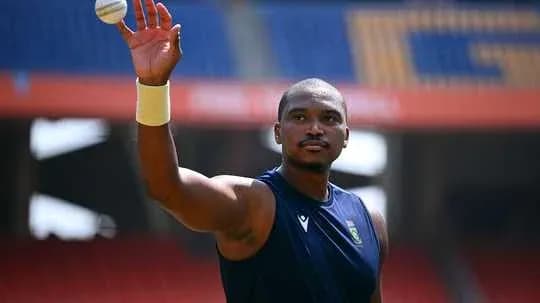
Lungi Ngidi has limped into a club no fast bowler wants to join. South Africa’s injury list is starting to look like a pace-bowling who’s who, and the entry requirement is painfully specific: a damaged hamstring.
Ngidi is the fifth quick to go down, ruled out of the ODI series against Australia that starts at Kingsmead on Thursday. Kagiso Rabada, Ottneil Baartman and Lutho Sipamla are already there with the same problem. Nandré Burger is the outlier, sidelined by a flaring back issue rather than the muscle that has ambushed his teammates.
For Cricket South Africa, this is no freak occurrence. It’s timing.
“It’s not surprising, because if you look at any sport there are two peaks in hamstring injuries — the beginning of the season and the end of the season,” Shuaib Manjra, CSA’s former chief medical officer and national men’s team doctor, told Cricbuzz.
At the start of a campaign, players leap from relative rest into high-intensity competition. Loads spike. Bodies lag behind. Muscles fail. At the other end of the season, fatigue gnaws away at resilience and the same injuries reappear. Different route, same destination.
Ngidi’s latest setback came in Centurion last Friday, in the opening round of first-class fixtures, turning out for the Titans against the Dolphins. CSA offered no forecast on whether he will recover in time for the Test series against Australia, which begins in Durban on October 9. Rabada’s timeline remains just as guarded.
That silence speaks to the bigger picture. The looming Tests matter far more than a standalone ODI series. South Africa are defending World Test Championship winners, their only senior global crown, earned by beating Australia in the final at Lord’s in June last year. Protecting that status shapes every decision.
So a five-second clip of Rabada, posted on his social media accounts on Wednesday, has been treated like a weather change. He jogs in off a short run-up and lets the ball go at gentle pace. Nothing dramatic. Yet for South Africans who think in spells and seam movement, it looks like a shaft of light.
The issue is not just whether these bowlers can send down an over. It is how long they can sustain it. Rabada has not played any form of cricket since May. Burger has been out since June. Sipamla only returned to bowling last month after last featuring in July. Before last week, Baartman had also not been on a field since July.
For all of them, the comeback is not a switch to flick but a staircase to climb. Bowling loads must be built carefully, over after over, spell after spell. Coaches used to call it “getting overs in the legs”. If the hamstring has already sounded an alarm, that climb becomes even more delicate.
“The other risk for a hamstring injury is a previous injury,” Manjra said. “You’re more likely to pick up another injury if you go back too early.
“Doctors have a saying that the highest risk of an injury is a previous unrehabilitated injury. So we have to ensure that the player is fully rehabilitated, otherwise they are vulnerable.”
Ngidi’s situation cuts against the obvious narrative. He has not been idle. From August 27 to September 6, he played six ETPL games for Glasgow Cosmic, sending down 120 of a possible 144 deliveries. It is a respectable workload, solid without being excessive. On paper, he arrived at the South African season with a decent bank of overs.
Yet the injury came anyway.
There is a counterpoint. Some will argue that those ETPL overs should never have been bowled, that a centrally important fast bowler ought to have been tapering and tailoring his preparation for a home season stacked with eight Tests. The calendar says one thing. The bank balance another.
Because would those same voices have covered Ngidi’s lost earnings had he skipped the ETPL? He is a professional cricketer. His window to cash in is finite. Choices are rarely simple.
What is simple is the reshuffle that follows. Nqobani Mokoena has been drafted in to replace Ngidi in the ODI squad. Gerald Coetzee steps up for Rabada. Duan Jansen fills Baartman’s slot. Sipamla and Burger were not in the original group, but the spate of injuries to those ahead of them would have dragged them into the conversation had they been fit.
So South Africa turn to a new-look attack for Australia’s visit in the 50-over format. Marco Jansen will lead it, his left-arm angle and bounce now the spearhead rather than the support act. Corbin Bosch and teenager Kwena Maphaka are also in the frame, tasked with carrying a workload that was meant to be shared by some of the country’s most seasoned quicks.
For a team trying to manage today’s fixtures while guarding tomorrow’s red-ball ambitions, the question hangs over everything: how many more overs can this group squeeze out of their fast bowlers before another hamstring snaps?





