.svg&w=384&q=75 "logo")
India vs Pakistan: Women's Asia Cup 2026 Showdown in Dubai
India and Pakistan return to familiar ground on September 5, when the latest chapter of their rivalry unfolds at the Dubai International Cricket Stadium in the Women's Asia Cup 2026 group stage.
Same venue. Same heat. Very different histories.
Dubai has become the beating heart of the women's game in recent years. It staged the entire 2024 Women's T20 World Cup and now carries the full weight of the Asia Cup, hosting all 15 matches. No side walks in blind here. India and Pakistan know every strip of turf, every troublesome patch of dew, every pocket of noise in a 25,000-seat bowl that can feel both vast and claustrophobic at once.
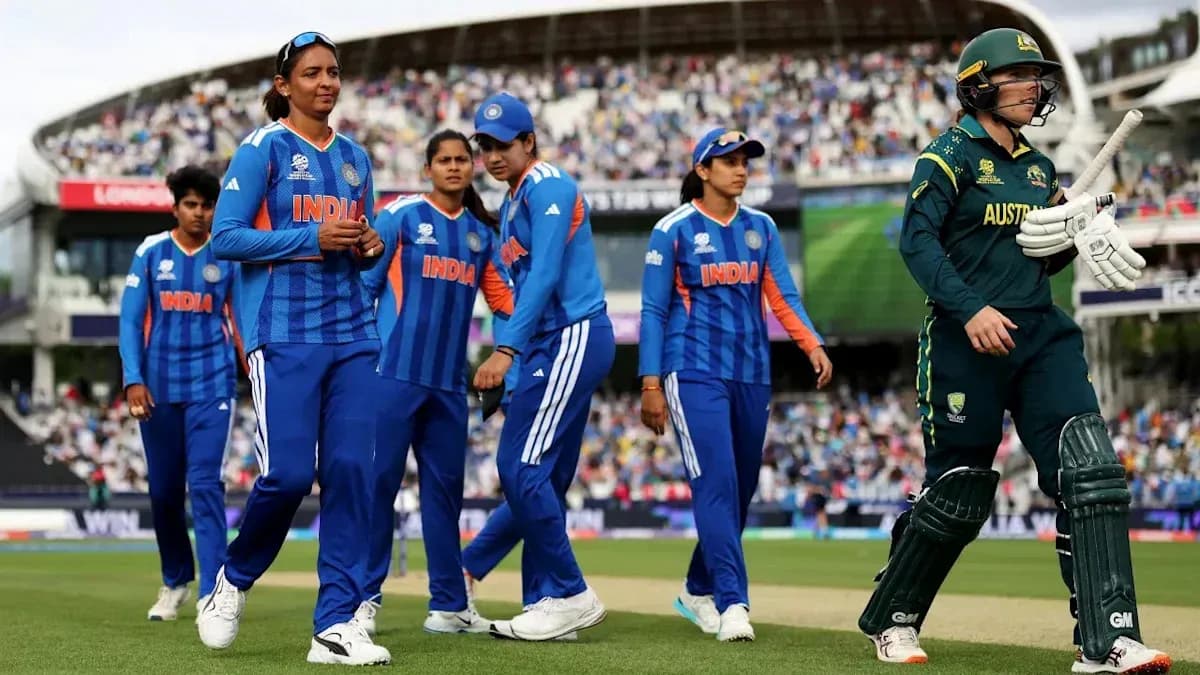
They met here in October 2024 during the T20 World Cup, India cruising to a six-wicket win. That result still hangs in the air. So do Pakistan’s more painful memories: they own the lowest women's T20I total at this ground. India, in stark contrast, own the highest. The gap between those two numbers mirrors the gulf in comfort and confidence between the sides in these conditions.
A ground that rewards nerve under lights
Since opening in 2009, the Dubai International Cricket Stadium has quietly built a serious women's T20I résumé. Nineteen matches, most of them crammed into the 2024 World Cup and a 2023 bilateral series between Namibia and UAE, have shaped a clear pattern.
Chasing teams have taken 11 of those 19 games. That’s no quirk. Dew rules the night here.
As the sun dips behind Dubai Sports City and the lights take over, moisture creeps onto the outfield and into the ball. Bowlers struggle to grip their variations, spinners fight the slick seam, and captains who misread the conditions often pay for it in the second innings. Winning the toss is one thing; reading the clock and the sky is another.
A pitch that changes character
The surface itself starts the evening with a bit of bite. New-ball quicks can hit the deck and find bounce, though swing rarely plays the lead role. It’s not a venue where the ball hoops around corners; it’s more about hard lengths, shoulder-height lift, and the odd surprise that climbs on the batter.
Then the game turns.
As the pitch dries, slower bowlers come into their own. The ball grips, holds in the surface, and suddenly the middle overs belong to the spinners. Across all women's T20Is here, slow bowlers have taken more wickets than pace. That trend isn’t accidental; it’s baked into the way the pitch ages over 40 overs.
For captains, the dilemma is constant: attack with pace early or hold something back for the death when the ball is skidding on under the dew? Use spin in the powerplay or save overs for a clogged middle? Dubai asks questions all night.
Records that tell a story
Some numbers at this ground are more than statistics; they’re signposts.
West Indies own the highest successful chase in women's T20Is here, reeling in England’s 141 during the 2024 World Cup. Hailey Matthews and Qiana Joseph both struck half-centuries that night, batting with a clarity that cut straight through England’s plans. It was the kind of chase that sticks in a venue’s memory, a reminder that 140-plus is not safe when the dew descends and batters hold their nerve.
India, though, have set the bar for raw scoring power.
Their 193 for 5 against Hong Kong in this Asia Cup stands as the highest women's T20I total at Dubai. It wasn’t just a record; it was a statement. Smriti Mandhana turned the ground into her own canvas, painting a brutal, elegant 124 off 64 balls. That innings pushed India past their previous mark of 172 for 3 from the 2024 World Cup and underlined a simple truth: when Mandhana settles in here, the scoreboard races.
India now own the two highest totals at the stadium. Walking in against Pakistan, they know they can stretch the ceiling again.
Mandhana’s arena
Few players have bent this ground to their will like Smriti Mandhana.
Across five matches in Dubai, she has piled up 212 runs at an average of 42.40, including that hundred and a fifty. She leads the run charts at the venue, ahead of South Africa’s Laura Wolvaardt, who has 181 runs in five innings at 45.25.
The contrast in styles is striking: Wolvaardt’s classical lines and late cuts, Mandhana’s flowing drives and ruthless acceleration. Both have thrived here, but it is Mandhana who now walks into the Pakistan clash with a chance to push her record even further, on a ground that already feels like an extension of her strengths.
She is also the only woman to reach three figures in a T20I at Dubai. Her 124 remains the highest individual score at the stadium, with the next best a 74* from South Africa’s Anneke Bosch. When the floodlights flick on and the ball comes onto the bat, this place can look very small in Mandhana’s eyes.
Spin, guile, and a seven-for
The bowlers have carved their own legends into this surface.
South Africa’s Nonkululeko Mlaba sits atop the wicket charts in women’s T20Is at Dubai, with 11 scalps in just five innings. Her left-arm spin has repeatedly exploited the grip and turn that emerge through the middle overs, highlighted by a best of 4 for 29 against West Indies during the 2024 World Cup.
Yet even Mlaba’s consistency bows to one outrageous performance.
Sri Lanka’s Chamari Athapaththu, better known worldwide for her hitting, produced scarcely believable figures of 7 for 5 against India on September 2 in this very Asia Cup. Seven wickets. Five runs. In a T20I. Those numbers read like a misprint, but they stand as the best bowling figures in women's T20Is at the venue.
That spell has rocketed her within two wickets of Mlaba’s overall record here. For batters, it’s a chilling reminder: Dubai can still bite, even in an era of bigger bats and heavier hitting.
A stage set for another chapter
So India arrive with the highest totals, the leading run-scorer, and the only centurion. Pakistan arrive carrying scars and a point to prove on a ground that has not been kind.
The stadium itself, with its 25,000 seats and the ICC’s headquarters nearby, has seen enough now to understand the rhythms of a big night. Early bounce, mid-innings spin, late dew, and the roar that rises when a chase gathers speed.
The records lean India’s way. The conditions reward nerve, clarity, and a captain who reads the evening correctly.
On September 5, under Dubai’s lights, which of those truths will matter most?