
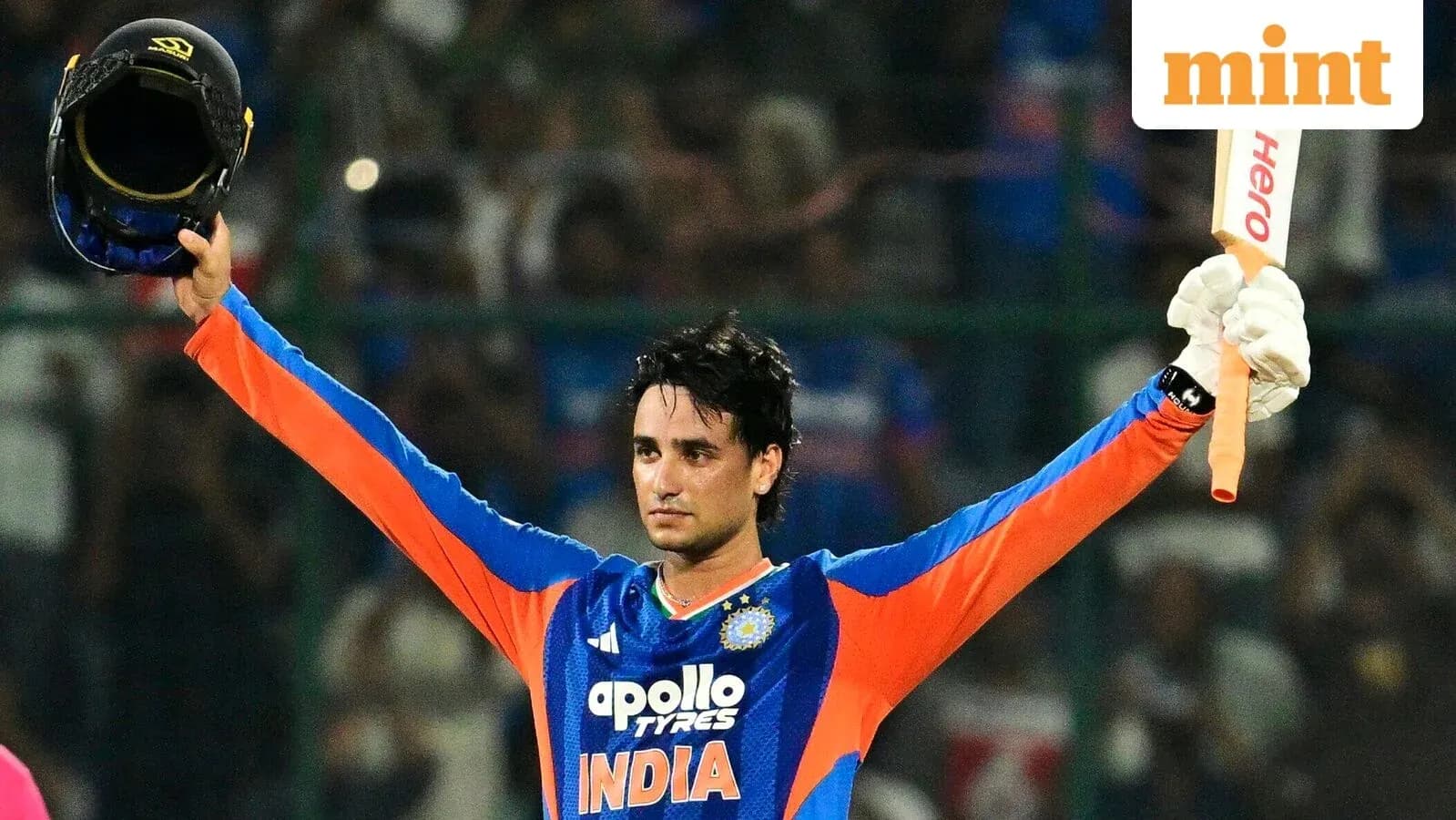
India's Openers Deliver a Powerful Message Against Afghanistan
India’s top order walked out with a message and delivered it in the loudest way possible.
By the time the fifth over ended, Afghanistan’s bowlers were staring at a scoreboard that read 85 without loss, and at two batters who looked in no mood to negotiate.
Abhishek and Samson light the fuse
It began with a hint of early intent. Azmatullah Omarzai’s second over was short, wide, and instantly punished. Sanju Samson opened his account with a neat cut to deep point, but it was Abhishek Sharma who ripped the script apart.
A swivel over deep square leg for six set the tone. He then picked up four to long-on, missed one outside off, and shrugged it off by launching Omarzai over deep extra cover for another six. India walked away from that over at 22 without loss, Abhishek already racing to 20 off 8 balls. The message was clear: there would be no quiet powerplay.
The assault only grew sharper when Fazalhaq Farooqi returned. Samson heaved a shorter ball to deep backward square for a single, giving Abhishek the strike and, with it, the stage. A fuller ball disappeared straight back over the bowler’s head for six, Abhishek holding the pose as if to underline the authority of the shot.
The next short ball was treated with disdain, helped over fine leg for another six. Farooqi tried to bang it in again, and Abhishek simply rolled his wrists and pulled it past deep square for four. Another four followed to fine leg, before two more to deep extra cover closed the over. India were 45/0 after just three overs, Abhishek blazing away on 42 off 13 deliveries, Afghanistan already chasing shadows.
Nabi’s nightmare over
If Afghanistan hoped the introduction of experience would steady things, Mohammad Nabi’s first over brutally disabused them.
He tossed one up, inviting Samson to drive. Samson went the other way. Backfoot, straight bat, and the ball was smoked back over the bowler’s head for six. The next delivery landed in almost the same area. It met exactly the same fate.
The pressure finally told on the fielding side. Abhishek joined the carnage, taking the same straight route to bring up his fifty in style. A crisp four followed, and the left-hander finished the over with yet another six. By the time Nabi escaped, 29 runs had been plundered from it. India surged to 85/0 after five overs, their openers turning a powerplay into a demolition.
Captains’ plans, very different realities
All this came after Ibrahim Zadran had won the toss and chosen to bowl, exactly what he had wanted in the previous games. He backed his attack, and he backed the surface.
“If you look at the wicket, it's quite supportive for the bowlers,” he said, confident his side could execute their plans, squeeze India, and prevent a big total. With the series already lost, Afghanistan had spent time dissecting their failures, especially with the bat. Their middle order had crumbled in both matches, while opener Rahmanullah Gurbaz had registered ducks twice. Zadran spoke openly about the need to transform totals of 150-160 into something closer to 200 if they wanted to trouble one of the best T20 sides in the world.
“We thought about the things that how to improve that 150-160 to 200 plus. So we need to bring that intent to the team...we should go with the right intent to score, 200 plus,” he said, stressing that only that kind of ambition could bring down a heavyweight like India. Two changes underlined the search for a spark: Gulbadin Naib and Noor Ahmad made way for Abdullah Ahmadzai and Noor ul Rahman.
On the other side, Shreyas Iyer was content to see his opposite number call correctly. India would have batted first anyway.
“We would have definitely batted first as well,” Iyer said, outlining a simple but sharp message to his team: no complacency, no unnecessary chaos. Batting first, he warned, did not give them license to “go completely berserk.” The plan was to attack with clarity, not abandon. Adapt to conditions. Trust instincts. Keep things uncomplicated.
He made one tweak of his own: Yash Thakur came in for Arshdeep Singh, a fresh option with the ball for later in the night.
Afghanistan’s looming question
For Afghanistan, the script that followed Iyer’s words was brutal. The very intent Zadran demanded from his own batters was being showcased, ruthlessly, by India’s openers. Their bowlers, supposedly aided by a helpful surface, were being driven, pulled, and launched into the stands.
This final game was supposed to be a chance to lift spirits before they board the flight to Japan, a chance to walk away with at least one win and a blueprint for bigger scores. Instead, as Samson and Abhishek tore into the attack, the question grew sharper with every boundary:
If 200 is the target they must chase to beat the “biggest team on the international stage,” can their batting finally match the intent their captain keeps demanding?





