
India Escapes Narrow Victory Against Japan in Controversial T20 Match
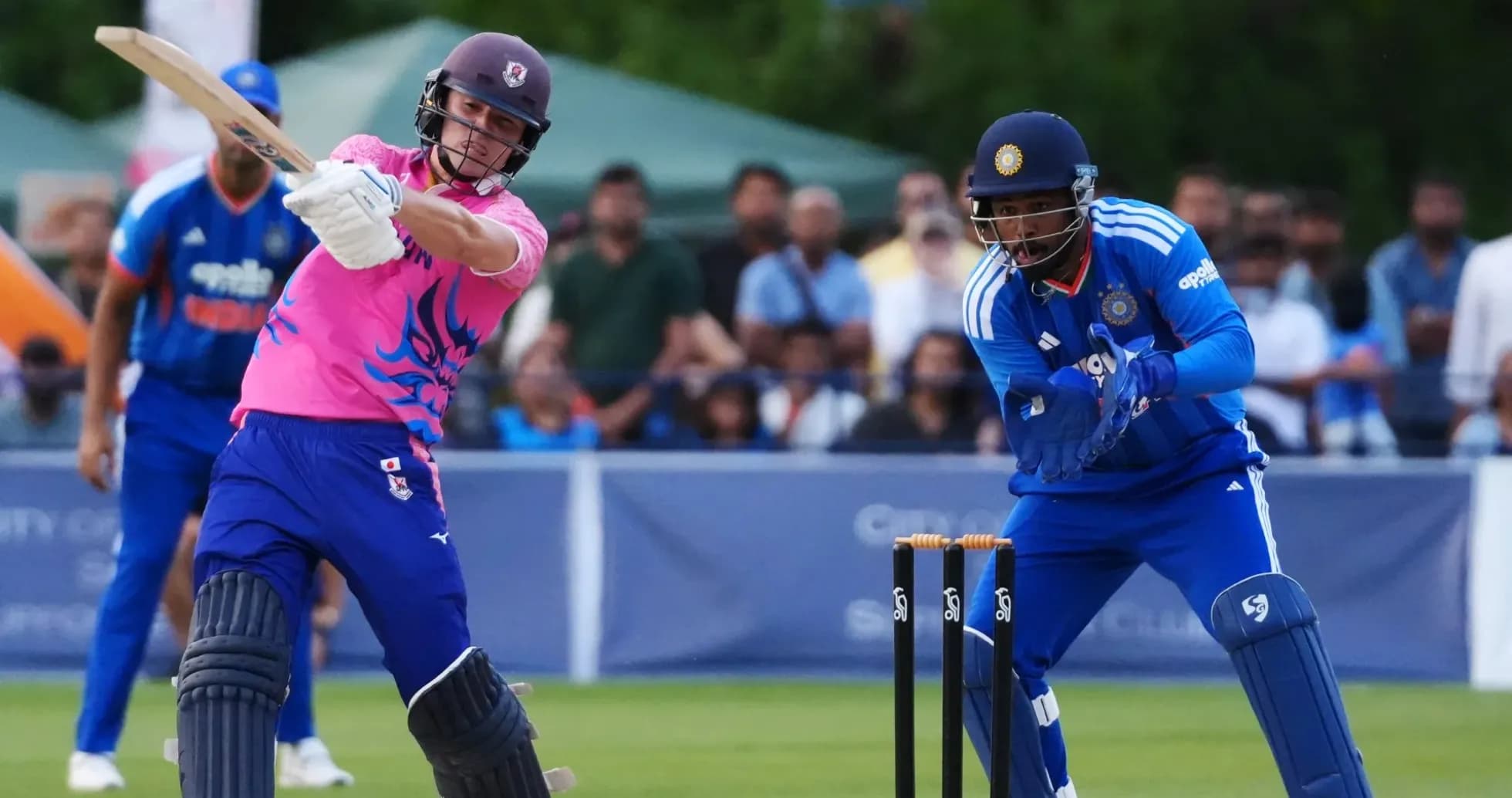
On a grey, rain-hit afternoon in Sano, a game that was supposed to be a soft tune-up for the world champions turned into something far more awkward. India escaped with a two-run win over Japan in a five-over shootout on Tuesday, but the narrow margin is not what will be remembered.
A single umpiring call – made, then unmade – has left India accused of browbeating the officials and Japan feeling robbed of a once-in-a-lifetime upset.
A five-over scrap that refused to behave
Rain hacked the contest down to five overs a side, stripping away the usual rhythms of T20 cricket and leaving no room for recovery. Shreyas Iyer won the toss and batted, a decision that looked routine on paper and reckless once the first over began.
Japan, ranked 41st in the ICC T20 standings and playing their first match against a full member, struck immediately. Charlie Hara-Hinze removed Abhishek Sharma in the opening over, then came back to dismiss Ishan Kishan with the second ball of his next. India, three-time T20 world champions, were suddenly 2 down and groping for control on a slow, low surface.
Iyer steadied them with a brisk 16 off 12, just enough to drag his side to 32-4. It was a total that looked modest, but in these conditions, far from trivial.
Japan’s chase began with the kind of restraint you’d expect from a side carrying almost no big-stage experience but a clear game plan. Axar Patel took the new ball for India and struck in his first over, removing Lachlan Yamamoto-Lake with his fourth delivery.
That left Japan needing 31 from the final four overs. Manageable, but only just.
Washington Sundar tightened India’s grip in the second over, conceding six and picking up another wicket. Spin remained India’s weapon of choice, yet Japan refused to fold. Across the next two overs they took 17 runs and, crucially, their captain Kendel Kadowaki-Fleming carved out a composed 12 before falling. The gap closed. The pressure shifted.
By the time Patel returned for the final over, the equation was simple and loaded with tension: eight needed off six, seven wickets in hand, the world champions suddenly looking very human.
The ball that changed everything
Patel began with a dot. One off the next. Seven off four. The Sano International Cricket Ground, more used to quiet afternoons and development fixtures, sensed something extraordinary.
Then came the first wide. Patel pushed one beyond the batter’s reach and the umpire stretched his arms. Six off four.
Alexander Shirai-Patmore took strike. Japan, the hosts, were six runs away from the biggest result in their cricketing history. Patel ran in again.
The ball went past the bat. Shirai-Patmore tried a reverse sweep, but the delivery stayed outside his hitting arc. At the bowler’s end, umpire Chris Thurgate signalled wide. The equation shifted again: five off four, plus an extra ball to come.
And then the storm broke.
Iyer and Patel exploded in protest. Arms out, voices raised, they marched towards the umpire, clearly furious with the call. Thurgate conferred with square-leg umpire Chris Brown. No replay. No DRS. No consultation with a TV umpire.
After a brief discussion, the wide was revoked.
No extra run. No extra ball. No law-based explanation visible to the players or those watching.
The decision ripped the air out of the ground. Under Law 22.3 of the MCC’s Laws of Cricket, a wide can be revoked only if the ball touches the bat or batter before any fielder, or if the delivery is called a no ball. Neither condition applied. The call stood alone, justified only by a hurried conversation and the visible anger of India’s captain and bowler.
Japan, stunned but still swinging, could manage only three singles from the last three balls. They finished on 30-3, two runs short of India’s 32-4. The scoreboard said thriller. The manner of it said something else.
‘Bullied the umpires’
Reaction was instant and scathing. With no formal review process triggered and no audio of any third-umpire intervention, the sequence looked, to many, like a straightforward case of pressure winning over protocol.
Ben Gardner, cricket writer at Wisden, called it a “disgraceful decision”, accusing India of having “bullied the umpires into overturning a wide call against Japan” at the very moment a seismic upset was in play.
Social media lit up. “Japan were robbed here,” wrote Abu Zaid Sarooji, echoing a sentiment that spread quickly beyond the usual associate-cricket circles. Even some Indian supporters turned on the incident, pointing out that Shirai-Patmore had not changed his stance before the ball was delivered and had not tried to manipulate the wide call.
The optics were brutal: the sport’s dominant powerhouse bearing down on an umpire from an emerging cricket nation, and getting what it wanted without a shred of visible evidence to justify the change.
In a sport that has long frowned on public dissent towards umpires, the sight of Iyer and Patel surrounding Thurgate jarred. The fact that the original decision was then overturned without recourse to technology or law-backed reasoning only deepened the unease.
Silence from the captains, pride from Japan
After the match, neither captain directly addressed the flashpoint. Iyer focused on the conditions and the nature of a five-over lottery.
“Honestly speaking, it was a very difficult wicket to bat on,” he said. “A five-over game, it can go anywhere. It doesn’t matter how good a team you are.”
He reserved warm words for Japan’s approach.
“The attitude and approach the Japanese team showed today was impeccable, and kudos to them. Their approach was outstanding. I’m sure that they are on the right track.”
On the other side, the Japanese players walked off looking shattered, fully aware of how close they had come. Kadowaki-Fleming, though, allowed himself a broader perspective.
“Emotions are running pretty high in our group. But the fact that we’re able to run the best team in the world, in my opinion, to the last ball of a game is pretty special,” he said. “I think today was a really momentous occasion in that it was the first time we were able to face a full member.”
A diplomatic coup, a moral flashpoint
This was not just another warm-up fixture. The game in Sano was the product of years of quiet work by the Japan Cricket Association, backed by corporate support and a push from the Japanese government.
The JCA had spent more than a year lobbying the BCCI to bring India to Sano. When the agreement finally came, it was hailed as a breakthrough: a full-strength T20 giant visiting a country with only 7,300 registered players and 16 cricket grounds, where cricket still lives in the long shadow of baseball and football.
“One match or competition itself won’t change anything, and we are certainly not going to think that suddenly it’s going to be as popular as baseball or football in Japan,” JCA chief executive Naoki Alex Miyaji said earlier this month. “But the match against India is the first page of a new era.”
On the field, that new era almost began with an earthquake. Japan, an associate member with no previous experience against full members, dragged India to the last ball and lost only because of a razor-thin margin and a decision that has already entered cricket’s catalogue of controversies.
For India, the result will slip quickly into the pre–Asian Games build-up file: a scare survived, lessons learned, reputations intact. For Japan, it may linger far longer.
They came within a single call of rewriting the sport’s hierarchy. The question now is whether the world will remember the courage of the underdogs, or the moment when the laws bent under the weight of a giant’s glare.





