India's Day at the Asian Games: Highs and Lows Across Sports
India’s long day at the Asian Games unfolded like a full campaign in miniature – soaring comebacks, narrow misses, and a stack of “what ifs” scattered across half a dozen sports.
This was not a day defined by one headline. It was a day of many small turning points.
Sindhu falls, Japan shuts the door in women’s badminton
All eyes were on the badminton hall in Ichinomiya to start with. India’s women’s team walked into a brutal quarterfinal draw: Japan, in Japan, with a first team medal since 2014 on the line.
P. V. Sindhu opened against World No. 3 Akane Yamaguchi and, for a while, it felt like the old script. From 13-17 down, Sindhu clawed back to steal the first game 23-21, pouncing on a rare Yamaguchi error on her second game point. The fight was there. The belief too.
But Yamaguchi tightened the screws. She edged the second game 21-18, then ran away with the decider 21-11, outlasting Sindhu in an hour and 12 minutes to hand Japan a 1-0 lead.
Unnati Hooda, tasked with dragging India back into the tie, flirted with a famous turnaround of her own. She lost the first game 16-21 to Tomoka Miyazaki, then stormed to an 11-4 lead in the second. The door to a decider was wide open. Miyazaki slammed it shut, reeling the youngster back and closing it out 21-16, 21-18. India trailed 0-2 and stood on the brink.
Treesa Jolly and Gayatri Gopichand refused to go quietly. In a must-win doubles, the World Championships bronze medallists produced a sharp, composed performance to beat Yuki Fukushima and Mayu Matsumoto 21-17, 21-16. India 1, Japan 2. A lifeline.
It didn’t last. Tanvi Sharma, thrust into a must-win third singles against former World Champion Nozomi Okuhara, never quite found a foothold. Okuhara controlled the rallies and sealed the tie with a 21-12, 21-10 win. Japan took the quarterfinal 3-1, ending India’s push for a women’s team medal.
Men’s badminton: Lakshya Sen drags India into the fight
If the women’s tie stung, the men’s quarterfinal against Japan brought a flicker of defiance.
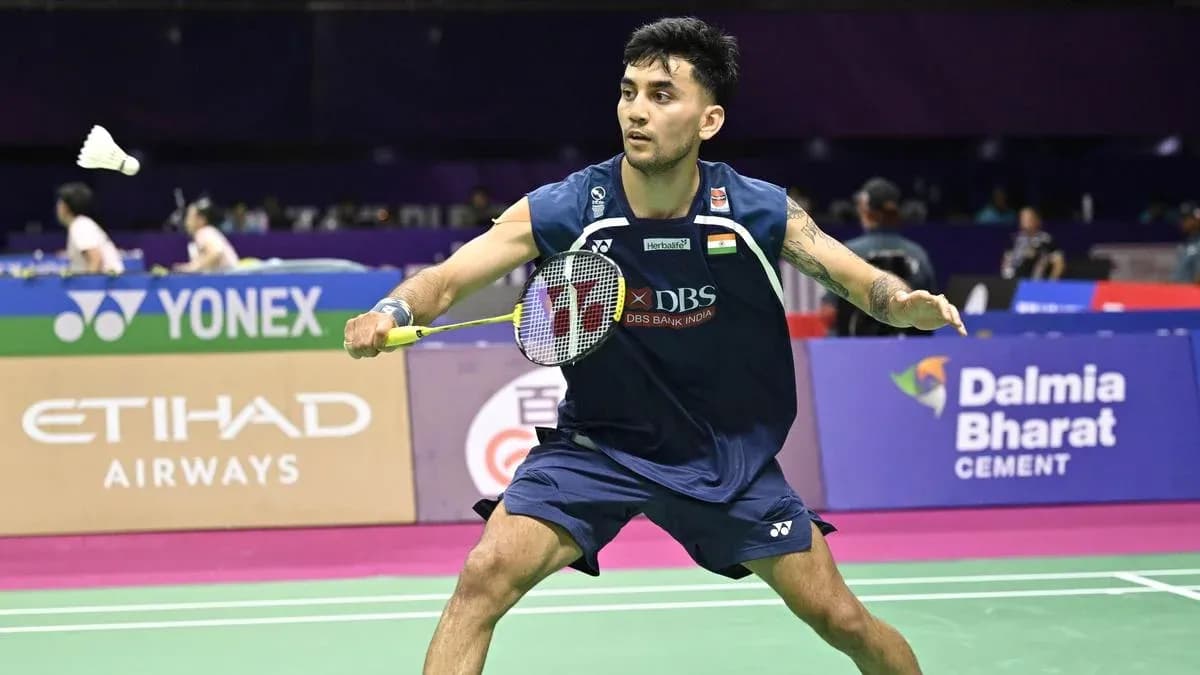
Lakshya Sen opened against World No. 7 Kodai Naraoka and started badly. Naraoka bossed the first game 21-11, leaving India staring at another uphill climb. Sen answered with a blistering second game, racing to a 5-1 lead and crushing it 21-5.
The decider turned into a test of nerve. Naraoka carved out a five-point cushion, and the Japanese crowd sensed the kill. Sen refused to yield. Point by point, he reeled his opponent in and edged a tense finish to take the match 2-1 (11-21, 21-5, 21-19), handing India a vital 1-0 lead in the tie.
Satwik-Chirag were next, set to face Takuro Hoki and Yugo Kobayashi with the momentum finally tilting India’s way.
Women’s cricket: Mandhana lights up the final
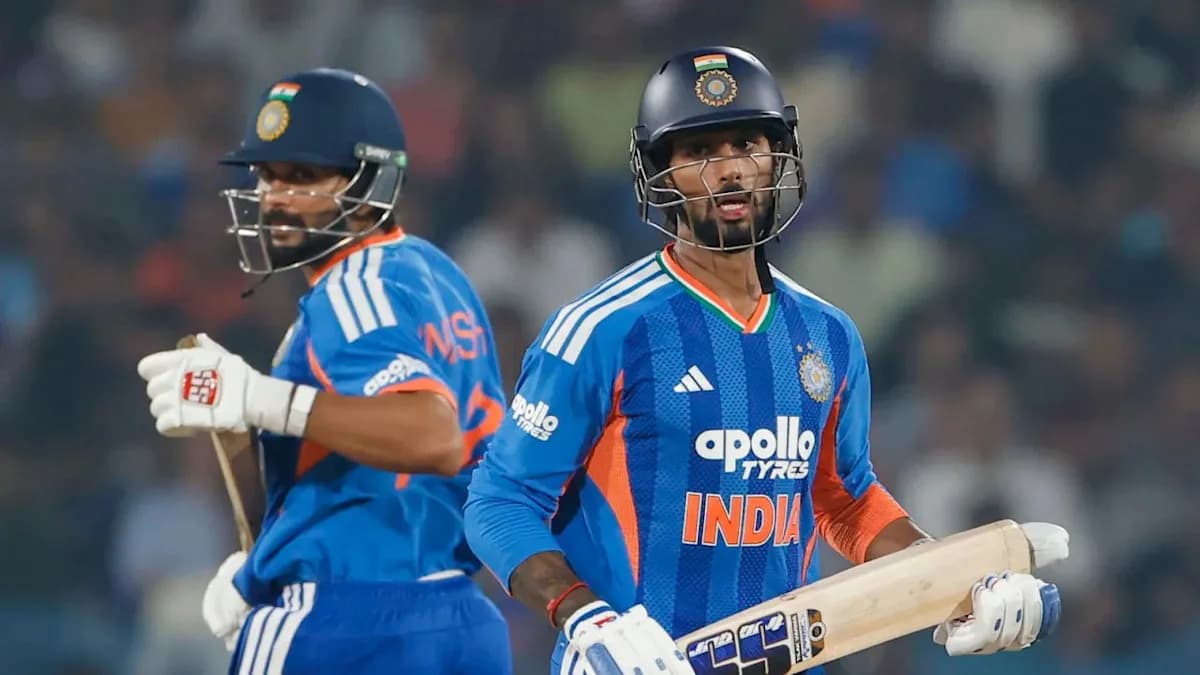
Over at the cricket, India’s batters turned the women’s T20 final against Sri Lanka into a statement.
Having won the toss and opted to bat, the openers cashed in. Smriti Mandhana was in full command, unfurling a 79 off 45 balls that anchored India’s innings and shredded Sri Lanka’s plans. At the other end, Shafali Verma hammered 48 from 29, setting the tone in the PowerPlay as India raced to 67/0 after six overs.
The platform allowed Richa Ghosh to launch. Her 49 off 22 kept the scoring rate high and the pressure relentless. India closed on 216/3 – its third-highest WT20I total – and left Chamari Athapaththu and her side staring at a daunting chase in a gold-medal match.
Shooting: from world-record shadow to fourth place
In 10m air rifle mixed team, Parth Mane and Elavenil Valarivan spent the morning in China’s slipstream. The Indian pair shot 634.6 in qualification, finishing second behind Wang Zifei and Sheng Lihao, who set a new Qualification World Record of 638.9. Korea (633.2) and Vietnam (631.7) initially completed the top four, with Japan missing out.
Then came a twist: Vietnam was disqualified, lifting Japan into the final alongside China, India and Korea.
The medal round, though, refused to bend India’s way. After the first 10-shot series, China led on 107.2, with Korea (104.9), Japan (103.9) and India (103.6) trailing. The pattern never quite changed. China kept stretching away – eventually winning gold with a World Record total of 507.1 – while Japan (439.7) took bronze and Korea (502.9) silver.
Parth and Elavenil finished fourth with 376.3, unable to climb out of last place through the subsequent series. From second in qualifying to just off the podium: another near-miss in a discipline where India expects to stand on the steps.
Table tennis: women dig deep, men bow out
The women’s team tie against Thailand turned into a long, twisting scrap.
India No. 1 Sreeja Akula looked set to give her side a smooth start, racing to a 2-0 lead in games against Orawan Paranang and even holding match point at 10-9 in the decider. She couldn’t land the final blow. Paranang surged back to steal it 3-2 (7-11, 1-11, 11-9, 11-6, 12-10), flipping the tie’s mood instantly.
Yashaswini Ghorpade steadied it. First she edged Suthasini Sawettabut in a five-game thriller, 3-2 (11-8, 5-11, 7-11, 11-9, 11-9), levelling the tie at 1-1. After Diya Chitale fell 2-3 (7-11, 11-5, 11-7, 7-11, 11-13) to Jinnipa Sawettabut, India trailed 1-2 and needed another rescue act.
Ghorpade delivered again. This time she swept Orawan Paranang 3-0 (11-5, 11-8, 11-9), dragging the contest into a deciding fifth rubber. With everything on the line, Sreeja returned and made amends, beating Suthasini Sawettabut 3-1 (9-11, 11-6, 12-10, 11-8) and sealing a 3-2 win. India marched into the women’s team quarterfinals to face North Korea.
The men’s team could not match that resilience. Up against Republic of Korea in the Round of 16, India went down 3-0. Harmeet Desai lost the opener 1-3 (11-8, 7-11, 8-11, 9-11) to Jang Woojin, and Manush Shah failed to close out his match, getting dragged to a decider by Oh Junsung. In the end, An Jaehyun completed the sweep, beating Manav Thakkar 3-1 (12-10, 11-6, 7-11, 12-10). A two-time bronze medallist exited without landing a real punch.
Gymnastics and Wushu: narrow margins, quiet excellence
In artistic gymnastics, Pranati Nayak put herself in the mix on women’s vault. She opened with a 13.000 on her first vault and followed it with 12.433 on her second, giving her an average of 12.916 and placing her fourth at that stage. Just outside the medals, right in the pressure zone where every tenth matters.
On the Wushu floor, Hanjabam Langlentombi Devi delivered a solid all-round display in the women’s Nanquan & Nandao combined event. She scored 9.403 in Nanquan, placing ninth out of ten, and improved to 9.436 in the Nandao final, finishing eighth there. Her combined total of 18.839 earned her ninth place overall – not a podium, but a performance that held its own in a high-quality field.
Fencing: breakthroughs and brick walls
India’s women’s epee campaign carried a brief surge of optimism. Taniksha Khatri became the first Indian fencer of the day to win a knockout bout, beating Thailand’s Natpapat Sangngio 15-10 in the round of 32 after finishing third in Pool 4. That victory set up a daunting clash against reigning World Champion Sera Song of Korea in the Round of 16.
The gulf showed. Song ended Khatri’s run with a 15-9 win, stopping India’s charge just as it began to gather pace.
In the men’s foil, both Hemash Singh Sanasam and Sachin navigated the pool stage with mixed fortunes. Hemash opened with a 2-5 loss to Singapore’s Raphael Juan Kang Tan, then rebounded with wins over Japan’s Kazuki Iimura (5-1), Sammuel Tranquilan of Philippines (5-2) and Oman’s Saeed Al Shuaibi (5-1), offset by a 2-5 defeat to Macao’s Chong Kio Cheong. Sachin started with a 5-0 win over Pakistan’s Baryal Khan, added victories against Kazakhstan’s Galim Nurumov (5-3) and Mongolia’s Chingis Narmandakh (5-1), but slipped up against Chinese Taipei’s Chen Chih-Chieh (2-5) and Korea’s Jeonghyun Youn (0-5). Both finished fourth in their pools and progressed to the Round of 32.
The knockout stage proved unforgiving. Hemash lost 9-15 to Nurumov, unable to build on his early 6-5 lead after the first period. Sachin fell by the same 9-15 margin to Kazakhstan’s Timofey Semyonov. Two runs, both cut short at the same hurdle.
Soft tennis: a day of extremes
Soft tennis produced a little of everything.
In men’s singles Group C, Aryan Thakur began with a dominant 4-0 win over Mongolia’s Bold-erdene Altangerel, mirroring Jay Meena’s earlier 4-0 victory in his own group against Pakistan’s Hussain Arain (4-2, 4-0, 4-2, 4-0) to reach the knockouts. The promise was there.
Later, the tone changed. Thakur ran into Chinese Taipei’s Chen Po-Yi and lost 4-0 (1-4, 2-4, 2-4, 1-4) in a key Group C clash. The defeat locked India into second place in the group and shut the door on a final-eight berth.
On the women’s side, Aadhya Tiwari opened Group D with a 1-4 loss to Thailand’s Alisha Ziegler (4-1, 0-4, 0-4, 2-4, 4-6), but steadied herself later in the day. She returned to beat Pakistan’s Kainaat Shallwani 4-0 (4-2, 5-3, 4-1, 5-3), claiming her first win of the competition.
Kabaddi: champions in cruise control
If some sports demanded calculators and tiebreakers, kabaddi did not.
India’s men’s team, defending champions and heavy favourites, brushed aside Korea 63-31 in their second Group A match. The margin told its own story: the title defence remains firmly on track, the gap in quality still stark at this stage of the tournament.
Equestrian: dressage leaves India with ground to make up
Eventing got underway with the dressage phase, and India’s three riders found themselves chasing the leaders.
Fouaad Mirza, a double Asian Games silver medallist, rode his 10-year-old bay gelding Camouflage 38 to a score of 38.70 and a percentile rating of 61.33, placing 26th. Arjan Singh Nagra, on 12-year-old grey stallion Cooley Goodwood, edged ahead with 38.20 and a 61.80 percentile to finish 23rd.
India’s best dressage performance came from Ashish Limaye, back with his familiar partner Willy be Dun, the 14-year-old bay gelding he rode in Hangzhou. Limaye posted 35.50 with a 64.47 percentile, good enough for 14th in a 32-rider field where only three combinations broke the 70-percentile mark. China’s Tian Hua, atop Irish Sport Horse gelding Manjushri, led the standings, with Thailand’s Korntawat Samran and Japan’s Toshiyuki completing the top three.
On the team front, India’s cumulative score of 112.40 left it seventh out of eight nations, well outside medal contention. Japan led with 91.60. With cross-country and show jumping still to come, there is room to climb, but the margin for error has already shrunk.
Shooting, swimming, esports and more: the supporting cast
Away from the headline arenas, India’s day filled out across other disciplines.
In swimming, the men’s 4x100m medley relay team of Rishabh Das, Danush Suresh, Benedicton Rohit and Akash Mani clocked 3:40.41 in the heats, finishing seventh among 16 teams to qualify for the final.
Esports made its quiet entry into India’s medal conversation. In eFootball, the pair of Chinmay Sahoo and Danial Patel opened their Group D campaign with a 0-0 draw against Uzbekistan’s Abubakir Iminjonov and Farrukh Mirkhamitov.
Sepaktakraw brought hard lessons. India’s men’s regu team lost 1-2 (13-15, 15-11, 6-15) to Malaysia in the first of three matches in its second Group B fixture, then saw Malaysia clinch the tie with a 2-0 win (15-9, 15-12) in the second match and a 2-0 (15-11, 15-5) sweep in the third. India will face the Philippines in its final group game.
Karate offered a glimpse of history, then heartbreak. In men’s kumite -84kg, Chetan Bhatt started directly from the semifinals, knowing a win would secure India’s first-ever karate medal at the Asian Games. He lost 0-8 to Jordan’s Mohammad Alja’Fari, dropping into the bronze-medal bout. There, against Chung Meng-yu of Chinese Taipei, he drew 1-1, each scoring one yuko. The medal went to Chung on first-point advantage. The margins could not have been finer.
In women’s kumite -55kg, Alisha Choudhary lost 1-6 to Indonesia’s Cok Istri Agung Sanistyarani in the Round of 16. Any hope of a repechage route vanished when the Indonesian failed to win her semifinal, closing off the bronze pathway for Alisha.
Some days at a multi-sport Games are simple. This one wasn’t. India’s athletes walked off courts, mats, pistes and fields with medals still to chase, regrets to process, and, in more than one arena, the unmistakable feeling that the story of this campaign is still only half-written.