.svg&w=384&q=75 "logo")
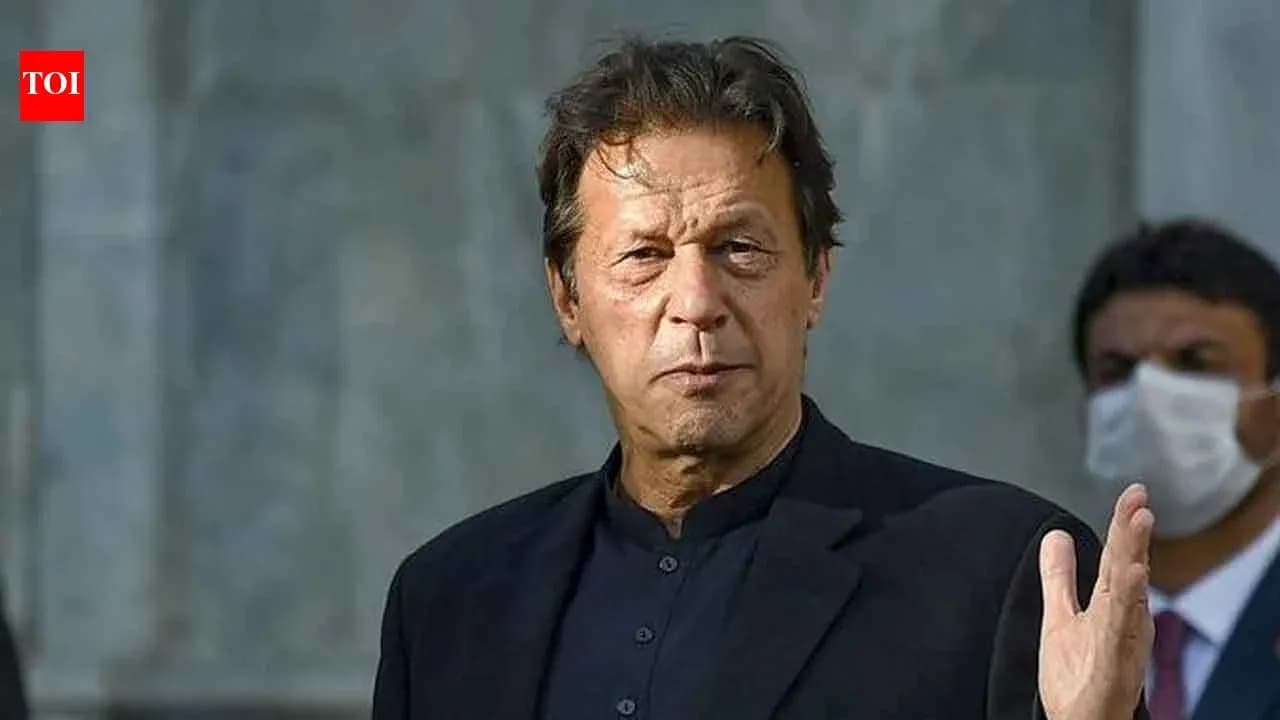
Imran Khan's Sons Ignite Political Storm During England vs Pakistan Test
At Lord’s, where cricket usually drowns out everything beyond the boundary rope, the noise came from somewhere very different.
During the second Test between England and Pakistan, an interview on Sky Sports with Sulaiman and Kasim Khan – the sons of former Pakistan captain and ex-Prime Minister Imran Khan – detonated into a political and sporting storm, dragging the Pakistan Cricket Board and its chairman Mohsin Naqvi into the spotlight.
The brothers spoke calmly on camera about their father’s health and his conditions in prison. The fallout was anything but calm.
Reports that followed claimed the PCB threatened not to send the Pakistan team back out after lunch on day one unless the interview was pulled from the broadcast. At the home of cricket, with a global audience watching, the accusation landed hard: a governing body allegedly prepared to disrupt a Test match over a segment about one of its most famous former captains.
Naqvi, already under pressure in his role as PCB chairman, suddenly found himself at the centre of a row that spilled well beyond sport.
‘They’re clearly hoping to kill him in there’
Away from the field, the tone from Imran Khan’s sons has grown darker and more desperate.
Kasim, speaking to The Telegraph, painted a grim picture of what he believes is happening to his father in solitary confinement, turning the spotlight from cricketing politics to a stark human rights claim.
“They're clearly hoping to kill him in there,” he said, accusing Pakistani authorities of trying to “silence him as secretly as possible and just slowly make him fade into nothing.”
For Kasim, this is not simply about a former World Cup-winning captain or a deposed prime minister. It is about a man he describes as “the most popular person in Pakistan right now,” and about a system he believes is tightening around him each time his family speaks out.
“Their strategy, whenever we speak, is to let everything fizzle out and then impose more brutal restrictions that make it even harder for him to survive,” he said.
Those words echo far beyond a TV studio. They cut directly into Pakistan’s already fraught intersection of politics, justice, and cricket – a sport that has long been entangled with national identity and power.
‘They made absolute fools of themselves’
If the reported PCB reaction at Lord’s was meant to shut down the conversation, it had the opposite effect.
Kasim was scathing about the board’s alleged attempt to strong-arm the broadcasters by threatening to keep the players in the dressing room.
“They made absolute fools of themselves,” he said, arguing that the PCB had only succeeded in damaging its own image on one of the sport’s grandest stages.
Sulaiman, too, expressed disbelief at the ferocity of the response. He expected pushback. He did not expect a threat that, if true, would have dragged the players directly into a political dispute in the middle of a Test match.
“I was expecting some sort of response. But I didn't think they would be so tactless as to threaten not to take to the field,” he said.
For Sulaiman, the issue was not party politics or policy, but something more basic.
“It shouldn't be in the remit of the Pakistan Cricket Board (PCB) to ask for an interview about an ex-Pakistan player, somebody who lived in England for 22 years, to be taken down. This wasn't about politics, but about the humanitarian situation and his health.”
In that single line, he drew a sharp boundary: a cricket board, a former captain, and a question of whether sporting authorities should ever lean on broadcasters over what is said about a political prisoner’s wellbeing.
Denials, doubts, and a lack of answers
On the other side, Pakistani authorities have repeatedly rejected allegations of mistreatment. The official line is clear: Imran Khan is receiving proper medical care.
The family does not believe it.
Sulaiman says they are being kept in the dark, with no concrete evidence to back up the assurances they keep hearing.
“The worrying theory we're hearing is that they're drip-feeding these reports of his ailing health and pretending that they're trying to help him, just to lay the ground for something worse to happen,” he said.
“Then they can wash their hands and say: 'He's just an old man who died, and we had nothing to do with it.’”
That accusation goes far beyond sporting controversy. It questions the credibility of every statement issued about Khan’s condition, and it paints a picture of a family forced to rely on second-hand briefings and official communiqués instead of direct, verifiable contact.
“They haven't given us proof of any of this. It's all just hearsay from government sources – there's no transparency, they don't want to give anyone access, so how are we supposed to believe any of it?” Sulaiman added.
The last solid information they trust, he says, came from Imran Khan himself six months ago, when he spoke about problems with his eye and what he described as neglect of his treatment.
Six months. In political detention, that is a lifetime.
Cricket caught in the crossfire
What began as a quiet, reflective interview at Lord’s about a jailed former captain has turned into something much bigger: a test of how far a cricket board will go to control the narrative, and a raw public plea from a family that believes time is running out.
The PCB denies nothing in public about the alleged threat at Lord’s in this account, but the criticism has already landed. In the eyes of Imran Khan’s sons, the board crossed a line – from running a team to trying to police a conversation about a man who once led that team to its greatest triumph.
At Lord’s, the players eventually walked back out. The Test went on. The runs and wickets will fade into the scorebooks.
The questions this episode leaves behind will not disappear so easily.