.svg&w=384&q=75 "logo")
The Impact of The Hundred on English Cricket's Schedule
Richard Thompson knows English cricket is creaking under the weight of its own schedule. He also believes the strain is worth it.
The England and Wales Cricket Board chair has doubled down on The Hundred, insisting the tournament’s impact on an already congested calendar is a necessary trade-off for the financial security it has brought to the game.
The price of The Hundred
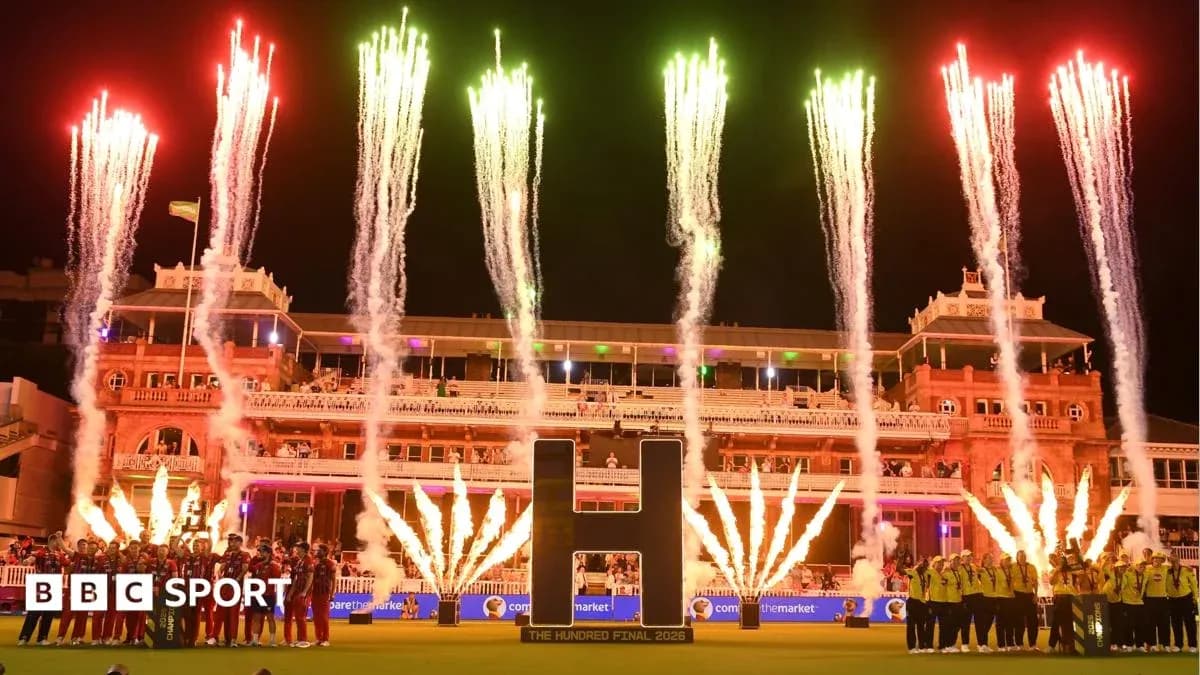
Since its launch in 2021, The Hundred has muscled its way into the heart of the English summer, compressing everything around it. This year, there were just two days between the Hundred final and the first Test against Pakistan at Headingley – a turnaround bowler Josh Tongue called “crazy scheduling”.
Thompson doesn’t deny the squeeze. He embraces it.
“Sacrifices have got to be made,” he told Sky Sports, as he defended the ECB’s strategy. “If we can take all of the debt out of the game, which we have, make a generation [of counties] which can reinvent themselves, that is a price worth paying.”
The numbers explain his conviction. The sale of stakes in the eight Hundred franchises last year generated more than £500m, money that has been pumped across the professional and domestic game. Some counties have wiped out long-standing debts. Others have finally been able to invest in facilities and infrastructure that had been kicked down the road for years.
Thompson stressed that while new investors now sit around the table and the prospect of future teams lingers in the background, the ECB will not extend the number of days The Hundred occupies in the calendar. The footprint, he insists, will not grow. The impact, though, is already enormous.
A summer carved out for franchises
To maximise the tournament’s pull, the ECB has cleared a prime July-August window of international cricket, freeing England’s leading players to represent their Hundred franchises. That clarity has come at a cost.
England can no longer pull players out of the competition for early Test preparation. This summer’s rapid shift from franchise finals to Test whites has already drawn criticism, not least from within the dressing room.
“We were criticised that The Hundred finished and two days later we were playing a Test match at Headingley,” Thompson said. “Imagine if that becomes one day – that can’t happen.”
Yet the domestic calendar remains brutally tight. The Hundred now sits alongside the County Championship, the T20 Blast and a diminished One-Day Cup, which is often treated as a second-team competition while first-choice players are tied up elsewhere.
“We are having to crowbar so much cricket in,” Thompson admitted. It is a blunt description of a system that has long been stretched, but he points to the financial logic that has driven the creation of a dedicated window.
“There are only four countries in the world that have managed to create a window that can pretty much guarantee the financial success of their game – us, South Africa, India, Australia.”
The message is clear: if you want to pay the bills and keep pace with the global game, you ringfence your showpiece tournament and live with the fallout.
Standards under the spotlight
While Thompson wrestles with the calendar, another issue has left him “enormously” disappointed – the recurring questions around the professionalism of England’s men’s side.
The latest flashpoint came with Brydon Carse. The fast bowler was left out of England’s squad for the second Test against Pakistan after being briefly arrested on suspicion of being drunk and disorderly while on duty with Durham. He was de-arrested, but investigations by both the police and the Cricket Regulator are ongoing. Images circulating on social media showed Carse in handcuffs, surrounded by officers.
For Thompson, the optics cut deep.
“When you play for your country you are judged by far higher standards,” he said. “What comes with wearing those three lions comes with respect, responsibility and pride.
“Unless you live and breathe those qualities there is a problem. Every player has to understand the responsibility that comes with playing for England.”
It is a sharp reminder that while The Hundred may be helping to balance the books and reshape the domestic landscape, the ECB’s wider challenge runs deeper than dates on a fixture list. Money can buy time, infrastructure and breathing space.
It cannot, on its own, buy the standards Thompson now demands.